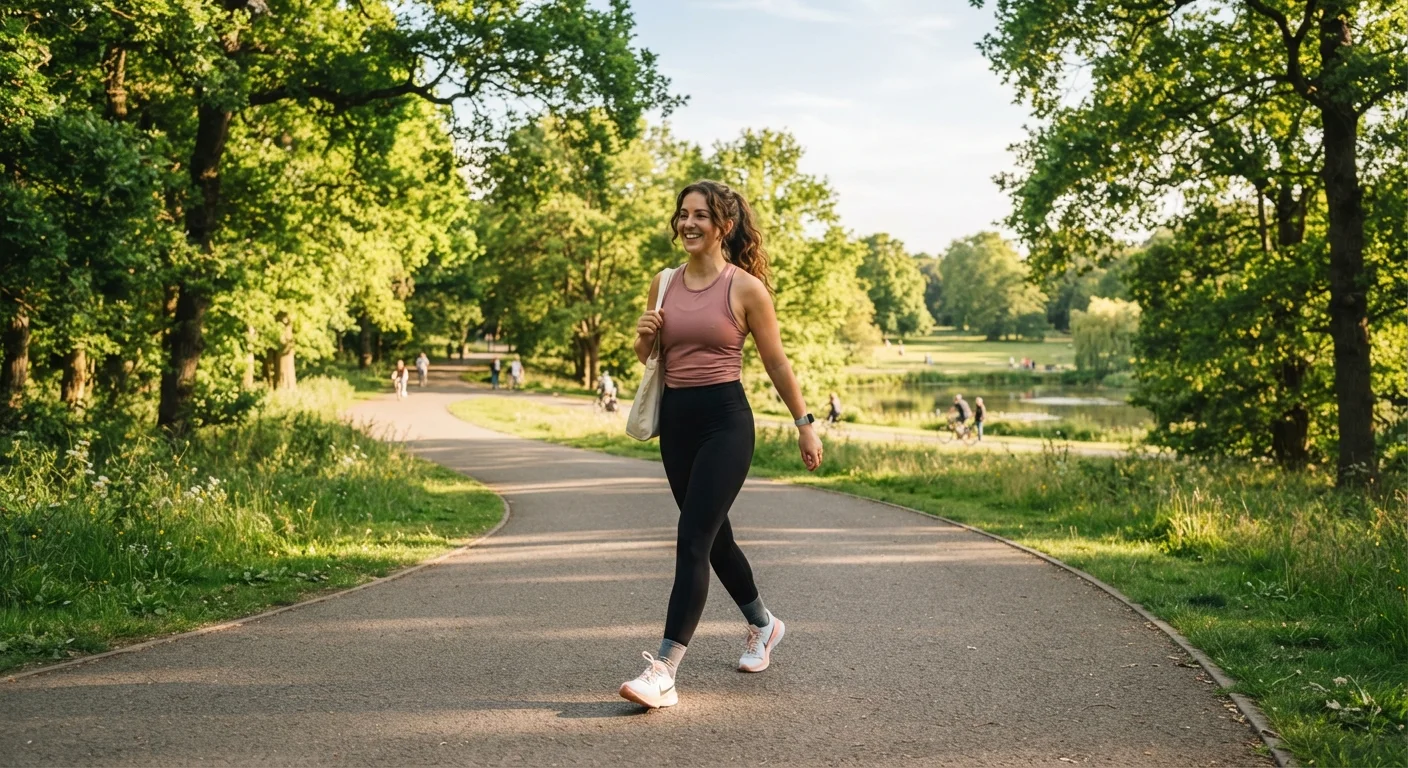
Why Walking Works as a Fitness Foundation
Walking is the exercise almost anyone can do. It requires no gym membership, no specialized training, and no dramatic lifestyle overhaul. For people new to regular physical activity — or returning after a gap — it offers a meaningful entry point that carries real health value.
Research consistently associates regular brisk walking with improvements in cardiovascular health, blood pressure, blood sugar regulation, mood, and weight management. It's low-impact, meaning it places less stress on joints than running or high-intensity workouts, making it well-suited for a wide range of ages and fitness levels.
If you're also thinking about rebuilding other healthy habits, our guide on starting an exercise routine after a long break covers how to ease back into movement safely after time away.
Moderate-intensity exercise
Physical activity that noticeably increases your heart rate and breathing, but still allows you to carry on a conversation. Brisk walking typically falls in this category.
Talk test
A simple way to gauge exercise intensity: if you can speak in short sentences but feel your breathing working, you're likely at a moderate effort level.
Habit stacking
The practice of attaching a new behavior to an existing daily routine to make it easier to remember and repeat consistently.
Progressive overload
Gradually increasing the demand placed on your body over time — such as walking longer or faster — so that fitness improves without causing injury.
Low-impact exercise
Movement that keeps at least one foot on the ground at all times, reducing the force transmitted through joints compared to activities like running or jumping.
What You Need Before You Begin
The barrier to entry for walking is intentionally low, but a few basics make the experience safer and more comfortable.
- Footwear: A pair of supportive walking or athletic shoes is the single most important investment. Look for cushioning, a firm heel, and a fit that doesn't pinch or slip.
- Comfortable clothing: Breathable, moisture-wicking layers suited to your local weather help you stay comfortable regardless of conditions.
- Safe route: Choose well-lit, even terrain — sidewalks, parks, or flat trails — especially when starting out. Uneven ground increases fall risk for beginners.
- Hydration: Bring water on any walk longer than 20 minutes, or in warm weather.
If you have any pre-existing health conditions, recent injuries, or haven't been physically active for some time, speak with your healthcare provider before beginning a new exercise program.
Start With What You Have
You don't need to buy new gear before your first walk. Use whatever supportive, closed-toe shoes you already own to get started. Investing in proper walking footwear makes sense once you've committed to a regular routine and know what kind of terrain you prefer.
Pacing and Duration: Starting Right
One of the most common mistakes beginners make is starting too fast or too long. Both lead to excessive soreness, fatigue, or discouragement.
A useful gauge of appropriate effort is the talk test: you should be able to speak in short sentences but feel your breathing working. This signals a moderate, sustainable intensity. If you're completely breathless, slow down. If you could sing comfortably, pick up the pace slightly.
For true beginners, 10 to 15 minutes per session is a reasonable starting point. Focus on completing the walk at a steady, comfortable pace rather than covering a set distance. Over the first two to three weeks, aim to walk three to four times per week to let your body adapt.
Steps vs. Time: Which Should You Track?
Step counts (popularized by the 10,000-steps goal) are one way to measure activity, but time-based targets are often more practical for beginners. Focusing on minutes walked removes the need for a tracker and keeps the emphasis on consistency over distance. Both approaches can be effective — choose whichever is easier to maintain.
How to Progress Without Overdoing It
Once 15-minute walks feel manageable — you finish without significant fatigue and recover easily the next day — it's time to build. A widely used principle is to increase total weekly walking time by no more than 10% per week. This gradual ramp-up gives muscles, tendons, and joints time to adapt.
Progression generally follows this order:
- Duration first: Extend your walks by a few minutes each session before changing your pace.
- Frequency next: Add an additional walking day once existing sessions feel comfortable.
- Intensity last: Introduce brisker segments or gentle inclines only after you've built a consistent base.
Don't Ignore Persistent Pain
Mild muscle soreness after a new activity is normal, but sharp or persistent joint pain, chest discomfort, or dizziness are not. Stop your walk immediately if these occur and consult a healthcare professional before resuming activity. Pain is your body's signal that something needs attention.
Tracking your walks — even informally with a notebook or a basic smartphone app — helps you see progress and avoid accidentally doing too much too soon.
Building a Sustainable Walking Habit
Consistency is what turns walking into a fitness asset. Research on habit formation suggests that anchoring a new behavior to an existing routine — sometimes called habit stacking — significantly improves follow-through. Walking after your morning coffee, during a lunch break, or before dinner all work as reliable anchors.
A few strategies that support long-term adherence:
- Schedule walks like appointments and protect that time.
- Vary your routes to keep things interesting.
- Walk with a friend or family member when possible — social accountability is a strong motivator.
- Accept that some days will be shorter or slower, and that a brief walk still counts.
Building consistent physical activity habits shares some DNA with other sustainable routines. If you're working on structuring other areas of your life, our article on getting started with home organization explores similar principles of sustainable habit-building in a different context.
This article is for general informational purposes only and does not constitute medical advice. Consult a qualified healthcare professional before beginning any new exercise program, especially if you have existing health conditions.