Why the Distinction Matters
Modern vehicles are more reliable than ever, but they still require consistent attention to stay safe and road-worthy. The good news is that a significant portion of routine maintenance monitoring requires no special tools or mechanical training — just a few minutes and a basic understanding of what to look for.
The challenge is knowing where that boundary sits. Attempting tasks beyond your skill level or without the right equipment can cause injury, create new damage, or invalidate warranties. Equally, outsourcing everything to a shop when simple checks could catch a problem early adds unnecessary cost and inconvenience.
Before your next long drive, consider pairing these habits with the pre-departure vehicle check every road tripper should run to make sure nothing gets missed.
| DIY Checks | Professional Servicing | |
|---|---|---|
| Typical tasks | Fluid levels, tyre pressure, lights, wipers | Brakes, suspension, timing belt, electrical diagnosis |
| Tools required | Pressure gauge, dipstick, visual inspection | Lift, scan tools, torque wrenches, specialised equipment |
| Skill level needed | No mechanical training required | Certified mechanic or trained technician |
| Frequency | Weekly to monthly | Per manufacturer schedule or as issues arise |
| Cost | Minimal — mostly time and basic supplies | Varies; necessary for safety-critical work |
| Safety risk if done wrong | Low, when tasks are within scope | High for brakes, airbags, suspension if unqualified |
What Most Drivers Can Safely Check at Home
The following tasks involve observation, measurement, and topping up fluids — none of which require lifting the car or disassembling components.
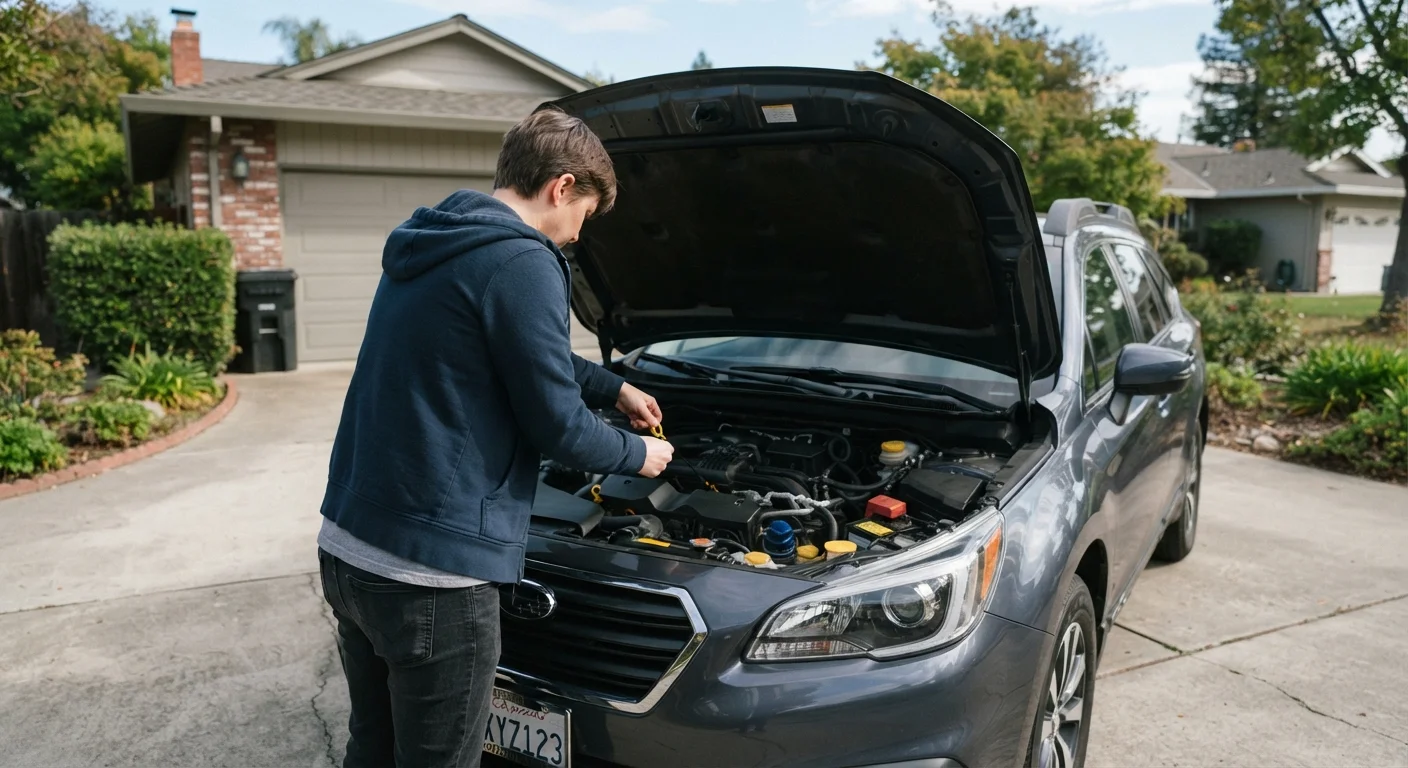
- Engine oil level: Use the dipstick with the engine cold. If the level is below the minimum marker, top up with the grade specified in your owner's manual. Low oil is one of the leading causes of engine wear.
- Coolant reservoir level: Check the translucent reservoir when the engine is cold. Never open a hot radiator cap — pressure buildup can cause serious burns.
- Tyre pressure: Use a quality pressure gauge to match the recommended PSI printed on the driver's door jamb sticker, not the tyre sidewall. Check when tyres are cold for an accurate reading.
- Windshield washer fluid: A simple top-up that takes under a minute and significantly affects visibility in poor weather.
- Wiper blade condition: If blades are streaking or chattering, replacement is a straightforward task most drivers can handle in a parking lot.
- Exterior lights: Walk around the vehicle periodically to confirm headlights, tail lights, brake lights, and indicators are all functioning.
These checks form the backbone of a solid pre-drive routine. See Before You Turn the Key: A Pre-Journey Safety Walkthrough for a structured approach to making these habits automatic.
Keep Your Owner's Manual Accessible
Your vehicle's owner's manual is the most reliable reference for fluid specifications, tyre pressures, and service intervals specific to your make and model. If your physical copy is missing, most manufacturers provide digital versions on their official websites. Consulting it before topping up fluids or resetting any setting can prevent using the wrong product.
When to Hand It Over to a Mechanic
Several systems in your vehicle are too safety-critical, too complex, or too difficult to diagnose accurately without professional equipment. Attempting these without training introduces real risk.
- Brake system: Pad replacement may look straightforward, but improper installation can cause brake failure. Rotors, calipers, and brake lines require professional assessment and torque specifications.
- Suspension and steering: Worn ball joints, tie rods, or shocks affect vehicle control. These components must be diagnosed with a lift and checked against manufacturer tolerances.
- Timing belt or chain: Replacement requires precise alignment. An error here can cause catastrophic engine damage.
- Airbag system (SRS): Any work involving airbag sensors, wiring, or modules must be handled by a certified technician. Accidental deployment is a serious hazard.
- Transmission service: Fluid changes and adjustments in automatic or continuously variable transmissions (CVTs) require specific fluid types and equipment-level procedures.
- Electrical faults and warning lights: A persistent check-engine or ABS warning light warrants a proper scan tool diagnosis, not a reset. Clearing codes without addressing the underlying cause can mask serious issues.
Unusual sounds are often the first signal that professional attention is needed. Our guide on noises your car makes and what they're trying to tell you can help you interpret what you're hearing before calling the shop.
Don't Ignore Persistent Warning Lights
A check-engine, ABS, or traction-control light that stays on after a restart is not something to defer indefinitely. These systems monitor safety-critical functions, and the underlying fault can worsen over time. Have the vehicle scanned by a qualified technician rather than clearing the code without diagnosis — masked faults can lead to more costly repairs or unsafe driving conditions.
Building a Maintenance Routine That Uses Both
The most effective approach treats DIY checks and professional servicing as complementary, not competing. A practical structure looks like this:
- Weekly or before longer trips: Tyre pressure, fluid levels, lights, and a visual walkaround.
- Monthly: Check wiper condition, battery terminal cleanliness (no corrosion), and tyre tread depth using a tread depth gauge or the penny test.
- Per manufacturer schedule: Engine oil and filter, air filter, cabin filter, spark plugs, coolant flush, and brake fluid — timing varies by vehicle, so consult your owner's manual.
- As symptoms arise: Any unusual noise, vibration, warning light, or handling change warrants prompt professional evaluation. Do not delay on safety-critical symptoms.
Documenting everything you do — and everything a mechanic does — pays dividends over time. A consistent service history supports warranty claims, informs future repairs, and can strengthen a vehicle's resale value. Learn more in The Maintenance Log: Why Keeping Service Records Matters More Than Most Drivers Realise.
~35%
Cars on US roads with at least one underinflated tyre
The National Highway Traffic Safety Administration (NHTSA) has noted that underinflation is one of the most common and preventable tyre-related issues among US drivers.
1 in 4
Vehicles needing maintenance or repairs when checked
The Car Care Council's periodic vehicle inspection programs consistently find that a significant proportion of vehicles checked at public events require some form of attention.