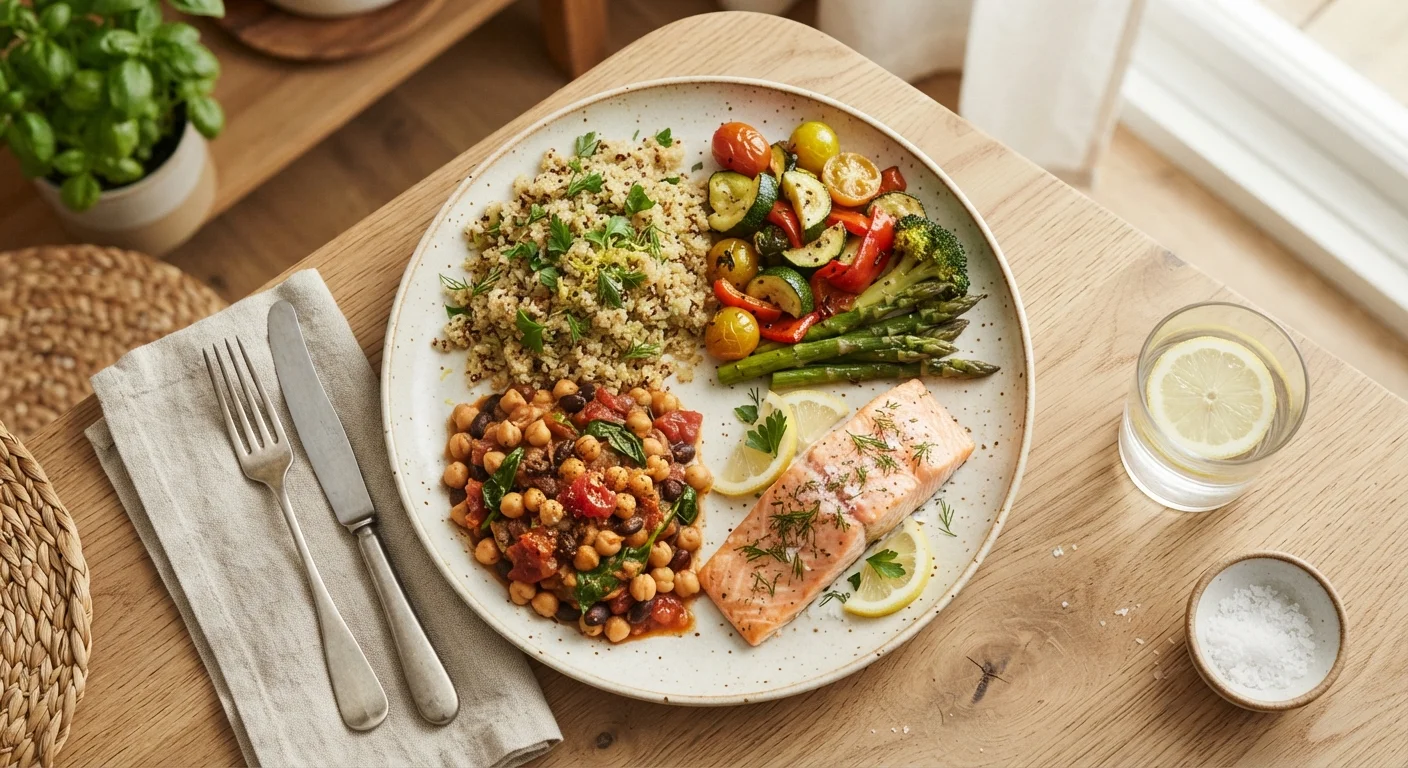
Why Plate Proportions Matter More Than Calorie Counting
For many people, the word «nutrition» conjures spreadsheets, macro tracking, and strict food rules. The reality is simpler: the way you proportion your plate across most meals has a more practical and sustainable impact on overall health than meticulous calorie arithmetic.
Research consistently supports a food-quality-first approach. The types and relative amounts of foods you eat shape energy levels, digestive health, and long-term wellbeing in ways that a raw calorie number doesn't capture. You don't need an app to eat well — you need a reliable mental model. Before we build one, it helps to understand the core food groups involved. Common nutrition myths — like the idea that carbohydrates are inherently harmful — can make this feel more complicated than it needs to be.
The Four Food Groups to Keep in Mind
A balanced plate draws from four broad categories, each contributing something specific:
- Vegetables and fruit — Supply vitamins, minerals, antioxidants, and fibre. Fibre deserves particular attention for its wide-ranging role in digestive and cardiovascular health. Aim for variety and colour across the day.
- Whole grains and starchy vegetables — Provide sustained energy via complex carbohydrates. Examples include brown rice, oats, quinoa, whole-wheat bread, and sweet potato. These differ from refined grains because they retain fibre and key micronutrients.
- Protein sources — Support muscle maintenance, immune function, and satiety. Options span animal and plant foods: eggs, poultry, fish, legumes, tofu, and low-fat dairy.
- Healthy fats — Found in avocado, olive oil, nuts, and seeds, these support brain function, hormone production, and absorption of fat-soluble vitamins (A, D, E, and K).
For a broader look at the vitamins and minerals that work alongside these food groups, see Micronutrients at a Glance.
A Simple Visual Framework for Every Meal
The plate method — widely used by dietitians and promoted by public health bodies — offers a practical, scale-free way to portion meals:
- Half the plate: non-starchy vegetables and fruit (leafy greens, broccoli, peppers, carrots, berries)
- Quarter of the plate: whole grains or starchy vegetables
- Quarter of the plate: lean or plant-based protein
- A small addition: a source of healthy fat, used in cooking or added as a topping
This framework doesn't require measuring cups. Your hand is a useful rough guide: a palm-sized portion for protein, a cupped hand for grains, and as many vegetables as will comfortably fill the rest. Beverages matter too — water or unsweetened drinks support the overall pattern better than sugary alternatives.
Use Your Plate as a Template, Not a Rule
The plate method is a starting framework, not a rigid requirement. If your meal is a hearty soup or a grain bowl, visualise the proportions rather than physically dividing anything. Over time, estimating balanced portions becomes second nature and requires almost no conscious effort.
Common Stumbling Blocks and How to Work Around Them
Even a simple framework runs into real-world friction. Here are the most common obstacles and practical responses:
- Time pressure
- A balanced plate doesn't require elaborate cooking. Batch-prepared grains, canned legumes, and pre-washed salad greens can dramatically reduce assembly time. See Eating Well on a Busy Schedule for habits that hold up under time pressure.
- Mixed dishes
- Stir-fries, soups, and grain bowls don't split neatly into sections — and that's fine. Apply the proportions mentally: is the vegetable component the dominant one? Is there a meaningful protein source? Is the starch portion moderate?
- Eating away from home
- Restaurant portions are often larger and heavier in refined grains or fat. You can still apply the framework by requesting extra vegetables, choosing grilled over fried options, and treating a large entrée as two meals.
Avoid Eliminating Entire Food Groups
Cutting out whole categories — such as all carbohydrates or all fats — based on popular trends can leave nutritional gaps that are difficult to fill. Most people benefit from a varied diet that includes all major food groups in appropriate proportions. If you're considering a restrictive dietary approach for medical or personal reasons, speak with a registered dietitian first.
Turning a Balanced Plate Into a Daily Habit
Nutritional balance is built through consistent patterns, not flawless individual meals. A useful mindset shift: aim for most meals to follow the framework rather than every single one. This reduces the all-or-nothing thinking that derails many well-intentioned efforts.
Practical anchoring strategies include keeping a fruit bowl visible, storing pre-cut vegetables at eye level in the refrigerator, and building a short list of five or six balanced meals you genuinely enjoy and can rotate confidently. If you grow any of your own produce, even a small kitchen garden can increase vegetable variety — see Your First Vegetable Garden for a beginner-friendly starting point. Pairing balanced eating with regular movement reinforces overall health — the Fitness and Movement hub offers accessible ideas for staying active alongside your nutrition changes.
This article is for general informational and educational purposes only and does not constitute medical or dietary advice. Individual nutritional needs vary. Please consult a qualified healthcare provider or registered dietitian before making significant changes to your diet, especially if you have an existing health condition.