Why Busy People Struggle With Nutrition (And Why It's Not a Willpower Problem)
Most nutrition advice assumes you have a free afternoon, a fully stocked pantry, and the mental bandwidth to plan five days of meals in advance. For the majority of people juggling work, family, and a dozen other responsibilities, that's not reality — and feeling like you're failing a system designed for someone else is discouraging.
The good news: eating reasonably well on a hectic schedule is less about discipline and more about building a small set of low-friction habits. When the right default is also the easy default, healthy choices happen almost automatically. The practices below are designed to work within real constraints — no expensive ingredients, no elaborate prep, and no perfection required.
This article provides general nutrition information for educational purposes. It is not a substitute for personalized advice from a registered dietitian or qualified healthcare professional.
Core Habits That Hold Up Under Pressure
These practices are grounded in nutrition fundamentals and chosen specifically because they remain realistic when time is short.
Anchor every meal with a protein source and a fiber-rich food.
Protein and dietary fiber both slow digestion and help maintain a feeling of fullness, which reduces the likelihood of energy crashes and impulsive snacking later. Establishing this as a non-negotiable combination simplifies meal decisions without requiring a detailed plan.
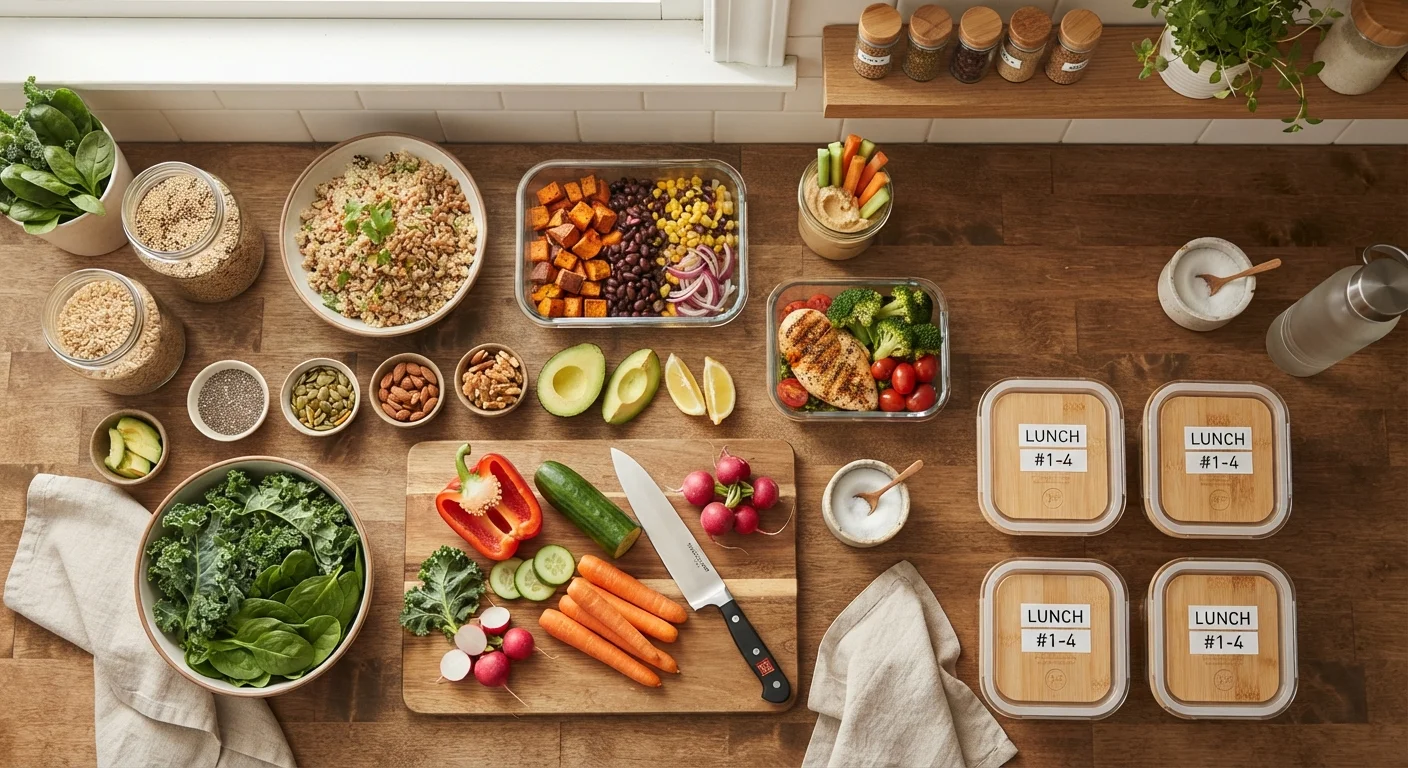
Batch-prepare one or two base ingredients each week, not full meals.
Cooking complete meals in advance often feels overwhelming and doesn't account for changing schedules. Preparing a single versatile ingredient — cooked grains, roasted vegetables, or hard-boiled eggs — removes a key friction point without requiring a formal meal prep session.
Keep ready-to-eat whole foods visible and accessible at home.
Research in behavioral nutrition consistently shows that people eat what is convenient and visible. Placing fruit on the counter, pre-cut vegetables at eye level in the fridge, and nuts in an easy-to-reach spot shifts the default snack choice without requiring ongoing decision-making.
Treat hydration as a structured habit, not an afterthought.
Mild dehydration is associated with reduced concentration and fatigue, and thirst signals are often mistaken for hunger. Building water intake into existing routines — such as drinking a glass before each meal — makes it easier to maintain without tracking apps or reminders.
Use a short, consistent grocery list rather than shopping by inspiration.
Nutrition often falls apart at the grocery store, where decision fatigue and poor planning lead to less nutritious default choices. A rotating list of 15–20 staples that you know how to use reduces cognitive load and ensures your kitchen stays stocked with workable ingredients.
For a practical look at how to proportion these food groups on your plate without overcomplicating it, see Building a Nutritionally Balanced Plate Without Overthinking It.
Quick Wins You Can Start Today
You don't need to overhaul your entire routine. Even one or two of the following changes can meaningfully shift your daily nutrition in the right direction.
77%
Adults who say lack of time is a barrier to healthy eating
A survey by the International Food Information Council Foundation found time constraints are among the most commonly cited obstacles to better nutrition among U.S. adults.
~30%
Daily calories consumed away from home by U.S. adults
According to the U.S. Centers for Disease Control and Prevention, a significant share of American adults' daily caloric intake comes from foods purchased outside the home, where nutritional quality is harder to control.
Making It Stick: Reading Labels and Moving More
Two underrated habits complement everything above. First, getting comfortable with nutrition labels removes guesswork at the grocery store — you can make a smarter swap in seconds rather than deliberating for minutes. Our guide to reading a nutrition label without getting confused breaks down serving sizes, daily values, and ingredient lists in plain language.
Second, nutrition and movement work together. Brief activity breaks — sometimes called "movement snacks" — are an accessible way to stay active even on packed days. See Movement Snacks: Short Activity Bursts and Their Place in a Sedentary Day for what the research says. Explore more accessible fitness tips through our Fitness & Movement hub.
Keep Your Standards Flexible, Not Perfect
A habit that works 80% of the time is far more valuable than a perfect plan that collapses under pressure. On particularly demanding days, aim for one nutritional win — a piece of fruit, a glass of water, or a protein-containing snack — rather than treating the day as a write-off. Consistency over time matters more than any individual meal.
“You don't have to eat perfectly to eat well. Small, consistent improvements to your daily routine will do more for your long-term health than any short-term overhaul.”
— Walter Willett, Professor of Epidemiology and Nutrition, Harvard T.H. Chan School of Public Health
Always consult a qualified healthcare professional before making significant changes to your diet, particularly if you have an existing health condition or are managing a chronic illness.