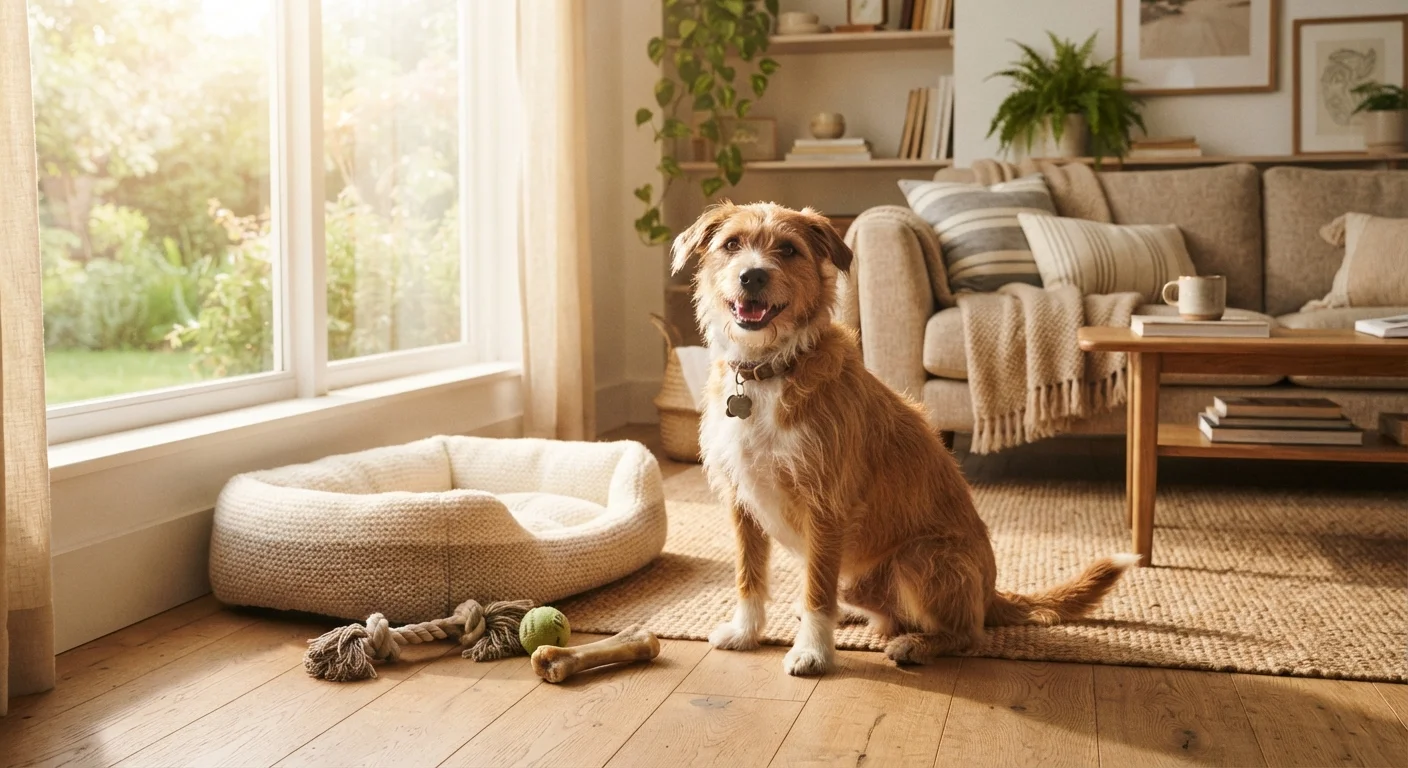
Before Your Dog Arrives
Bringing a dog home is not just an emotional milestone — it requires practical preparation. Before your dog walks through the door, do a thorough dog-proofing sweep of your home. Get down to floor level and look for electrical cords, small objects that could be swallowed, toxic plants, and gaps in fencing or under furniture.
Dog-proofing
Removing or securing hazards in your home — such as toxic plants, loose cords, or small objects — to keep a dog from being injured or ingesting something harmful.
Crate
An enclosed space, often made of wire or plastic, that serves as a den-like retreat for a dog. When introduced positively, it supports housetraining and gives dogs a sense of security.
Positive reinforcement
A training method where desirable behaviors are rewarded — with treats, praise, or play — to encourage the dog to repeat them.
Housetraining
Teaching a dog where and when it is appropriate to eliminate, typically by establishing a consistent outdoor bathroom routine from the start.
Decompression period
The adjustment time a newly homed dog needs to recover from the stress of a change in environment, during which calm and routine are especially important.
Set up a designated area with everything your dog needs: a comfortable bed or crate, water and food bowls, and a few toys. Keeping this space in a low-traffic part of the house gives your dog somewhere to decompress. If you're introducing a dog to a home that's already organized and compartmentalized, the same principles from home organization thinking apply — clear zones, clear purpose.
Gather supplies ahead of time: a properly fitted collar with an ID tag, a leash, enzymatic cleaner for accidents, and food recommended by the shelter or breeder. Having everything ready prevents stressful last-minute runs on the first day.
The First 24 Hours
The first day sets an emotional tone. Resist the urge to invite friends over or overwhelm your dog with excitement. Keep the household calm, limit introductions, and give your dog time to sniff and explore at its own pace.
Take your dog outside to the bathroom immediately upon arriving home — this begins housetraining from minute one. Show your dog its sleeping area and let it settle without pressure. If you have children or other pets, manage introductions carefully and in brief, positive sessions.
Don't Rush the Settling-In Period
Well-meaning enthusiasm — lots of visitors, new experiences, and constant handling — can overwhelm a newly homed dog. Signs of stress include hiding, excessive panting, yawning, and refusing food. If your dog is showing these signals, scale back stimulation and give it more quiet time before expanding its world.
Learning to read your dog's signals during this period is invaluable. Our guide on what your dog's body language is telling you can help you interpret whether your dog is relaxed, anxious, or overstimulated as it adjusts.
Building a Daily Routine
Dogs are creatures of habit. A predictable routine — consistent wake times, meals, walks, and bedtimes — gives your dog a framework for feeling secure. Anxiety and problem behaviors often decrease once a dog understands what to expect from its day.
Feed your dog at the same times each day and stick to measured portions. If you're weighing up food types, see our overview of dry kibble versus wet food to understand the nutritional trade-offs. Be aware that some common household foods are harmful to dogs — this reference on foods that can make dogs seriously ill is worth bookmarking.
Consistency Is the Real Training Tool
Every member of the household should use the same cues and rules — a dog can't learn 'no jumping' if one person allows it. Agree on ground rules before your dog arrives, not after. Short, frequent, consistent training sessions build habits faster than sporadic long ones.
Exercise and mental stimulation should also be part of the routine. Most dogs need at least one substantial walk per day, plus interactive play or puzzle time to prevent boredom-driven behavior.
Your First Vet Visit
Schedule a vet appointment within the first week. Even if your dog appears healthy, an early check-up establishes a baseline and catches anything that might have been missed. Bring any records you received from the shelter, rescue, or breeder.
Your vet will typically check weight, heart, teeth, coat condition, and confirm or update vaccinations. They'll also screen for parasites like fleas, ticks, and intestinal worms. This is a good time to discuss spay or neuter status, heartworm prevention, and appropriate food for your dog's life stage.
Records Matter From the Start
Keep all veterinary records, vaccination certificates, and microchip information in one place from day one. If your dog ever needs emergency care or boarding, these documents are essential. Digital copies stored in your email or cloud storage are a reliable backup.
Don't hesitate to ask questions. No concern is too small at this stage, and your vet is your most reliable partner in your dog's long-term wellbeing.
Basic Training From Day One
Training isn't something you start once the dog has settled — it begins on arrival. Every interaction teaches your dog something. Consistent, positive reinforcement-based training is the approach most supported by animal behavior research and veterinary professionals.
Start with the fundamentals: sit, stay, come, and leave it. Keep sessions short — five to ten minutes — and end on a success. If your dog seems to tune out or ignore commands, small adjustments in timing, tone, and reward delivery often make a significant difference. Our guide on why dogs ignore commands walks through the most common reasons and fixes.
As your dog matures, your care approach will evolve too. For a look at how needs change over a lifetime, keeping an older dog comfortable as they age offers useful long-range perspective.
This article is for general informational purposes only and is not a substitute for professional veterinary advice. Always consult a licensed veterinarian for guidance specific to your dog's health and needs.