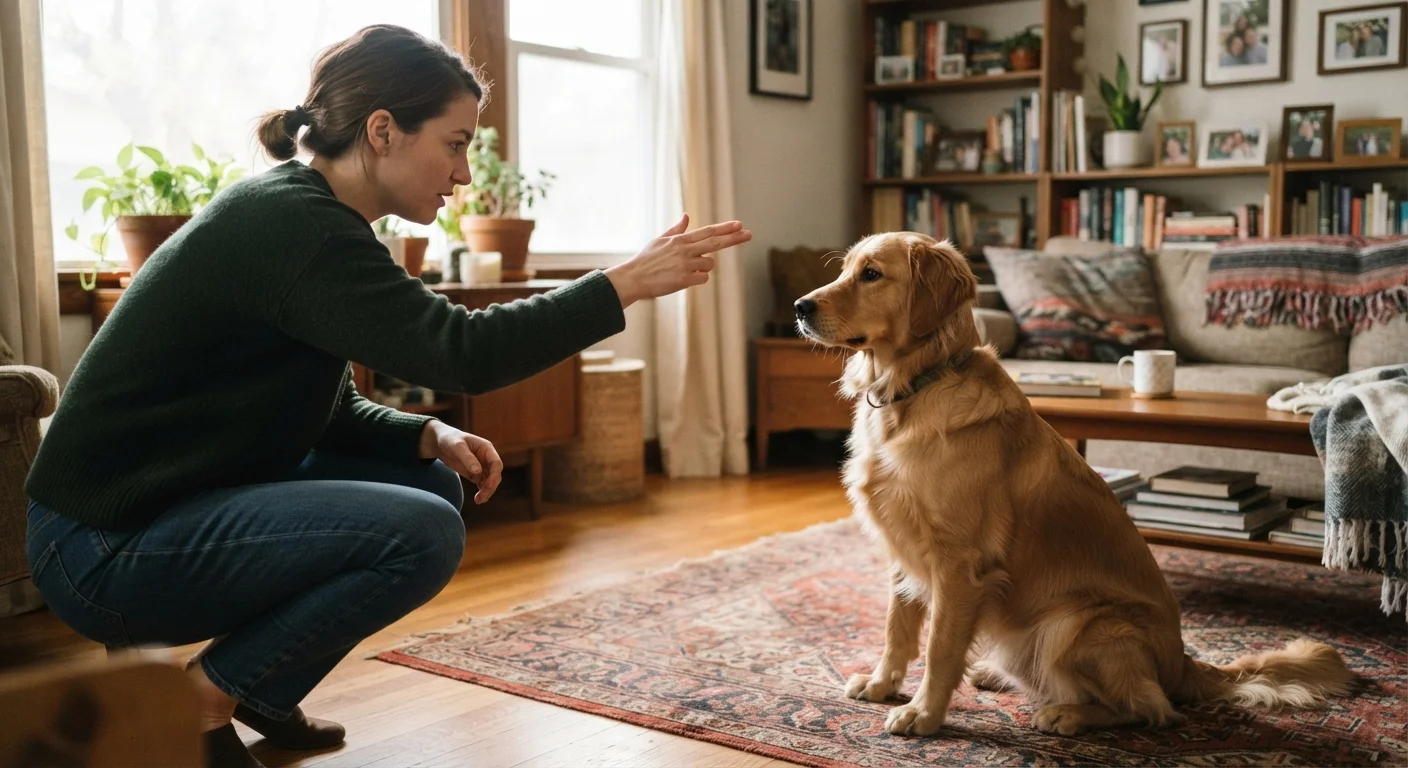
The Real Reason Your Dog Isn't Listening
Most dogs don't ignore commands because they're dominant, spiteful, or stupid. In the vast majority of cases, the problem lies in how the cue was taught, how it's being delivered, or what's competing for the dog's attention in that moment. Understanding these underlying causes is the first step toward fixing them.
It helps to think of training from the dog's perspective. A dog learns associations — this sound or gesture, followed by this action, produces something good. Break any part of that chain and the behavior starts to fall apart. Before assuming your dog is being difficult, it's worth examining what may have gone wrong on the human end of the leash.
Setting clear routines early on is one of the most effective ways to prevent many of these communication gaps from forming in the first place.
Sudden Non-Compliance May Signal a Health Issue
If a dog that previously responded well suddenly stops following familiar commands, a physical cause — such as pain, hearing loss, or a neurological change — may be involved. This is especially worth noting in older dogs. A veterinary check-up is the appropriate first step before assuming a behavioral cause.
Common Training Mistakes That Undermine Compliance
The errors below come up repeatedly when owners struggle with unresponsive dogs. None of them reflect bad intentions — they're simply patterns that conflict with how dogs actually learn.
Repeating the command multiple times before the dog responds.
Why it happens: Owners assume the dog didn't hear or understand, so they say 'sit, sit, SIT' in hopes it will eventually work.
Using inconsistent words or hand signals for the same behavior.
Why it happens: Different family members use different words ('down' vs. 'lie down' vs. 'floor'), or owners switch cues without realizing it.
Practicing in low-distraction environments and then expecting compliance everywhere.
Why it happens: Dogs learn commands in context. A cue mastered in your living room has to be re-learned at the park, where smells, sounds, and movement compete for attention.
Rewarding too late, reducing the link between behavior and reinforcement.
Why it happens: Owners fumble for a treat or say 'good boy' while the dog has already moved on to sniffing the floor, accidentally reinforcing that later behavior instead.
Asking for commands when the dog's basic needs aren't met.
Why it happens: A dog that is overtired, hungry, overstimulated, or anxious has limited capacity to focus — but owners often interpret this as willful refusal.
Punishment Backfires in Dog Training
Responding to ignored commands with raised voices, physical corrections, or frustration tends to increase anxiety without improving compliance. Dogs don't connect punishment delivered after the fact with the behavior you intended to address. Consistent, reward-based methods are broadly supported by veterinary and animal behavior professionals as the more effective and humane approach.
Understanding your dog's emotional state also plays a role. Reading your dog's body language can help you recognize when they're anxious, overstimulated, or simply not in a position to focus — which directly affects their ability to respond.
Building Better Habits Going Forward
Improving your dog's responsiveness doesn't require long daily sessions or expensive tools. What it requires is consistency, realistic expectations, and an understanding of how dogs process learning.
~60%
Dogs reportedly trained without professional guidance
Industry surveys suggest the majority of US dog owners rely primarily on self-guided training, making consistent technique especially important.
1–2 seconds
Ideal reward delivery window after correct behavior
Applied animal behavior research consistently finds that rewards must follow the target behavior almost immediately to reinforce the correct association.
Keep sessions to five or ten minutes and end on a success — even if that means asking for something easy your dog knows well. This maintains a positive association with the training context itself. As responses become reliable in one setting, introduce mild distractions and gradually increase difficulty. Progress is rarely linear, and some regression is normal when the environment changes.
If you've worked through the common errors above and your dog is still struggling, a certified professional dog trainer or a veterinary behaviorist can offer hands-on assessment. They can identify patterns that are hard to spot on your own and tailor guidance to your specific dog's temperament and history.
This article is for general informational purposes only and does not constitute professional training or veterinary advice. If your dog shows sudden behavioral changes, consult a qualified veterinarian.