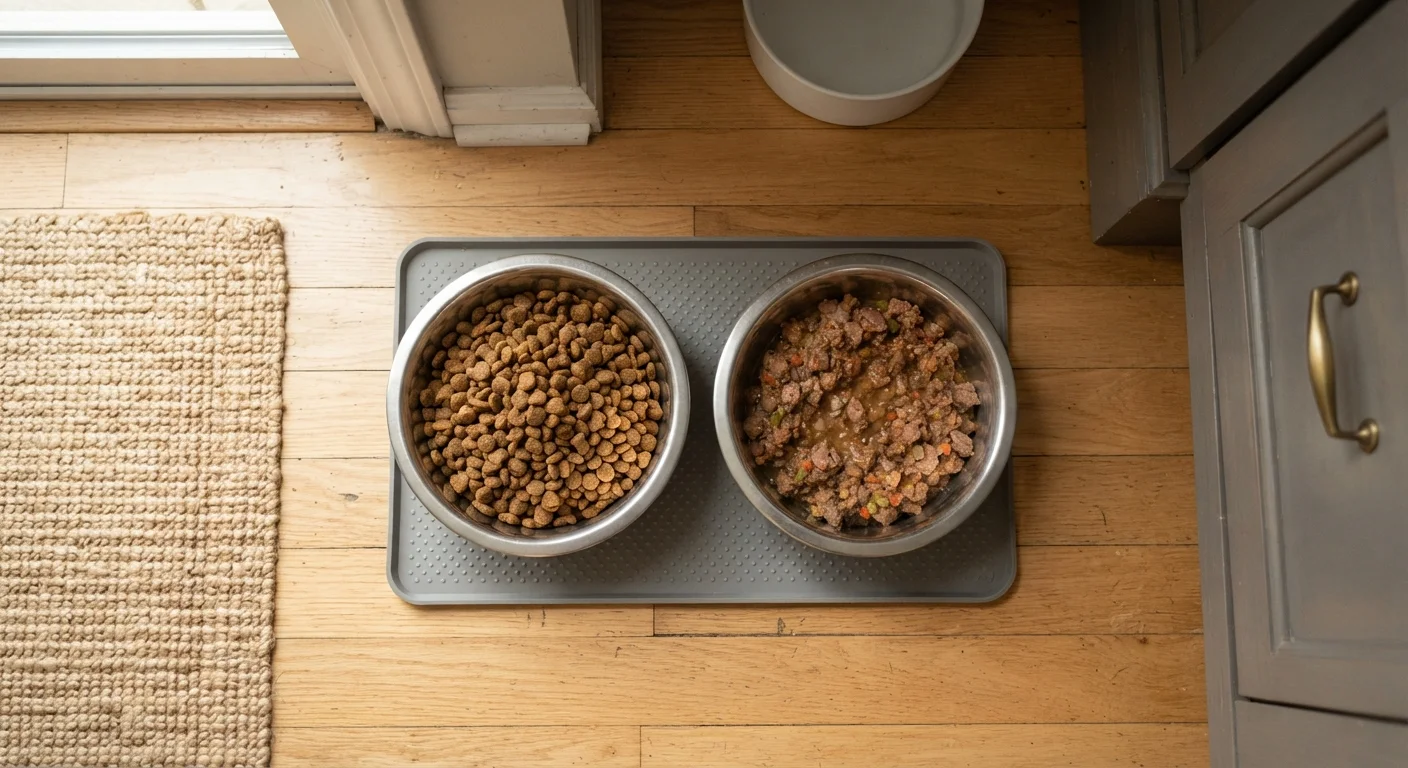
How Dry and Wet Dog Food Actually Differ
At their core, dry kibble and wet canned food are processed differently, which shapes their nutritional profile, texture, and shelf life. Kibble is made by combining ingredients into a dough, extruding it into pellets, and then baking it at high heat — a process that removes most of the moisture and concentrates calories. Wet food is typically packed with higher moisture content (often 70–80%), which dilutes its calorie density but makes it more palatable and hydrating.
Both formats can be nutritionally complete if they carry an AAFCO statement on the label confirming the food meets minimum nutrient profiles for your dog's life stage. That statement — not the marketing copy on the front of the bag — is the most reliable indicator of nutritional adequacy. For a deeper look at reading those labels, see our guide to decoding dog food labels.
| Criterion | Dry Kibble | Wet Food |
|---|---|---|
| Moisture content | ~10% water | ~70–80% water |
| Calorie density | Higher per gram | Lower per gram |
| Typical cost per serving | Generally lower | Generally higher |
| Shelf life (unopened) | Months to over a year | Months to over a year |
| Once opened | Stays fresh days to weeks | Refrigerate; use within 2 days |
| Dental abrasion | Modest mechanical effect | Minimal mechanical effect |
| Palatability for picky dogs | Variable | Generally higher |
| Suitable for dogs with chewing difficulties | Less suitable | Well suited |
Hydration, Dental Health, and Palatability
One of the clearest functional differences between the two formats is hydration. Dogs on an exclusively dry diet rely entirely on their water bowl to meet fluid needs. Some dogs — especially older or less active ones — simply don't drink enough. Wet food can meaningfully supplement daily water intake and is often recommended by veterinarians for dogs with a history of urinary crystals or kidney concerns.
On the dental side, the picture is more nuanced. While dry kibble has a reputation for cleaning teeth, the evidence for this is modest. Crunching kibble does create some mechanical abrasion, but many pieces shatter before making sustained contact with the gum line. Specialized dental kibble designed with a particular texture is different from standard kibble. Neither format replaces regular tooth brushing as the gold standard for canine oral hygiene.
70–80%
Typical moisture content in wet dog food
Compared to roughly 10% in dry kibble, making wet food a meaningful hydration source for dogs that under-drink.
~3x
Approximate calorie-density advantage of dry kibble
Gram for gram, dry kibble typically delivers significantly more calories than wet food, which matters for portion management.
Palatability matters practically. Dogs with reduced appetite — whether due to age, illness, or simply strong preferences — often respond better to wet food's stronger scent and softer texture. If you're introducing a new dog to your home, palatability can make the difference during a stressful adjustment period. Our article on bringing a dog home for the first time covers how to establish healthy feeding routines from day one.
Cost, Storage, and Everyday Practicality
For most households, cost and convenience are deciding factors. Dry kibble typically costs considerably less per daily serving than an equivalent wet diet, and a large bag stores easily in a cool, dry space for weeks. Wet food, once opened, must be refrigerated and used within a couple of days, and individual cans or pouches add up in both cost and packaging waste.
Portion control is also simpler with kibble — measuring cups are easy to use consistently. With wet food, calorie density varies more across products, so checking the feeding guide on the packaging is important to avoid unintentional overfeeding, which can contribute to weight gain over time.
Combination Feeding: A Middle Path
Mixing dry and wet food is a widely used approach that can offer hydration benefits alongside the convenience and cost savings of kibble. If you try this, use the feeding guides on both products to calculate proportional servings and avoid overfeeding. Your veterinarian can help you find the right balance for your dog's size, age, and activity level.
A mixed feeding approach — sometimes called combination feeding — uses dry kibble as the base while adding a portion of wet food for palatability, hydration, or variety. Many veterinarians consider this a reasonable middle ground. The key is accounting for the total calorie intake across both formats to maintain a healthy weight.
Whatever format you choose, be aware of what your dog should never eat. Our reference on foods that can make dogs seriously ill is a useful companion resource.
This article is for general informational purposes only and is not a substitute for professional veterinary advice. Always consult your veterinarian before making significant changes to your dog's diet, particularly if your dog has a health condition.