How the Body Responds to Stress
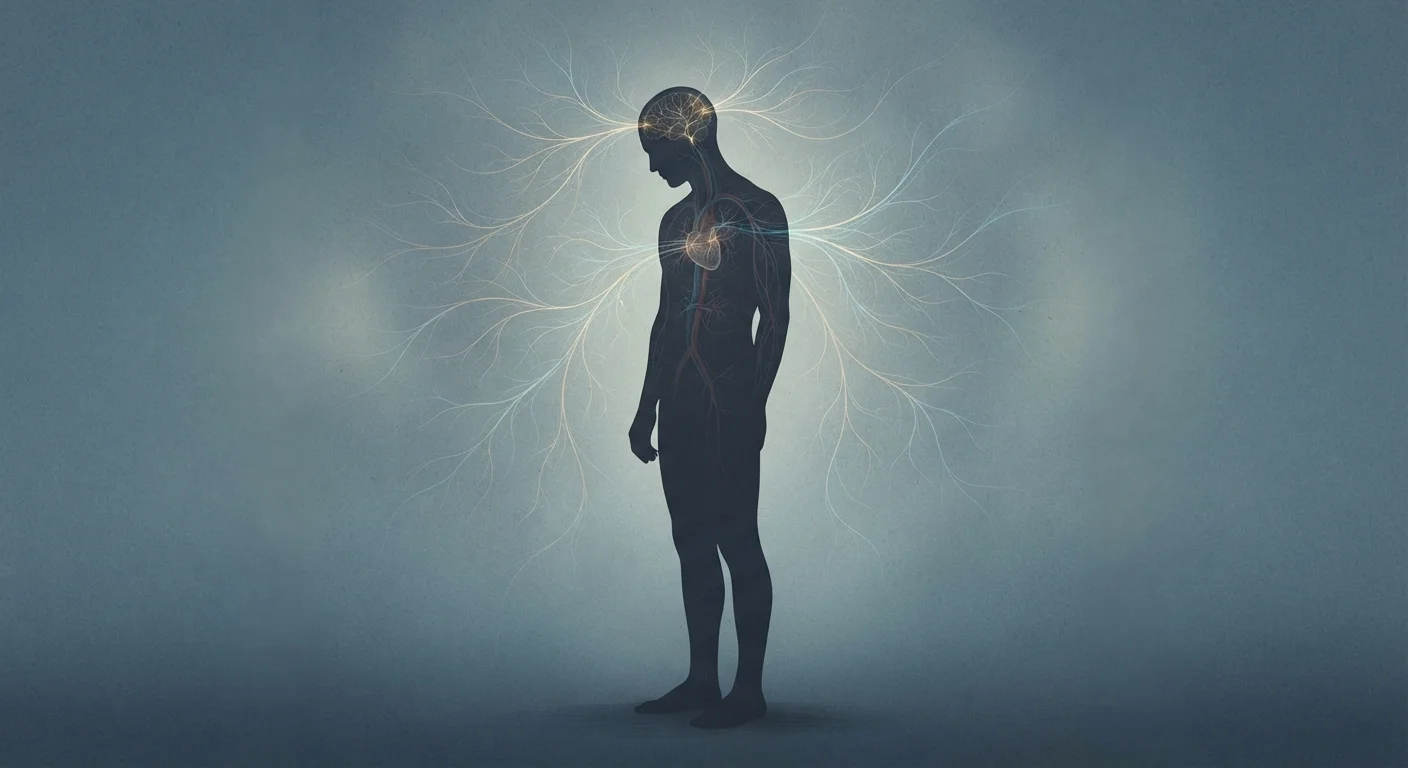
When the brain perceives a threat — real or imagined — the hypothalamus triggers the release of adrenaline and cortisol through a cascade involving the adrenal glands. Heart rate accelerates, breathing quickens, blood is redirected to muscles, and digestion slows. This is the fight-or-flight response, and in short bursts, it is protective and adaptive.
The problem arises when this system stays switched on. Modern stressors — financial pressure, relationship conflict, work demands — rarely resolve with a physical response. The body prepares to sprint from a threat that never physically appears, and without a natural discharge, the hormonal activation lingers.
Stress vs. Anxiety: An Important Distinction
Stress and anxiety are related but distinct. Stress typically has an identifiable external cause and tends to resolve when the situation changes. Anxiety persists even without a clear external trigger and may require specific clinical support. If you are uncertain which you are experiencing, a mental health professional can help clarify and guide appropriate care.
The autonomic nervous system has two complementary branches: the sympathetic (fight-or-flight) and the parasympathetic (rest-and-digest). Chronic stress keeps the sympathetic branch dominant, preventing the recovery that the parasympathetic branch provides. This imbalance is at the root of most stress-related health consequences.
The Physiological Toll of Prolonged Cortisol Exposure
Cortisol is essential in measured doses — it regulates metabolism, reduces inflammation, and sharpens focus in emergencies. But chronically elevated cortisol disrupts nearly every major body system.
77%
Adults reporting physical symptoms of stress
According to the American Psychological Association's Stress in America survey, a large majority of U.S. adults report experiencing physical symptoms they attribute to stress.
2–3×
Increased cardiovascular risk under chronic stress
Research published in peer-reviewed cardiology literature has found that individuals with high chronic stress levels face a substantially elevated risk of cardiovascular events compared to low-stress peers.
Up to 20%
Hippocampal volume reduction in chronic stress
Neuroimaging studies have documented measurable reductions in hippocampal volume associated with prolonged cortisol exposure, according to research in psychoneuroendocrinology.
- Cardiovascular system: Sustained cortisol raises blood pressure and promotes arterial inflammation, contributing to long-term cardiovascular risk.
- Immune system: Cortisol suppresses immune activity over time, making chronic stress a recognized risk factor for increased susceptibility to illness.
- Digestive system: Stress disrupts gut motility and microbiome balance, commonly linked to irritable bowel symptoms and gastrointestinal discomfort.
- Metabolic function: Elevated cortisol promotes fat storage, particularly abdominal fat, and interferes with insulin sensitivity.
These are not minor inconveniences. They represent measurable changes in how the body operates — which is why researchers increasingly view unmanaged chronic stress as a significant public health concern.
What Chronic Stress Does to the Brain
The brain is uniquely vulnerable to long-term stress because it is both the origin of the stress response and one of its primary targets. Neuroscience research has identified several structural changes associated with chronic stress exposure.
“The mind and body are not separate. What affects one affects the other. Chronic stress is not a psychological weakness — it is a physiological state with real, measurable consequences for the entire organism.”
— Robert Sapolsky, Professor of Biology and Neuroscience, Stanford University, and author of research on stress physiology
The hippocampus, critical for learning and memory consolidation, is sensitive to cortisol and can lose volume under sustained exposure. The prefrontal cortex, which governs rational decision-making and impulse control, also shows reduced activity. Meanwhile, the amygdala — the brain's threat-detection center — can become hyperactive, causing heightened anxiety and emotional reactivity.
This combination helps explain why people under chronic stress often report difficulty concentrating, poor decision-making, and a sense of being emotionally overwhelmed. The brain is, quite literally, being shaped by its stress load. Some of this is potentially reversible with sustained stress reduction and appropriate support — but it underscores why early intervention matters.
Certain everyday patterns can make this worse without people realizing it. See how common daily habits quietly undermine mental health for more on this connection.
Evidence-Informed Strategies for Daily Stress Management
Reducing chronic stress is not about eliminating all tension — some stress is unavoidable and even motivating. The goal is to prevent the nervous system from remaining in a state of sustained activation. Several approaches have meaningful scientific support:
Start Small With Stress-Reduction Habits
You do not need to overhaul your entire routine to begin reducing your chronic stress load. Research supports the value of even brief interventions — five minutes of controlled breathing or a 20-minute daily walk can meaningfully shift nervous system balance over time. Consistency matters far more than intensity. Build one manageable habit before adding another.
- Consistent physical movement: Regular moderate exercise promotes the release of endorphins and helps metabolize excess cortisol. Even daily walks have measurable effects on stress hormone regulation.
- Diaphragmatic breathing and mindfulness: Slow, controlled breathing activates the parasympathetic nervous system directly. Short daily mindfulness practices have shown reductions in cortisol and self-reported stress in clinical settings.
- Sleep prioritization: The brain clears stress-related metabolic waste during deep sleep. Chronic sleep deprivation dramatically worsens stress reactivity.
- Environmental adjustments: Reducing avoidable stressors matters too. Research has found that physical environments influence psychological state — for example, clutter is a known contributor to ambient stress and mental fatigue.
No single strategy eliminates chronic stress. A consistent combination of habits — supported by professional guidance when needed — produces the most durable results.
This article is for general informational and educational purposes only and does not constitute medical advice. If you are experiencing symptoms that may be related to chronic stress, please consult a qualified healthcare professional.