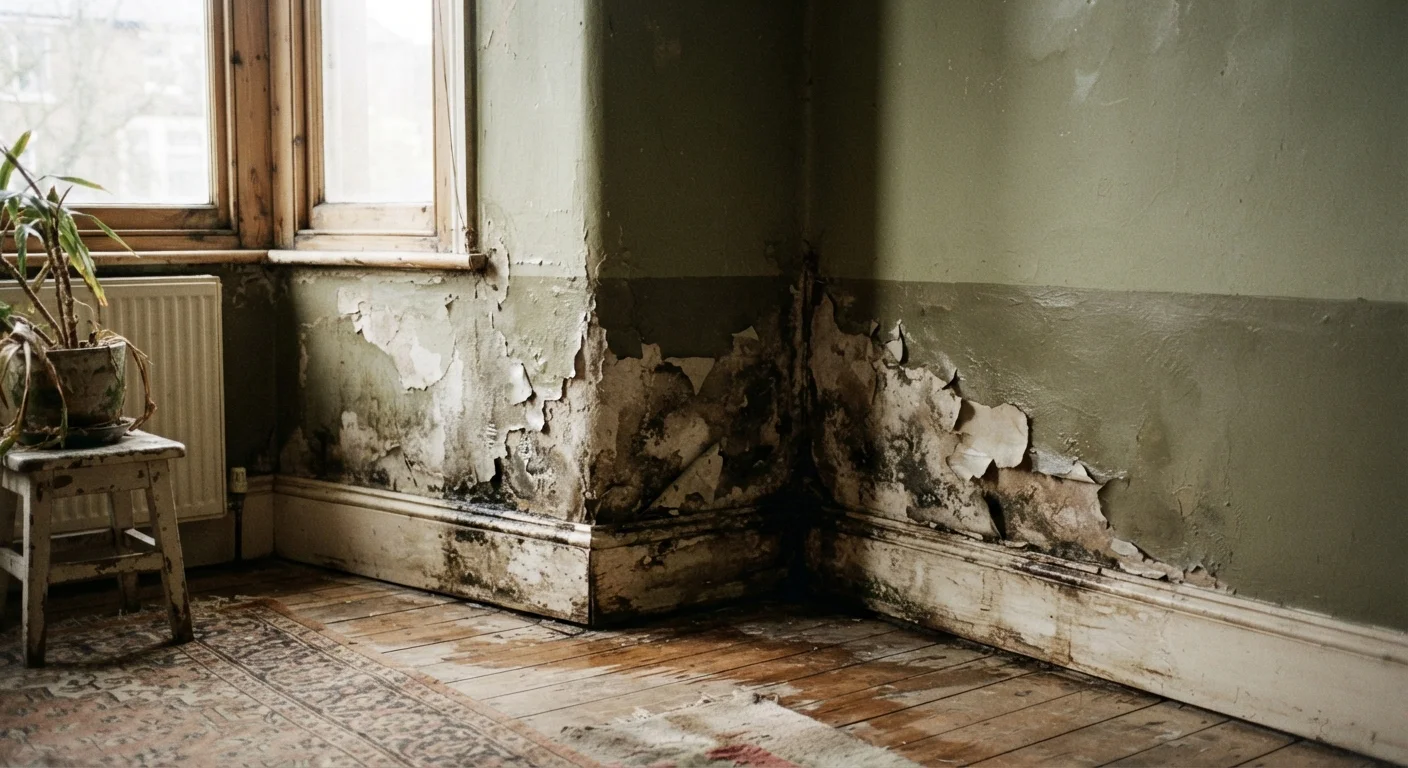
Condensation: The Most Common Culprit
Condensation forms when warm, moisture-laden air contacts a cold surface and releases its water content. It is the most widespread form of damp in US homes, particularly in tightly sealed modern buildings with limited natural airflow.
Look for condensation on window glass, in the corners of rooms where cold air pools, and on exterior-facing walls — especially in bathrooms, kitchens, and bedrooms. A key indicator is that it tends to worsen in winter and improve in warmer months.
Left unmanaged, surface condensation feeds black mold growth (Cladosporium and Aspergillus species are common). The good news: condensation is usually the most manageable damp type.
Control Indoor Humidity First
Before investing in any damp treatment, measure indoor relative humidity with an inexpensive hygrometer. Aim to keep living spaces between 40–60% RH. If humidity consistently runs higher, improving ventilation or running a dehumidifier is the right first step — and it costs a fraction of professional remediation.
Remedies to consider: Improve mechanical ventilation with extractor fans rated for the room size, use a dehumidifier to reduce indoor humidity, ensure dryers vent outside, and open windows briefly when cooking or showering. Insulating cold walls and upgrading to double or triple glazing reduces the cold surface area where condensation forms.
Rising Damp: Understanding Capillary Action
Rising damp occurs when groundwater is drawn upward through the tiny pores of masonry — bricks, mortar, and stone — by capillary action. It is far less common than condensation but is frequently over-diagnosed, sometimes by contractors with a financial interest in remediation work.
The telltale signs are specific and distinct from other damp types:
- A horizontal tide mark on the wall, typically between 0.5 and 1 meter from floor level
- White powdery deposits on the wall surface (called efflorescence), caused by salts carried up with the water
- Damage that persists year-round regardless of rainfall or indoor humidity
- Plaster that crumbles or blows away from the wall face
Rising Damp Is Often Over-Diagnosed
Independent building surveyors and academic research have noted that rising damp is frequently diagnosed in cases that are actually condensation or penetrating damp. Some damp-proofing contractors have a financial incentive to recommend costly DPC installation. Seek a survey from a party with no financial stake in the recommended remedy before proceeding.
Modern homes built after roughly the 1870s typically include a physical damp-proof course — a layer of slate, bitumen, or plastic — embedded in the masonry to block rising moisture. When rising damp is confirmed, the DPC may be bridged, damaged, or absent. Remedies include installing a new chemical-injected DPC or a physical membrane, alongside replastering with salt-resistant render. Always obtain an independent survey before committing to remediation.
Penetrating Damp: Water Coming In Sideways
Penetrating damp describes moisture that enters the building envelope horizontally — through walls, roofs, or floors — driven by rain or plumbing defects rather than ground moisture. Unlike rising damp, it can appear at any height.
Common entry points include cracked or porous render, failed pointing in brickwork, blocked or leaking gutters, defective window or door seals, and damaged roofing or flashing. The pattern of damage is usually directly related to the location of the defect and worsens noticeably after heavy rain.
Diagnosing vs. treating: Before any repair, trace the water to its source externally. Repainting internal walls or applying sealant to the inside face treats a symptom, not the cause. External repairs — repointing mortar joints, clearing gutters, replacing flashing, or applying a breathable masonry sealant to porous brick — address the actual entry point.
1 in 5
US homes affected by some form of damp or moisture intrusion
The EPA estimates that excess moisture is among the most common indoor environmental concerns in residential buildings.
~1 m
Maximum typical height of true rising damp
Building science consensus holds that capillary action in masonry is physically limited to roughly one meter above the damp-proof course level.
Up to 30%
Reduction in heating efficiency from damp walls
Saturated masonry conducts heat significantly faster than dry masonry, according to general building physics principles widely cited in construction guidance.
Putting It Together: A Simple Diagnostic Approach
Because treatments differ completely, spending a few minutes on diagnosis before reaching for a product or calling a contractor is genuinely worthwhile.
- Check the location. Near windows and room corners in winter → likely condensation. Low on external walls with tide marks → investigate rising damp. Patches linked to a specific external feature, worsening with rain → penetrating damp.
- Check the timing. Condensation correlates with cold weather and daily activities. Penetrating damp follows rainfall. Rising damp is consistent year-round.
- Check for salts. White crystalline deposits strongly suggest rising or penetrating damp carrying salts from the masonry. Condensation does not deposit salts.
“Damp is one of the most misunderstood problems in housing. The key is always to find where the water is coming from — not just where it ends up. Treating the symptom without fixing the source is a guaranteed way to spend money twice.”
— Jeff Howell, Chartered builder and construction columnist specializing in building defects
If in any doubt — particularly before investing in a chemical DPC or internal wall insulation — commission an independent damp survey from a surveyor who does not profit from the remediation work they recommend.