Material Overview: What You're Actually Choosing Between
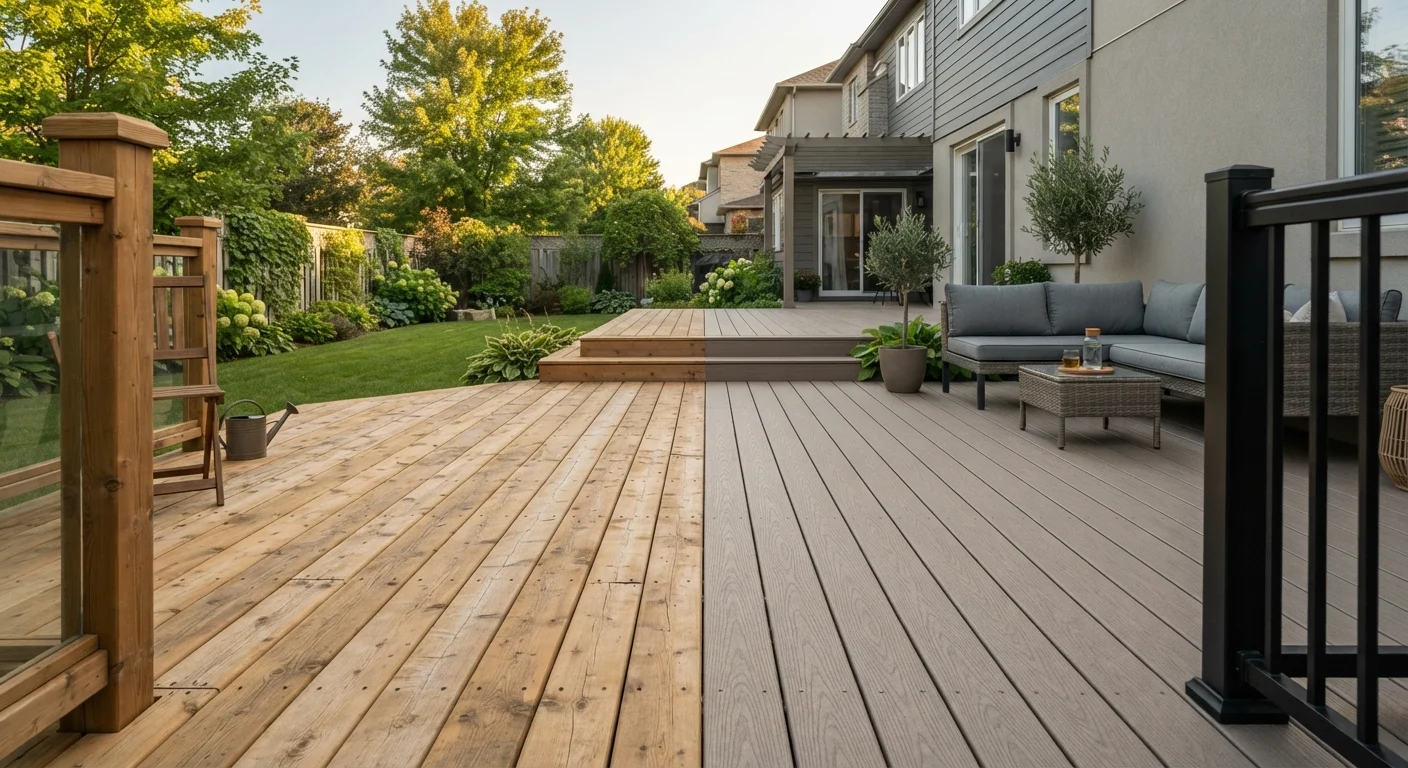
Timber decking uses solid or engineered wood — commonly pressure-treated pine, cedar, or redwood — cut into planks and installed over a structural frame. The appeal is straightforward: it's a natural product with genuine grain texture and a warmth that manufactured materials work hard to replicate.
Composite decking is manufactured from a blend of wood fibers and recycled plastic, typically with a protective outer cap layer. It's engineered to resist the vulnerabilities that affect real wood — moisture absorption, UV fading, and insect damage — while mimicking the look of timber to varying degrees of success depending on the product type.
Understanding what each material is made of helps clarify why they behave so differently over time.
| Timber Decking | Composite Decking | |
|---|---|---|
| Upfront Cost | Lower per square foot | Higher per square foot |
| Maintenance Frequency | High — annual to biannual | Low — occasional cleaning |
| Typical Lifespan | 20–30 years with upkeep | 25–30+ years well-maintained |
| Splinter Risk | Yes, especially aging boards | Minimal to none |
| Repairability | Easy — boards replaced individually | Harder to match and replace |
| Heat Retention | Stays cooler in sun | Can get hot in direct sun |
| Natural Appearance | Genuine wood grain and texture | Varies — high-end looks realistic |
Durability: How Each Material Holds Up Over Time
Timber's durability depends heavily on species and treatment. Pressure-treated pine resists rot and insects chemically, while naturally durable species like cedar and redwood rely on their own oils. Without consistent sealing, even quality timber can crack, warp, or develop surface mold within a few seasons — particularly in regions with dramatic moisture swings.
Composite decking is engineered for dimensional stability. Capped composite boards resist moisture, won't splinter, and generally hold their color far longer than painted or stained timber. However, early generations of uncapped composite did absorb moisture and develop mold; it's worth verifying any product's cap layer specification before assuming modern performance.
Don't Overlook Substructure Maintenance
The decking surface often gets all the attention, but the structural frame beneath — joists, beams, and posts — is just as vulnerable to moisture and rot. Regardless of which surface material you choose, inspect the substructure annually for signs of deterioration. If you suspect structural compromise, consult a licensed contractor before walking on the deck regularly.
In direct sun, composite surfaces can retain more heat than timber, which may affect comfort in hot climates. Timber, especially lighter-colored species, tends to stay cooler underfoot.
Maintenance Requirements: What Ownership Actually Looks Like
Timber decks require annual inspection and typically need cleaning, sanding, and resealing or restaining every one to three years depending on exposure. Failing to keep up with this schedule shortens the deck's life noticeably. Boards that crack or splinter can be individually replaced — a genuine advantage when repairs are needed.
Composite decking largely eliminates seasonal refinishing. Routine cleaning with soap and water, and occasional rinsing for debris between boards, is typically sufficient. The trade-off is that composite boards are harder to replace individually if damaged, and some surface stains from grease or certain tree saps can be difficult to remove fully.
Keep Gaps Clear to Prevent Moisture Problems
For both timber and composite decking, routinely clearing debris from between boards is one of the most effective things you can do to extend the deck's life. Trapped leaves, dirt, and moisture accelerate decay in timber and can promote mold growth even on composite surfaces. A putty knife or stiff brush works well for this seasonal task.
Long-Term Cost Considerations
Timber decking generally costs less per square foot at installation. However, factoring in sealants, stains, tools, and labor (whether hired or your own time) over a 10–20 year period narrows or eliminates that gap. In some scenarios, the cumulative maintenance expense of timber exceeds the cost difference at purchase.
Composite decking carries a higher upfront price, but its lower annual maintenance burden means overall lifecycle costs can be competitive — and potentially lower — over 15–25 years. This calculation shifts depending on whether you perform maintenance yourself or hire out the work.
1–3 years
Timber resealing interval
Most timber decking professionals recommend resealing or restaining every one to three years depending on climate and sun exposure.
25–30 years
Composite deck expected lifespan
Many composite manufacturers design their products to last 25 to 30 years or more with basic routine care.
Both decking types should be factored against the deck's structural frame, fasteners, and any finish work like railings — costs that apply regardless of which surface material you choose.
Installation and Environmental Considerations
Both materials are installed over a similar structural framework, so the basic construction process doesn't vary dramatically. Timber boards are cut and fastened with relative ease, and most experienced DIYers can handle installation with proper planning. Composite boards are similarly workable but require attention to expansion gaps, as they shift more with temperature changes than timber.
From a sustainability standpoint, composite decking made with recycled content keeps plastic out of landfills, though the manufacturing process and mixed materials can complicate recycling at end of life. Responsibly sourced timber — look for certification from recognized forest stewardship programs — represents a renewable material, though harvesting and treatment processes have their own environmental footprint.
Important: Deck construction in most US jurisdictions requires a building permit and inspection, regardless of material. Contact your local building department before beginning any deck project to understand what's required for your specific situation.