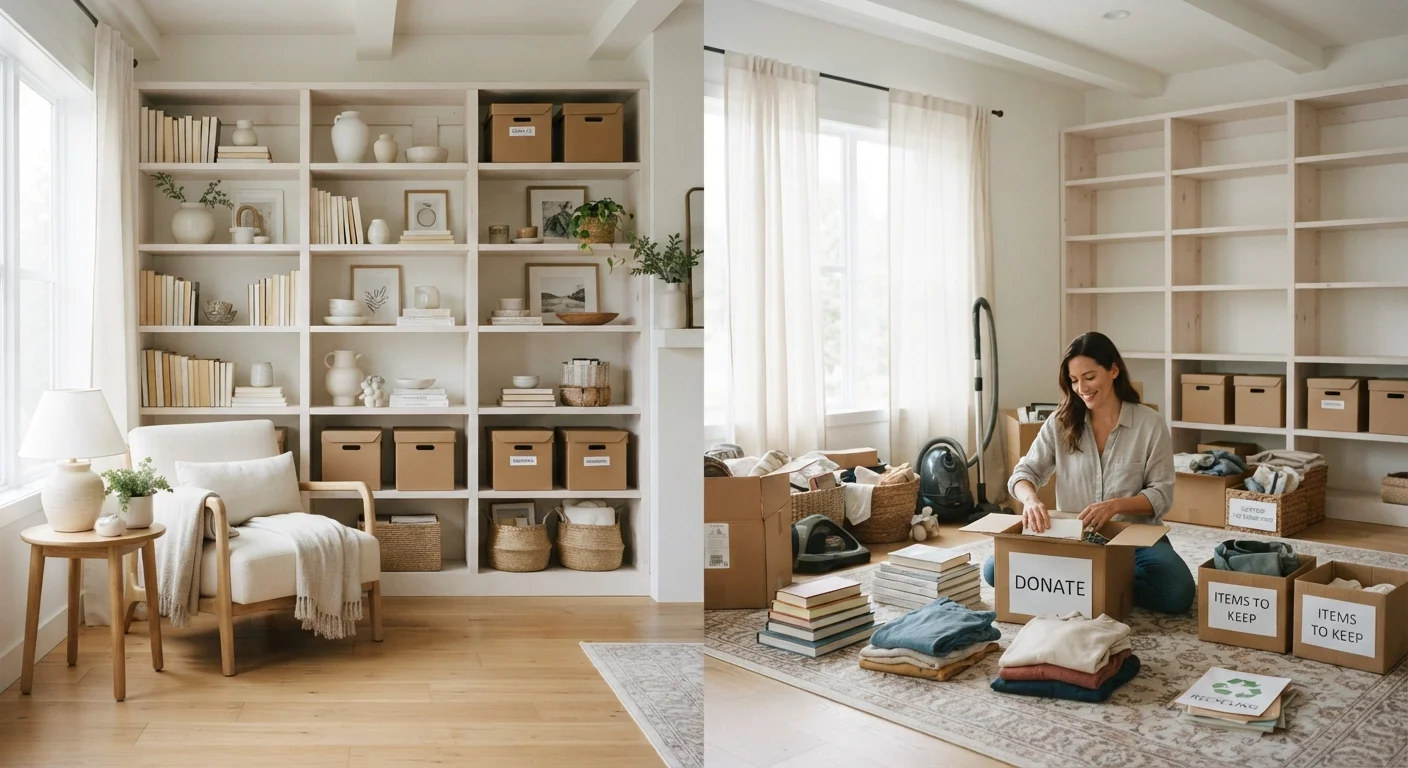
What Each Approach Actually Looks Like in Practice
All-at-once decluttering means setting aside a concentrated block of time — typically a full day or weekend — to sort through every space in your home in one sustained effort. You might work category by category (clothing, then books, then kitchenware) or room by room in rapid succession. The goal is a complete reset before resuming normal life.
Room-by-room decluttering, by contrast, means choosing a single area — a bathroom cabinet, the living room shelves, a bedroom closet — and finishing it fully before moving on. Sessions might last 30 minutes or a few hours, spread across days or weeks. Progress is incremental, but each completed space stays orderly while you work elsewhere.
Both methods involve the same core decisions: keep, donate, discard, or relocate. The difference is pace, pressure, and how much of your home is in transition at any given moment. If you're new to organizing your home, understanding these differences upfront helps you choose a method you'll actually finish.
| Criterion | All-at-Once | Room-by-Room |
|---|---|---|
| Time commitment | Full day or weekend | Short sessions over weeks |
| Disruption to daily life | High — whole home in flux | Low — one space at a time |
| Decision fatigue risk | High after several hours | Lower per session |
| Visible results | Immediate, whole-home | Gradual, room by room |
| Momentum style | Single burst of energy | Repeated small wins |
| Best for | Major resets or life transitions | Busy schedules, first-timers |
| Risk of stalling | Low if weekend is blocked | Higher without a schedule |
The Case for Going All-In at Once
The strongest argument for a whole-home declutter is momentum. When you commit a full day or weekend, you're forced to confront the entire scope of what you own. That visibility matters — it's harder to justify keeping duplicate items when you can literally see three identical spatulas side by side.
An intensive session also eliminates the "I'll finish next weekend" problem. Many room-by-room attempts stall when life intervenes between sessions. A single push gets you to a finished state faster, which can make it easier to establish the maintenance habits that keep a home tidy long term. For more on why that matters, see why organized homes tend to stay that way.
That said, the all-at-once method has a real pitfall: decision fatigue. Research in cognitive psychology consistently shows that the quality of our decisions deteriorates after extended periods of choosing. After hour five of sorting, many people start defaulting to "keep" just to move forward — which undermines the whole effort.
~$10B
Annual US spending on home organization products
Industry estimates suggest Americans spend roughly $10 billion per year on storage and organization products, yet clutter remains a widespread concern.
1 in 4
Americans with a cluttered garage
According to a survey by the National Association of Professional Organizers, roughly one in four American homeowners reports having a garage too cluttered to fit a car.
40%
Of housework eliminated by reducing clutter
Professional organizers commonly estimate that reducing household clutter can cut cleaning time significantly, though individual results vary widely by home size and habits.
The Case for Taking It Room by Room
Room-by-room decluttering works with your energy rather than against it. Finishing a single drawer or closet produces a genuine sense of completion — a psychological reward that motivates the next session. This is particularly relevant if you've ever felt overwhelmed by clutter's mental weight, since smaller wins keep the process from feeling endless.
This method also keeps disruption contained. When you tackle one room at a time, the rest of your home remains functional. Children can still find their belongings. Guests can still use the living room. Life continues while the work gets done.
Emotional Items Deserve Extra Time
Whether you're working all at once or room by room, sentimental objects — photos, inherited items, keepsakes — often slow decision-making considerably. Many organizers suggest setting these aside in a dedicated box to revisit after the rest of the space is sorted. This prevents one emotionally loaded item from derailing an entire session.
The primary risk with the room-by-room approach is losing momentum between sessions. If weeks pass between efforts, clutter can accumulate faster than you're clearing it. A loose schedule — even just naming which room you'll tackle next — helps bridge the gaps. A room-by-room organization checklist can keep you on track.
Whichever Method You Choose, Maintenance Is What Sticks
The most common reason decluttered homes slide back into chaos isn't the method used — it's the absence of a maintenance routine afterward. An intensive weekend reset and a careful room-by-room process both result in a tidier home, but neither outcome is permanent without consistent habits.
Simple practices make the difference: a weekly 15-minute scan of high-traffic surfaces, a one-in-one-out rule for new purchases, and seasonal reassessments of closets and storage areas. Understanding what goes wrong after a big declutter can help you set up the right systems before clutter creeps back.
Think of the decluttering session — whether it's a single weekend or a series of Saturday mornings — as the foundation. The habits you build afterward are what actually keep the house organized.