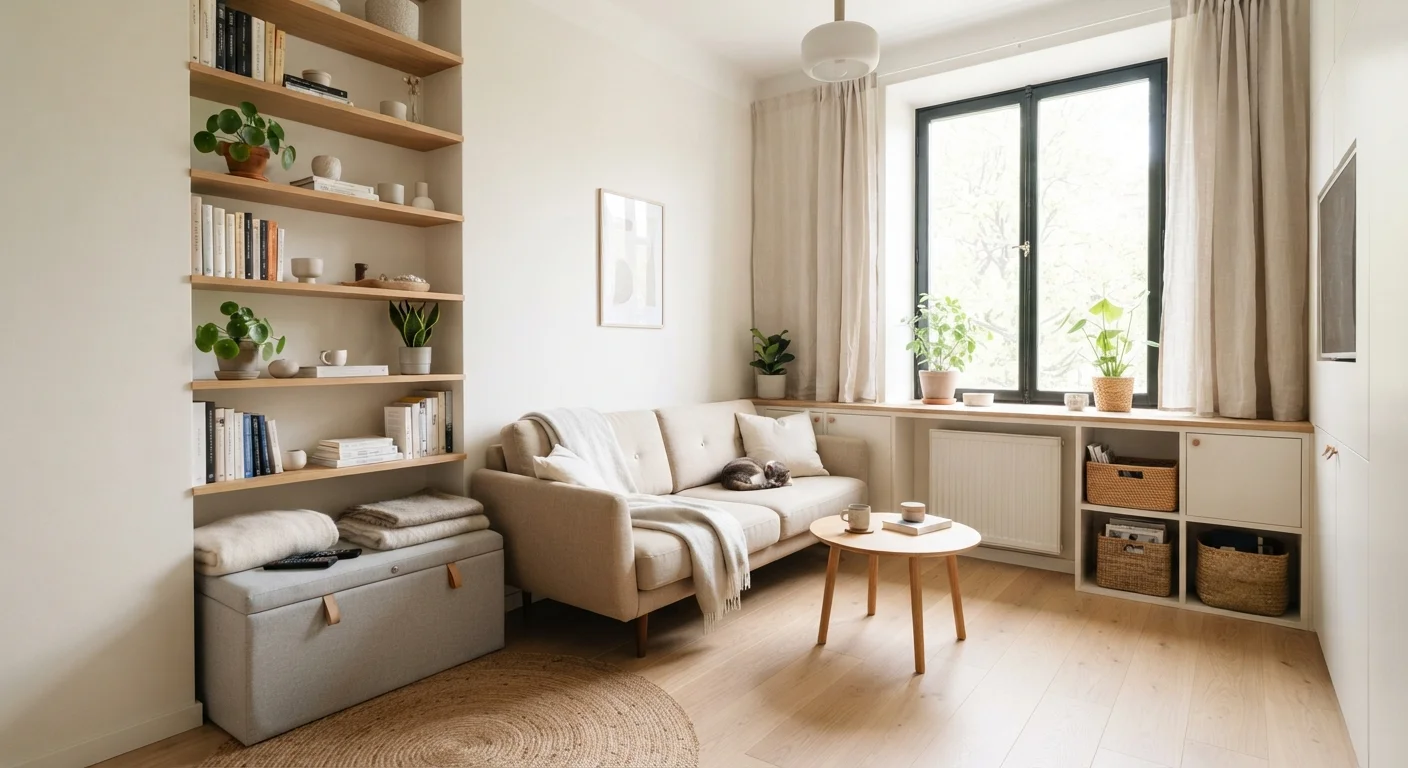
Making Less Space Work Harder
Small homes present a genuine organizational challenge: limited floor area, fewer built-in storage options, and the constant pressure of items with nowhere logical to go. But square footage isn't the only variable in the equation. How deliberately you use the space you have matters far more than how much of it you have.
The strategies below aren't about buying more containers or filling every corner — they're about identifying where usable space already exists and putting it to work. Whether you're in a studio apartment, a modest starter home, or simply a house where every room is doing double duty, these approaches are practical starting points. If you're unsure where to begin, the home organization beginner's guide lays out the core principles clearly.
Start With One Zone, Not the Whole Home
Trying to reorganize every room at once is a reliable path to burnout. Pick a single high-friction area — the entryway, the kitchen counter, or a cluttered closet — and get it fully sorted before moving on. Small wins build momentum and clarify what storage approaches actually work for your habits.
7 Storage Strategies for Compact Homes
Go Vertical With Wall-Mounted Storage
Floor space in a compact home is precious, but walls often go completely unused. Installing shelves above doorways, stacking shelving units to ceiling height, or mounting pegboards in kitchens and entryways immediately multiplies your usable storage without claiming a single square foot of floor.
Floating shelves work especially well in living rooms for books and décor, while wall-mounted racks in bathrooms can hold toiletries and towels. The key is treating every wall as a potential storage surface — even narrow strips between a door and corner can hold a slim vertical shelf unit.
Every unused wall is a storage opportunity waiting to be claimed.
Choose Furniture That Doubles as Storage
In a small home, every piece of furniture should earn its place. Ottomans with interior compartments, bed frames with built-in drawers, dining benches with lift-up seats, and coffee tables with lower shelves all provide hidden storage while performing their primary function.
When shopping for new furniture, prioritize pieces with integrated storage even if they cost slightly more upfront — the functional payoff in a compact space typically outweighs the added expense. Sofa beds and fold-down desks take this concept further, converting a single area for multiple uses across the day.
Multi-purpose furniture earns its keep twice over in a compact home.
Use the Space Under Stairs and Beds
Under-bed and under-stair areas are two of the most consistently wasted zones in small homes. Flat storage bins with lids slide neatly under most bed frames and are ideal for seasonal clothing, extra linens, or rarely used items. Measuring clearance height before buying containers prevents the frustrating discovery that your bins don't fit.
Under-stair space, when accessible, can be converted into open shelving, drawers, a small home office nook, or even a coat closet. This often requires some carpentry work — consult a qualified contractor if structural modifications are involved to ensure the work is done safely and to code.
Under-bed storage alone can reclaim the equivalent of a full closet's worth of space.
Declutter Before You Organize
No storage solution works well if it's filled with items you no longer need. Before investing time or money in new systems, take stock of what you actually use. Items that haven't been touched in a year are strong candidates for donation, recycling, or disposal.
The room-by-room declutter approach tends to feel less overwhelming than a whole-home purge and makes it easier to assess what storage each space genuinely needs once the excess is cleared out. Organizing clutter just moves the problem; removing it solves it.
Organizing clutter just relocates the problem — removing it solves it.
Contain and Label Everything
Open storage without containment quickly becomes visual chaos. Baskets, bins, and drawer dividers group similar items together so everything has a defined home. When each category of item belongs somewhere specific, tidying up becomes a matter of returning things rather than making decisions.
Labels take this one step further, especially in shared households. When everyone knows where something lives — and what belongs there — the system sustains itself with far less effort. This is the foundation behind why some organized homes seem to stay that way naturally. For a deeper look at the habits involved, see why organized homes tend to stay that way.
When every item has a defined home, tidying becomes automatic rather than effortful.
Maximize Kitchen and Bathroom Cabinets With Organizers
The insides of standard cabinets are often poorly used — one flat shelf with wasted vertical space above it. Stackable shelf risers, pull-out drawer inserts, over-the-door organizers, and tension rods (used to separate cutting boards or pan lids vertically) all dramatically increase the usable capacity of existing cabinet space without any permanent modifications.
In bathrooms, over-toilet shelving units and magnetic strips on cabinet doors for small metal items (nail files, bobby pins, tweezers) recover space that typically goes unused. These are low-cost, renter-friendly adjustments that make a noticeable difference in cramped rooms.
A few inexpensive organizers can double the functional capacity of a standard cabinet.
Build a Consistent Routine Around Your Systems
Even the most thoughtfully designed storage setup will deteriorate without a simple maintenance habit. A five-minute daily reset — returning displaced items to their homes before the end of the day — prevents small disorder from compounding into large chaos. Weekly spot-checks of high-traffic zones like entryways, kitchen counters, and bathrooms catch drift before it becomes overwhelming.
If you're new to building these habits or feel uncertain about where to start, the home organization beginner's guide walks through realistic first steps. The goal isn't a perfect home — it's a functional one that's easy to maintain.
A five-minute daily reset prevents small disorder from becoming large chaos.
Renting? Check Before You Mount
Many wall-mounting solutions require drilling into drywall or studs. If you're renting, review your lease and check with your landlord before making permanent changes. Adhesive hooks, tension rods, and freestanding shelving units are strong renter-friendly alternatives that require no drilling and can move with you.
Permits May Be Required for Built-In Work
Converting under-stair space or adding built-in cabinetry may require a permit depending on your local building codes, particularly if it involves electrical work or structural changes. Always check with your local building authority before starting any modification that goes beyond surface-level storage additions.
Keeping Your Systems Working Long-Term
Storage solutions only deliver value if they're maintained. The most common pattern is a thorough reorganization followed by gradual drift back to clutter — not because the systems failed, but because the habits to support them were never established. Understanding what goes wrong after a big declutter can help you avoid repeating the cycle.
For a structured way to audit every room and catch storage gaps before they grow, the room-by-room home organization checklist offers a practical walkthrough. A compact home that's genuinely organized isn't about having less — it's about having what you need, where you need it, consistently.