Why the small stuff adds up faster than you expect
Monthly budgets usually fail not because of one large, reckless purchase — but because of dozens of small, unexamined ones. The $6 coffee, the $3 app upgrade, the $12 delivery fee, the subscription that renewed without notice: individually, none registers as a problem. Collectively, they can account for a substantial portion of discretionary spending without ever feeling like a conscious choice.
The underlying issue is that small, frequent purchases are psychologically underweighted. We notice big expenses because they require deliberate decisions. We don't notice small ones because they don't. Spending More Than You Think explores the research behind this tendency in more depth.
The habits below aren't about eliminating spending — they're about making it more intentional. None requires a strict budget or financial overhaul. Each targets a specific pattern that quietly reshapes what's left at the end of the month.
This is general financial education
The information in this article is intended for general educational purposes and does not constitute personalised financial advice. Everyone's financial situation is different. For guidance tailored to your specific circumstances, consider speaking with a licensed financial adviser or counselor.
Small amounts compound both ways
The same mathematical principle that makes small savings add up also applies to small, repeated overspending. A $5-per-day habit runs to roughly $150 per month and over $1,800 per year — not because any single purchase is large, but because frequency does the work. Awareness of this dynamic is a starting point, not a source of shame.
Track every purchase for one full week
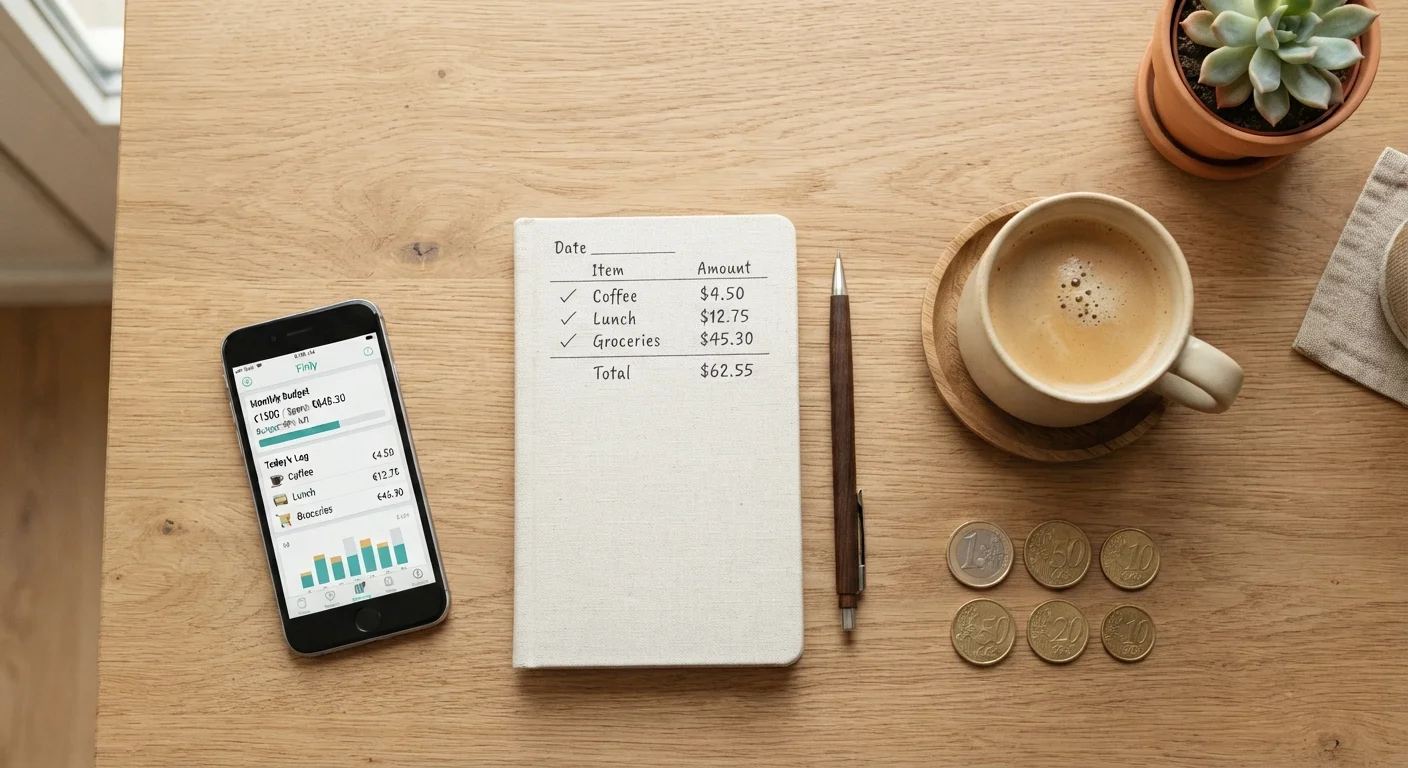
Most people significantly underestimate how much they spend on small, frequent purchases. A coffee, a convenience store snack, a quick app top-up — none feels significant in isolation. But research in behavioral economics consistently shows that frequent low-cost purchases are among the hardest spending categories for people to estimate accurately.
Spending a single week logging every transaction — even just in a notes app — tends to produce surprises. The goal isn't guilt; it's an accurate baseline. You can't adjust what you can't see. Once you have a week of real data, patterns become visible: which categories you overspend in, which days drive the most discretionary outflow, and where the largest gaps sit between your assumptions and reality.
You can't adjust what you can't see — one week of honest tracking changes your baseline entirely.
Introduce a 24-hour pause on non-essential purchases
Impulse purchases are rarely random — they tend to cluster around friction-free payment methods, boredom, stress, or convenience. A simple habit of waiting 24 hours before completing any unplanned, non-essential purchase disrupts the impulse-to-checkout pipeline without eliminating spending entirely.
The practical mechanic is straightforward: add the item to a wish list or note, and revisit it the following day. Many purchases simply won't survive the wait. Those that do are more likely to reflect genuine preference rather than momentary appeal. Over a month, this single habit can noticeably reduce discretionary spending without requiring a strict budget or spending rules.
Most impulse purchases don't survive a 24-hour wait — that's the point.
Audit subscriptions on a regular schedule
Subscription services are designed to be forgettable — small recurring charges that rarely trigger a conscious decision to continue. Streaming platforms, fitness apps, cloud storage tiers, news sites, and software trials all accumulate quietly. According to various consumer surveys, the average household underestimates its monthly subscription spend by a significant margin.
Setting a recurring calendar reminder — quarterly works well for most people — to review all active subscriptions takes under 20 minutes but can yield meaningful monthly savings. The key questions: Is this actively used? Would I sign up for it again today at this price? If either answer is no, cancellation is straightforward. For a deeper look at how forgotten recurring charges add up, see Subscriptions You Forgot You Had — and What to Do About Them.
A 20-minute quarterly subscription audit often uncovers more savings than a week of coupon-hunting.
Shift convenience spending to planned preparation
A meaningful share of everyday discretionary spending is driven not by preference but by lack of preparation. Buying lunch out every workday, grabbing convenience store drinks because there's nothing at home, or ordering delivery because meal planning didn't happen — these are habit-gaps rather than genuine choices.
The fix isn't necessarily cooking elaborate meals or packing lunches every day. It's identifying your two or three highest-frequency convenience purchases and building a lighter preparation habit around each one. Keeping a reusable water bottle filled, preparing two or three lunches per week instead of five, or batch-cooking one weekend meal to stretch across several dinners are modest changes that compound over a full month. For ideas on managing food habits within a time-constrained routine, Eating Well on a Busy Schedule offers practical framing.
Most convenience spending is a preparation gap, not a genuine preference — small prep habits close that gap.
Automate a small savings transfer on payday
The most reliable way to save consistently isn't willpower — it's removing the decision entirely. Scheduling an automatic transfer to a separate savings account on the day income arrives means the money moves before it can be spent. Even a modest fixed amount builds a habit, a buffer, and eventually a more substantial reserve.
The size of the transfer matters less than its consistency and automaticity. Starting with an amount small enough to be genuinely painless — even $10 or $25 per pay period — establishes the structure. It can be adjusted upward as spending patterns improve. For a fuller look at how this approach works in practice, Automating Your Savings walks through the mechanics clearly.
Automation removes the willpower equation — saving happens before you have a chance to spend the money.
Do a monthly five-minute budget review
Budgets drift silently. A price increase here, a new recurring charge there, a gradual uptick in one category — without a regular review, these shifts go unnoticed until the end-of-month balance is smaller than expected. A brief monthly check-in — five to ten minutes reviewing last month's transactions against your rough expectations — catches drift before it compounds.
This doesn't require detailed spreadsheets. A simple comparison of actual bank or card totals against your anticipated categories is enough to flag anything worth addressing. The Monthly Budget Health Check offers a structured checklist if you want a consistent format to follow each month.
A five-minute monthly review catches spending drift before it quietly erodes a month's financial progress.
Building these habits into your routine
The common thread across all six habits is low friction. None requires a major lifestyle change or a sophisticated financial system — they work because they interrupt automatic behavior with a small, deliberate pause or process.
Start with one habit, not five
Trying to implement multiple changes at once tends to reduce follow-through on all of them. Pick the single habit on this list that addresses your largest known spending gap, and give it four weeks before adding anything else. Consistency with one habit beats partial effort across many.
If you want to understand the broader patterns that erode savings over time — not just daily spending, but subscription creep, reactive purchases, and skipped reviews — Habits That Quietly Erode Savings covers the territory well. And if your monthly budget needs a structural foundation before these habits can really take hold, Building Your First Monthly Budget from Scratch is a practical starting point.
This article is for general informational and educational purposes only and does not constitute personalised financial advice. Please consult a qualified financial professional for guidance specific to your situation.