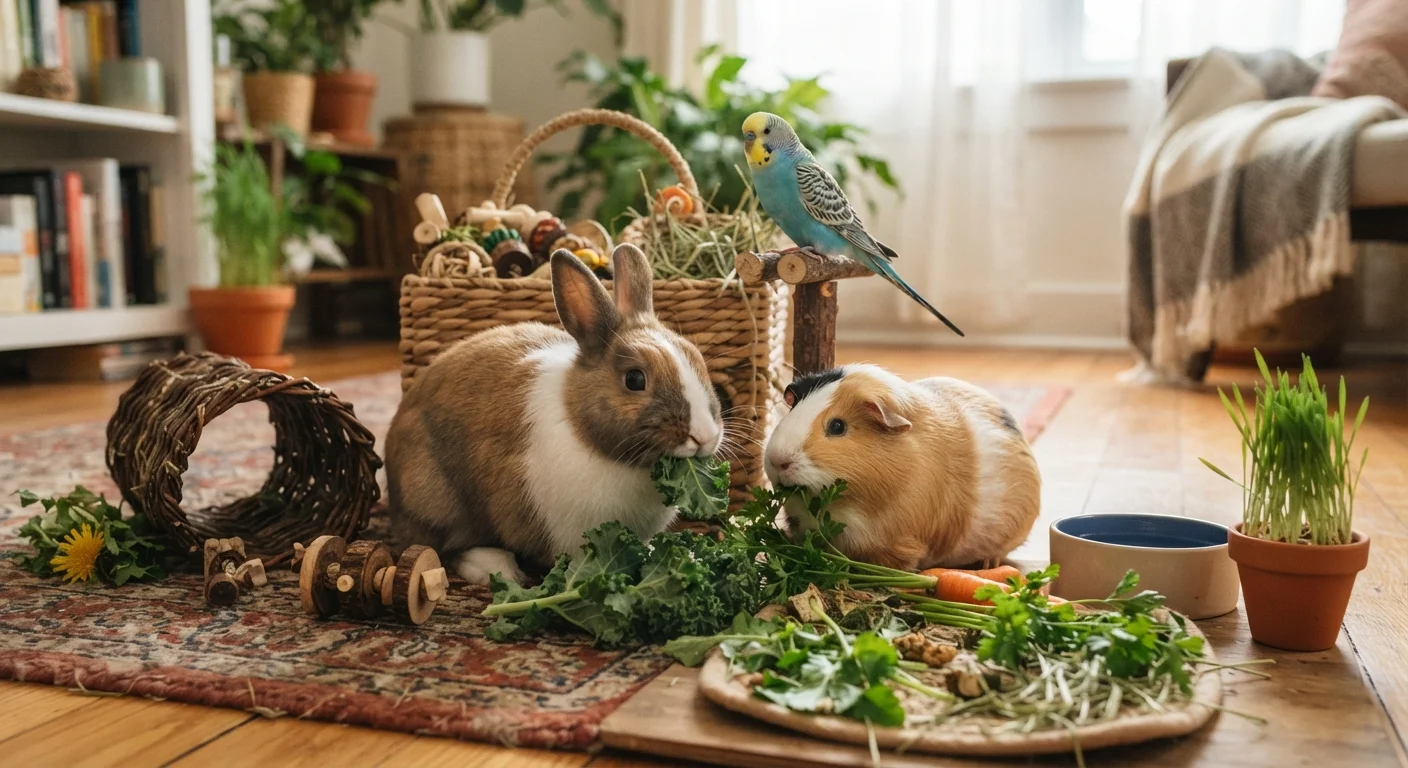
Why Small Pet Myths Are Particularly Costly
Small animals — hamsters, guinea pigs, rabbits, budgies, and similar species — are often marketed as convenient, fuss-free pets. That framing comes with consequences. When owners act on inaccurate expectations, the animal typically bears the cost: inadequate housing, poor nutrition, missed illness, and insufficient companionship. Many of these misconceptions are reinforced by outdated husbandry advice, undersized commercial products, and the simple assumption that 'small' means 'simple.'
The good news is that most of these myths are easy to correct once you know what accurate care actually looks like. The pairs below address the most common — and most consequential — misconceptions circulating among small-pet owners today.
Myth
Hamsters are perfect starter pets because they're easy to care for and need very little attention.
Fact
Hamsters have complex needs — including large enclosures, deep substrate for burrowing, and nightly enrichment — that require genuine daily commitment.
The 'easy starter pet' label has done hamsters a disservice for decades. In the wild, hamsters travel several miles each night foraging, digging extensive burrow systems, and engaging in solitary territorial behaviour. Replicating even a fraction of this in captivity requires a large enclosure (many animal welfare organisations suggest a minimum footprint of 775 square inches of floor space), several inches of burrowing substrate, and a sufficiently large exercise wheel — typically 10–12 inches in diameter for Syrian hamsters.
Beyond housing, hamsters are primarily nocturnal and can become stressed when woken repeatedly during the day. They also require fresh food, daily cage checks, and handling to stay comfortable with human contact. If you're setting up a proper habitat, our hamster habitat guide covers the essentials.
Myth
Birds are fine living alone — they don't really need companionship.
Fact
Most common pet bird species are highly social flock animals that can develop psychological and behavioural problems when kept in prolonged social isolation.
Budgerigars, cockatiels, and many other popular pet birds are naturally flock-living species. In the absence of avian companionship, they rely heavily on their human caretakers for social stimulation. When that interaction is insufficient — or when a bird spends many hours alone — it can lead to feather destructive behaviour, repetitive stereotypic movements, excessive vocalisation, and chronic stress.
This doesn't mean every single bird must have a bird companion, but it does mean owners need to realistically assess how much time they can invest in daily, meaningful interaction. Some species, like budgerigars, often thrive better in bonded pairs. Recognising the signs of stress in small animals can help owners catch problems early.
Myth
Guinea pigs and rabbits make great cage-mates because they're similar-sized animals.
Fact
Guinea pigs and rabbits should not be housed together — they have different dietary needs, communication styles, and rabbits can physically injure guinea pigs.
This pairing is common but carries real risks. Rabbits communicate through body language that guinea pigs do not naturally understand, which can result in rabbits kicking or mounting guinea pigs with enough force to cause serious injury, including spinal damage. Their nutritional requirements also differ significantly: rabbits do not need the vitamin C that guinea pigs require, and the different diets can be difficult to manage in a shared space.
Both species are social and do benefit from same-species companions. If you're weighing which species better fits your household, our comparison of guinea pigs vs. rabbits can help you decide.
Myth
Small pets don't get sick often, and when they do, it usually resolves on its own.
Fact
Small animals are prone to conditions that progress quickly and are skilled at masking symptoms — by the time illness is obvious, it may already be advanced.
As prey animals, rabbits, guinea pigs, hamsters, and birds instinctively suppress visible signs of illness. By the time an owner notices something is wrong, the animal may have been unwell for days. Conditions such as gastrointestinal stasis in rabbits and respiratory infections in guinea pigs can deteriorate rapidly without treatment.
Routine check-ups with a veterinarian experienced in exotic or small animals are strongly recommended — not just reactive visits when something looks wrong. Early detection is especially important for dental disease, which is very common in rabbits and guinea pigs and not visible without examination. Annual wellness visits give your vet a baseline to detect changes over time.
Myth
A small cage is fine for small animals — they don't need much space.
Fact
Enclosure size has a direct impact on physical health and psychological wellbeing; most commercially sold small-pet cages are widely considered too small by current animal welfare standards.
The enclosures sold specifically as 'rabbit hutches' or 'hamster cages' in many pet stores are often far below the space guidelines recommended by veterinary and animal welfare organisations. Rabbits, for example, need sufficient room to perform three full hops in a row and to stand fully upright without their ears touching the ceiling. Insufficient space restricts natural movement, contributes to muscle atrophy, dental issues, and frustration-related behaviours.
Owners preparing to bring a small animal home should research species-specific space requirements from reputable sources before purchasing housing. Our guide to bringing a small pet home outlines what to prepare in advance.
What Good Small-Pet Care Actually Looks Like
Dispelling myths is only half the equation. Understanding what small pets genuinely need — space, species-appropriate diet, social interaction, and proactive veterinary attention — gives owners a practical framework to work from.
~6 miles
Distance wild hamsters travel nightly
Behavioural research on Syrian hamsters indicates they can cover several miles per night foraging — highlighting the enrichment gap in typical captive housing.
~7 years
Average guinea pig lifespan with good care
Guinea pigs commonly live 5–7 years under appropriate conditions, meaning they represent a multi-year commitment many first-time owners underestimate.
90%+
Of rabbit dental disease cases caught only on examination
Dental problems are among the most common health issues in pet rabbits and are frequently invisible externally, reinforcing the case for regular vet check-ups.
Diet is one area where misinformation causes measurable harm. All-seed diets for birds, for instance, are energy-dense but nutritionally incomplete.
Seed-Only Diets Can Be Dangerous for Birds
All-seed diets are energy-dense but nutritionally incomplete, and birds that eat only seeds over time are at significantly higher risk of vitamin A deficiency and fatty liver disease. Veterinary avian guidelines recommend pellets as the dietary foundation, supplemented with fresh vegetables. If your bird currently eats seeds only, transition gradually and consult an avian vet for guidance.
Owners who approach small-pet care with accurate expectations tend to have healthier, longer-lived animals. If you're also curious about how similar misconceptions affect cat ownership, our article on cat nutrition myths covers parallel territory.
Small Pets Still Need Veterinary Care
Many owners assume small animals rarely need a vet, but rabbits, guinea pigs, and birds are prey species that instinctively hide illness until it becomes serious. Finding an exotic-animal veterinarian before your pet shows symptoms is one of the most important steps you can take as a new owner. See our guide to veterinary care for small animals for what to watch for.
This article is for general informational purposes only and does not constitute veterinary advice. Always consult a qualified veterinarian experienced with your specific species for guidance on health, diet, and care.