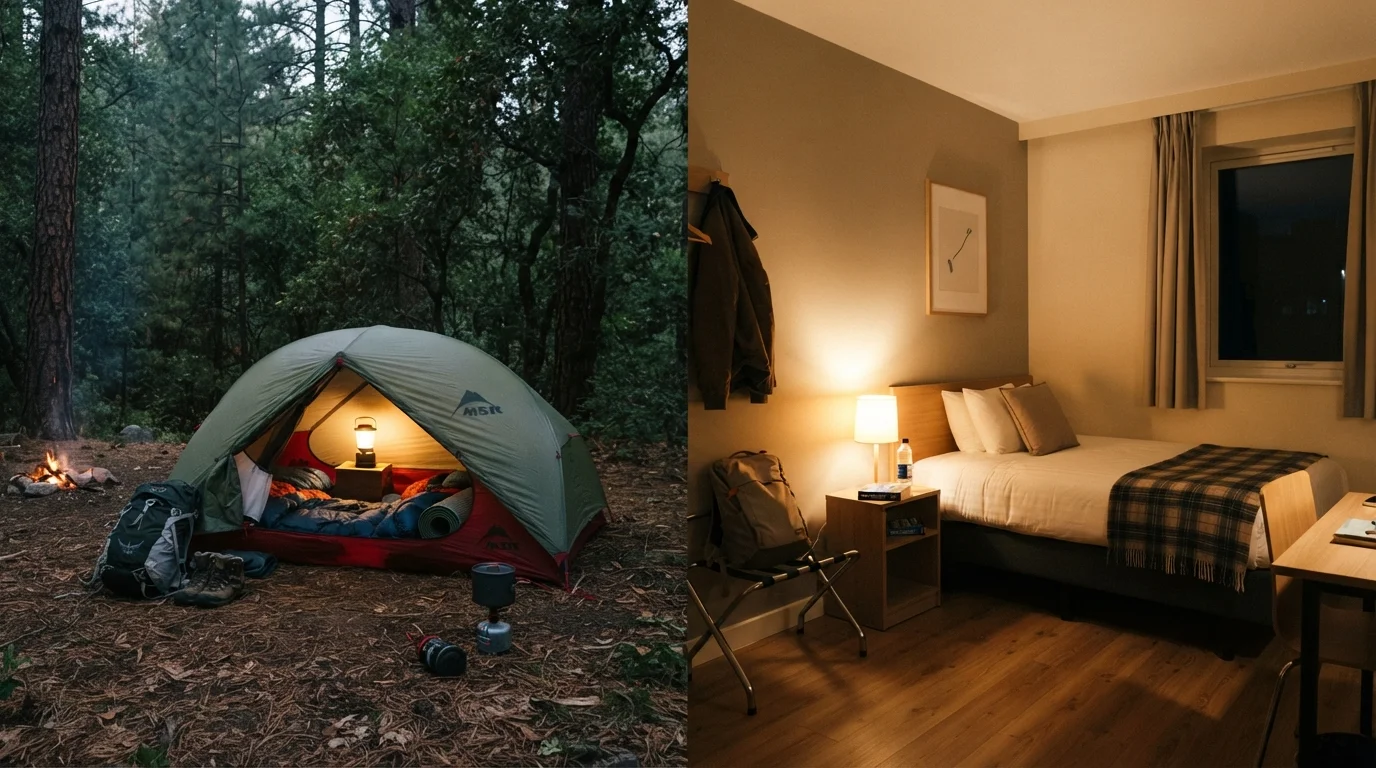
The Real Cost Comparison: What You're Actually Paying
The numbers look simple at first glance: a developed campsite in a US national forest might run $20–$35 per night, while a budget hotel in the same region could cost $70–$110. That gap is real — but it's rarely the whole story.
Camping costs layer on top of each other. Reservation platform fees, fire permit fees in some Western states, and the cost of consumables (camp fuel, ice, biodegradable soap) nibble at your savings. If you're renting or buying a tent, sleeping bags, and a camp stove for the first time, you could easily spend several hundred dollars before your first night under the stars.
Budget hotels carry their own surprises. Parking fees at urban properties can add $15–$30 per night. Some advertise a low base rate but apply mandatory resort or facility fees at checkout. Breakfast isn't always included despite what imagery implies — always check the fine print.
For a grounded look at how lodging fits into the broader picture, see our guide to hidden US road trip costs.
| Criterion | Camping | Budget Hotels |
|---|---|---|
| Typical nightly cost | $20–$40 per site | $70–$120 per room |
| Upfront gear investment | Potentially $200–$600+ if buying | None |
| Private bathroom | Rarely (shared facilities) | Yes, in-room |
| Meal prep options | Easy — camp stove, cooler | Limited — no kitchen access |
| Booking lead time needed | Often weeks to months | Days to same-day |
| Climate control | None | A/C and heat standard |
| Suitability for cities | Poor | Excellent |
| Hidden fees risk | Reservation and permit fees | Parking, resort, and facility fees |
Comfort, Convenience, and the Logistics Gap
Comfort is where the two options diverge most sharply. Budget hotels offer a private bathroom, a real bed, climate control, and an electrical outlet — basics that feel significant after a long driving day. Camping offers something harder to quantify: waking up surrounded by trees, stars overhead, and the sounds of nature. Both have genuine appeal, depending on what you're after.
Logistics matter more than most travelers anticipate. Campsite availability at sought-after destinations — think Yosemite Valley or the Smokies — can require reservations four to six months in advance. Budget hotels, by contrast, can often be booked a few days or even hours before arrival, which suits flexible itineraries well.
4–6 months
Advance booking needed for popular campsites
Recreation.gov data consistently shows high-demand sites at national parks selling out within minutes of their booking windows opening.
$30–$50/day
Estimated food savings when camping with a stove
Cooking your own camp meals instead of dining out can meaningfully reduce daily food spend on multi-night trips, based on general budget travel comparisons.
56 million
Americans who camped at least once in a recent year
According to the Outdoor Foundation's annual participation report, camping remains one of the most popular US outdoor activities.
Meal prep is another major variable. Camping naturally encourages cooking over a camp stove or fire, which cuts food costs considerably. Budget hotels typically offer no kitchen access, pushing travelers toward restaurants or convenience stores — costs that compound quickly across a week-long trip. As we explore in our piece on what budget travel actually means, the cheapest lodging option isn't always the one that produces the lowest total trip cost.
Choosing by Trip Type: Where Each Option Earns Its Place
Neither camping nor budget hotels is universally superior — the right call depends heavily on your specific itinerary.
National park and rural-focused trips are where camping genuinely shines. Campgrounds are embedded in the landscapes you're visiting, wildlife sightings happen from your site, and the savings over several nights are meaningful. Our guide to stretching a budget across national parks goes deeper on campsite booking and park entry strategies.
Urban stopovers and city-based trips tilt decisively toward budget hotels. Campgrounds near major cities are few, often poorly located, and don't offer the access or safety that a centrally-located hotel does.
Family trips require honest self-assessment. Families with young children who have never camped before may find the experience exhausting rather than magical on a first long trip. A family-focused approach might mean mixing one or two camping nights into an otherwise hotel-based trip, letting everyone test their comfort level without overcommitting.
Weather and Season Change the Math
Camping in shoulder season (spring and fall) often means lower campsite fees, fewer crowds, and cooler temperatures — but also greater weather unpredictability. A rainy or unexpectedly cold night can make a budget hotel feel like a bargain in hindsight. Always check seasonal weather patterns for your specific destination before committing to a camping-heavy itinerary.
For those planning longer US road trips, a hybrid strategy — camping in rural stretches, budget hotels in cities — often delivers the best balance of savings and comfort. The pre-trip budget planning checklist can help you map this out before you book anything.