Why Age Matching Matters in National Parks
National parks are not one-size-fits-all destinations. A toddler who loves splashing in tide pools will be miserable on an 8-mile ridge hike, and a curious 10-year-old may find a purely scenic drive underwhelming. Matching the park to your children's ages, stamina, and interests is the single most effective planning move a family can make.
The core variables to weigh are trail difficulty, accessible facilities (restrooms, shade, food), ranger programs, and the type of engagement each park offers — passive (viewing wildlife from a car) versus active (climbing, swimming, scrambling). Understanding what "kid-friendly" actually signals beyond marketing language helps you filter options faster.
Parks by Age Group: A Quick-Reference Guide
Toddlers & Preschoolers (Ages 2–5)
Short legs and short attention spans call for parks with paved or boardwalk paths, strong visitor center programming, and wildlife viewing that doesn't require miles of walking. Everglades National Park (Florida) fits well — its Anhinga Trail is a flat, 0.8-mile boardwalk where kids regularly spot alligators and herons up close. Acadia National Park (Maine) offers carriage roads wide enough for strollers and gentle pond-side walks.
Key criteria: restroom access within short distances, shaded rest areas, and water play opportunities. Avoid high-altitude parks like Rocky Mountain, where altitude sickness is a real concern for small children.
Elementary-Age Kids (Ages 6–10)
This is the sweet spot for national park exploration. Kids in this range can handle 3–5 miles of hiking and are engaged by ranger-led Junior Ranger programs, which are available at nearly every park in the system. Grand Canyon National Park (Arizona) is excellent for this group — the South Rim's paved Rim Trail offers jaw-dropping views without technical terrain, and the Junior Ranger booklet keeps kids focused. Zion National Park (Utah) is another strong fit; the Pa'rus Trail follows the Virgin River and is paved, stroller-accessible, and endlessly interesting.
Tweens & Teens (Ages 11+)
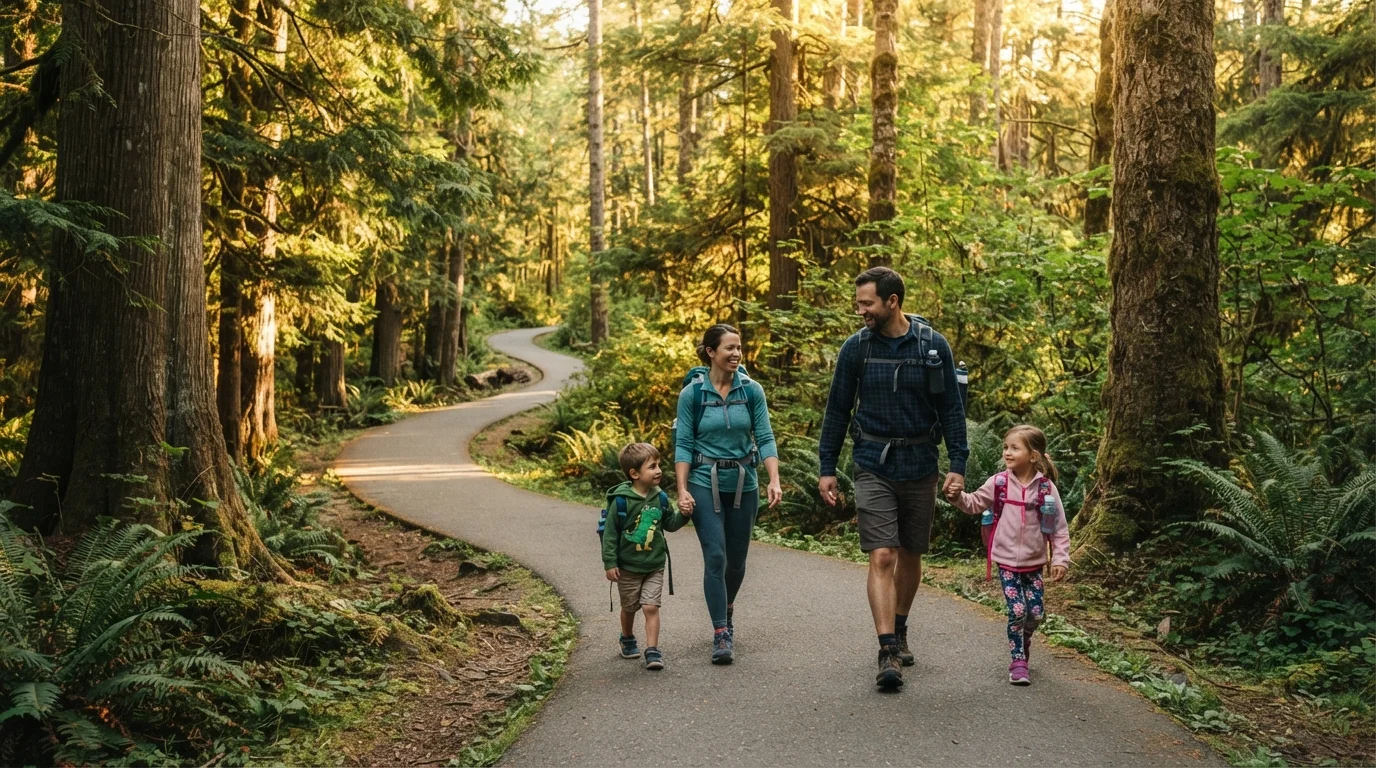
Older kids crave challenge and novelty. Olympic National Park (Washington) delivers variety — rainforest, alpine meadows, and wild coastline — which prevents the boredom that can derail teen enthusiasm. Arches National Park (Utah) rewards physically capable tweens with scrambles and iconic landscapes that feel genuinely Instagram-worthy. Give teens a role in navigation and decision-making to boost investment in the trip.
Facilities and Logistics That Make or Break a Family Park Trip
Even the most scenic park falls flat if logistics fail. Before booking, confirm: campground or lodging proximity to trailheads, food and water availability inside the park, cell service for emergencies, and whether you need timed-entry reservations (increasingly common at popular parks like Yosemite and Glacier).
The National Park Service's Junior Ranger program deserves special mention — it's free, widely available, and gives kids a structured mission that turns passive sightseeing into active learning. Badges are awarded at visitor centers upon completion. For longer drives between parks, see our guide on what actually makes road trips with kids work.
Budget is another real factor. A single-park visit can be managed affordably, but multi-park itineraries benefit from planning. Stretching a travel budget across national parks covers entry passes, campsite reservations, and food planning in practical detail.
Finally, check seasonal considerations. Many parks are dramatically more accessible — and less crowded — in shoulder seasons (spring and fall). Summer peak season brings full facilities but also long lines and limited parking, which is especially taxing with young children.