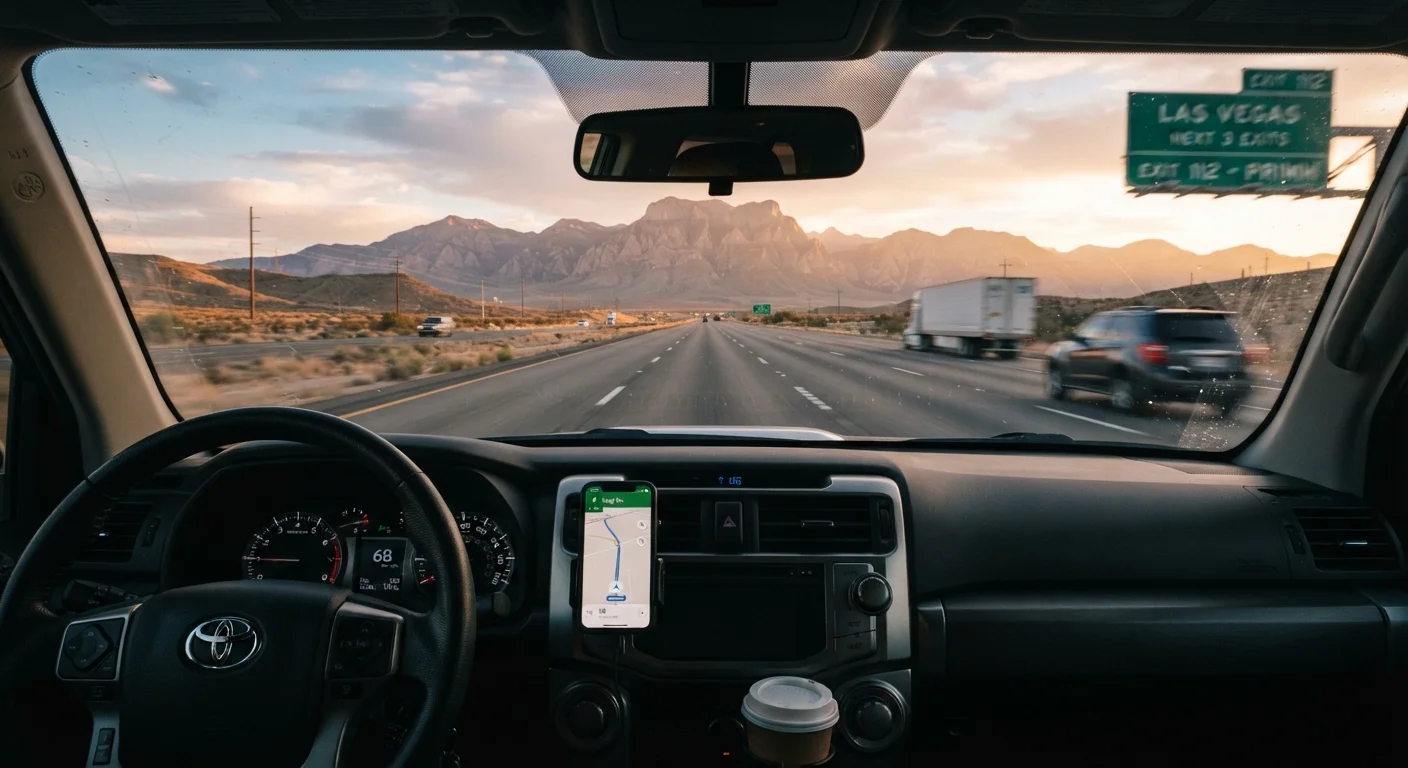
The Gap Between Map Miles and Real Drive Time
Open any map app, plug in a destination 800 miles away, and it'll hand you a tidy estimated arrival time. That number feels authoritative — but it's built on assumptions that rarely survive contact with an actual road trip. Average speeds, minimal traffic, and zero pit stops produce an estimate that experienced travelers know to treat skeptically.
For a deep dive into getting your full road trip planning process right, the fundamentals matter here. The single biggest planning error isn't picking the wrong route — it's trusting a number that was never designed to reflect how humans actually travel.
~20%
Time GPS estimates routinely undercount
Traffic data researchers have found that real-world drive times frequently run 15–25% longer than baseline navigation estimates once stops, congestion, and slowdowns are included.
45–60 min
Average daily stop time per person added by fuel and food breaks
A family of four making a fuel stop, a sit-down lunch, and two restroom breaks can easily accumulate nearly an hour of non-driving time that many trip planners don't account for.
The Most Common Time-Stealing Mistakes
These aren't rookie errors exclusive to first-timers. Even veteran road trippers fall into these patterns — especially when excitement about a destination makes optimism feel like a strategy.
Trusting the GPS estimated arrival time as a hard deadline.
Why it happens: Navigation apps calculate routes using average speeds and light-traffic assumptions. Drivers naturally anchor on that number and plan hotel check-ins, dinner reservations, and attraction visits around it.
Forgetting to count pit-stop time as part of the driving day.
Why it happens: People mentally separate 'drive time' from 'stop time,' so planned stops feel like they belong in a separate category and don't affect the schedule.
Planning daily mileage targets that exceed comfortable driving capacity.
Why it happens: Maps make 600-mile days look achievable on paper, especially when the route is all interstate. Drivers underestimate how fatiguing sustained highway driving actually is.
Ignoring road type when calculating pace — treating all miles as equal.
Why it happens: Mileage figures from mapping tools don't visually communicate the difference between a four-lane interstate and a two-lane mountain highway with a 25 mph switchback zone.
Failing to account for weather and seasonal road conditions.
Why it happens: Drivers plan weeks ahead when conditions look fine, then encounter unexpected weather — afternoon thunderstorms in the Rockies, coastal fog, or early-season snow at elevation — that wasn't on their radar.
Fatigue Is a Safety Issue, Not Just a Delay
Pushing past reasonable driving hours to 'make up time' significantly increases crash risk. The hidden danger of driver fatigue is well-documented — impaired reaction time can set in well before a driver feels sleepy. Schedule genuine rest stops and set a firm daily driving limit before you leave home, not after you're already behind.
Building a Schedule That Actually Holds
The fix isn't pessimism — it's honest arithmetic. Before booking any fixed-time commitments along your route, run through your itinerary segment by segment and apply a realism check:
- Identify road types: Separate interstate miles from two-lane, mountain, or construction-heavy segments and pace them differently.
- Count your stops explicitly: Log each anticipated stop and estimate its time cost — don't let them live in a mental 'it'll be fine' category.
- Set a daily driving ceiling: Choose a comfortable maximum and hold to it. Fatigue erodes both safety and enjoyment faster than most drivers expect.
- Add a buffer day on longer trips: A four-to-five-day trip benefits enormously from a single flex day that absorbs delays, weather, or a spontaneous detour you didn't plan for.
Mountain and Rural Routes Need Special Scrutiny
A 60-mile mountain segment through a pass like Loveland or Monarch in Colorado can take nearly as long as 150 miles of interstate. Steep grades, switchbacks, reduced speed limits, and seasonal closures all erode your estimated pace. Always look up the specific road type — not just the mileage — when planning segments through the Rockies, Cascades, Appalachians, or similar terrain. Check current road conditions with official state DOT sources before departing.
For trips where costs also need scrutiny, the hidden financial costs of US road trips follow a similar pattern to time costs — easy to overlook individually, significant in aggregate. Scheduling and budgeting share the same discipline: specificity beats optimism every time.
A well-paced road trip isn't a slower one. It's one where arrivals are calm, detours feel like discoveries rather than disasters, and the schedule bends without breaking. That's the kind of trip worth planning.