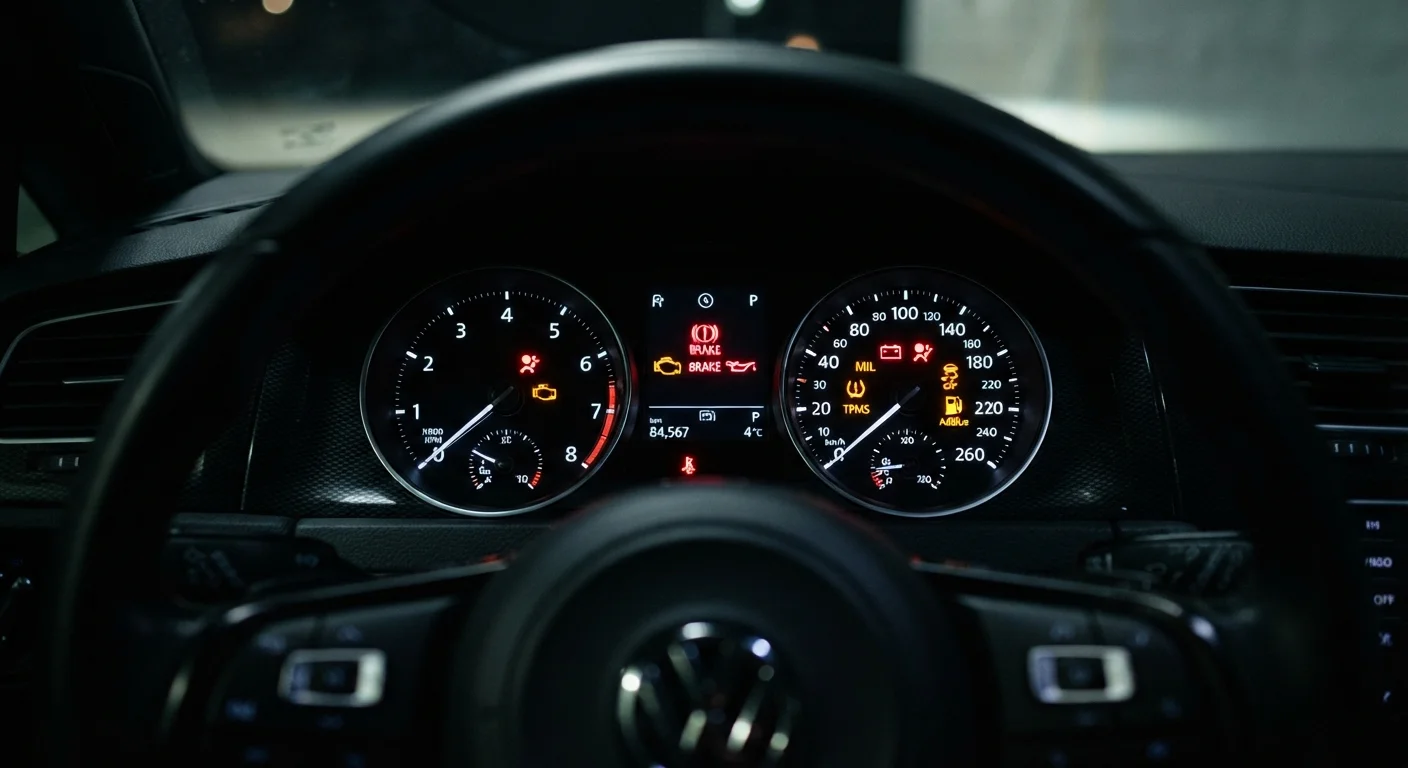
Why Dashboard Lights Exist — and Why You Shouldn't Ignore Them
Modern vehicles are equipped with an OBD system that continuously monitors dozens of sensors covering everything from exhaust emissions to brake pressure. When something falls outside acceptable parameters, the relevant warning light illuminates on your instrument cluster. Think of these lights as your car's way of flagging a concern before it becomes a breakdown.
Critically, not all warning lights carry the same urgency. Colour-coding gives you a fast-read priority system:
- Red: Requires immediate attention — continued driving may risk serious vehicle damage or personal safety.
- Amber/Yellow: Needs attention soon — the issue is not immediately critical but should be investigated within a day or two.
- Green/Blue: Informational — a system is active (e.g. high beams or cruise control).
Understanding this hierarchy is the first step toward responding appropriately rather than either panicking or dismissing every light that appears.
| Number of warning lights (typical modern vehicle) | 50–200+ symbols (Varies significantly by make, model, and trim level) |
| Colour indicating immediate action required | Red (Standard across US-market vehicles) |
| Most common reason for check engine light | Loose or faulty fuel cap / emissions sensor (Frequently cited by automotive diagnostic services) |
| TPMS federally mandated in the US since | 2008 (NHTSA FMVSS No. 138) |
| Recommended response to a red warning light | Stop driving as soon as safely possible (General industry guidance) |
The Most Common Warning Lights, Explained
Below are the warning lights US drivers encounter most frequently, along with what each typically indicates and how urgently you should act.
OBD (On-Board Diagnostics)
A standardised system built into modern vehicles that monitors engine, transmission, and emissions components in real time. When a sensor reading falls outside normal range, the OBD system logs a fault code and illuminates the corresponding warning light.
TPMS
Tyre Pressure Monitoring System — a sensor-based system that detects when tyre pressure drops significantly below the recommended level and alerts the driver via a dashboard light.
Fault Code (DTC)
A Diagnostic Trouble Code stored by the OBD system when a fault is detected. Mechanics retrieve these codes using a scanner tool to identify the source of a warning light.
Catalytic Converter
An emissions control device in the exhaust system that converts harmful combustion byproducts into less toxic substances. Engine misfires can overheat and permanently damage it.
Alternator
A generator driven by the engine that recharges the battery and powers electrical systems while the vehicle is running. A failing alternator can cause the battery warning light to appear.
Instrument Cluster
The panel behind the steering wheel that houses the speedometer, fuel gauge, and all warning lights. Sometimes called the dashboard or gauge cluster.
Temperature Warning (Red Thermometer)
Signals that your engine coolant has reached a dangerously high temperature. Pull over safely as soon as possible, turn off the engine, and allow it to cool before investigating fluid levels. Do not open the coolant reservoir cap while the engine is hot. This warrants a mechanic visit before further driving.
Oil Pressure Warning (Red Oil Can)
Indicates low oil pressure — not necessarily low oil level, though that may be the cause. Low oil pressure can cause rapid engine damage. Pull over, turn off the engine, and check your oil level using the dipstick when it is safe to do so. If the level appears adequate and the light persists, have the vehicle inspected by a qualified mechanic promptly.
Check Engine Light (Amber Engine Outline)
One of the most misunderstood lights on any dashboard. A steady amber check engine light typically points to an emissions-related issue, a faulty sensor, or a misfiring cylinder. A flashing check engine light is more serious and generally indicates an active misfire that could damage your catalytic converter — reduce speed and seek service quickly. A mechanic can retrieve the stored fault code using a diagnostic scanner to pinpoint the cause. See our guide on DIY checks vs. professional servicing to understand which steps you can safely take yourself.
Tyre Pressure Monitoring System — TPMS (Amber Exclamation in Tyre)
Alerts you that one or more tyres is significantly under-inflated. Check all four tyres with a calibrated pressure gauge and inflate to the levels specified in your owner's manual or door jamb sticker. For a deeper look at tyre-related misconceptions, see tyre care myths that could be costing you safety.
Battery / Charging System (Red Battery)
Points to a fault in the charging circuit — often a failing alternator, loose battery cables, or a battery near the end of its service life. Have this checked as soon as practical; if the alternator is not charging, the vehicle may stall unexpectedly.
Brake System Warning (Red Circle with Exclamation)
If your parking brake is off and this light appears, it may signal low brake fluid or a fault within the brake system itself. Do not ignore a brake warning light — braking performance directly affects safety. If you notice unusual sounds alongside the light, our article on noises your car makes and what they mean can help you describe the symptom accurately to a mechanic.
When to Pull Over Immediately vs. Drive to a Shop
Red warning lights — particularly the oil pressure, temperature, and brake system indicators — generally mean you should stop the vehicle as soon as it is safe to do so and avoid further driving until the cause is identified. Amber lights typically allow you to drive carefully to a service facility without delay. If you are ever uncertain about a light's severity, consulting your owner's manual or calling a roadside assistance provider is the safest first step.
Building a Habit: Lights, Checks, and Staying Ahead of Problems
Warning lights are most useful when you respond to them consistently. A few practical habits can help you stay ahead of dashboard surprises:
1 in 4
Vehicles on US roads with a lit check engine light
Estimates from automotive data firms suggest a significant share of vehicles are driven with unresolved OBD fault codes at any given time.
~25%
Fuel efficiency loss from under-inflated tyres
The US Department of Energy estimates that keeping tyres properly inflated can improve fuel economy by up to 3%; significant under-inflation compounds this loss over time.
- Read your owner's manual. Symbol meanings can vary between makes and model years. Your manual is the definitive reference for your specific vehicle.
- Act on red immediately, amber within 48 hours. This simple rule prevents minor issues from escalating into major repairs.
- Don't reset a light without diagnosing the cause. Clearing a fault code does not fix the underlying problem — it simply delays your awareness of it.
- Add a pre-drive visual check to your routine. A quick walk-around before longer journeys catches issues early. Our pre-journey safety walkthrough outlines a practical inspection sequence any driver can follow.
- Before road trips, be thorough. Consult the pre-departure vehicle checklist to confirm fluid levels and tyre condition before heading out on a long drive.
Dashboard warning lights are not designed to alarm you — they are designed to inform you. The more fluent you become in reading them, the more confidently you can make decisions about when to keep driving and when to seek help.