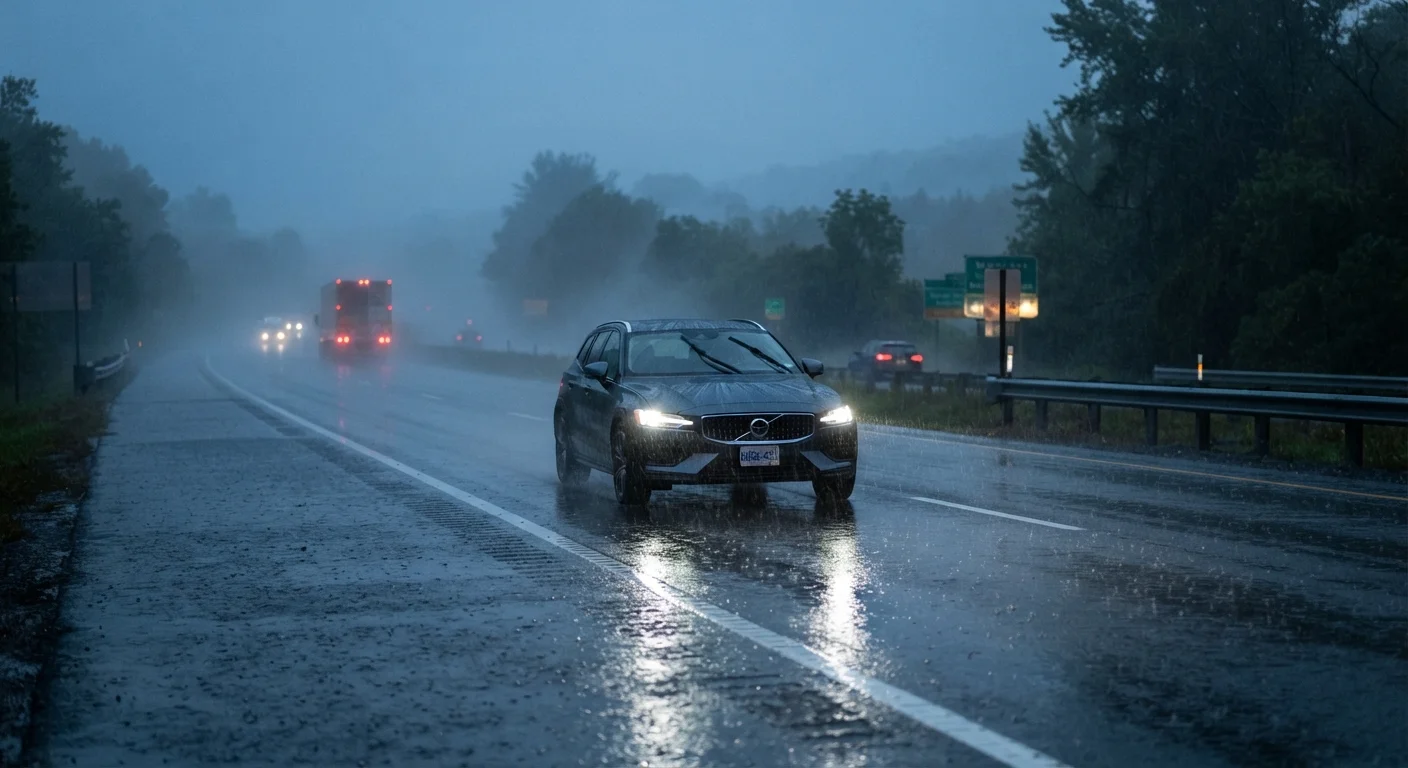
Why Weather Changes the Rules of the Road
Most drivers learn the fundamentals in fair conditions — clear skies, dry pavement, good visibility. But roads in the real world are frequently wet, icy, foggy, or worse. Each of these conditions doesn't just add inconvenience; it fundamentally changes how your vehicle responds, how far you can see, and how much margin for error you have.
The physics are straightforward: wet or snow-covered surfaces reduce tire friction, meaning your brakes need more distance to stop you. Fog cuts the visual information you rely on to judge speed and gap. Rain, particularly heavy rain, can overwhelm wiper blades and create hydroplaning risk — where tires ride on a film of water rather than gripping the road surface. Understanding these dynamics is the foundation of smarter adverse-weather driving.
It's also worth noting that many crashes in poor weather aren't caused by the conditions alone — they're caused by drivers who failed to adjust their habits to match those conditions. Speed, following distance, and situational awareness all need deliberate recalibration when the weather changes. For a broader look at how small habit drift can increase risk over time, see Habits That Quietly Erode Safe Driving Over Time.
What you will need
Step-by-Step: Adjusting Your Driving for Each Condition
The steps below apply across rain, fog, and snow, but each section highlights condition-specific considerations. Work through them as a mental checklist before and during any adverse-weather drive.
Reduce Speed Proactively, Not Reactively
Before you encounter the worst of the conditions, slow down. Posted speed limits represent safe speeds for dry, clear roads. In rain, a conservative reduction of 10–15 mph below posted limits is a reasonable starting point. In snow or ice, conditions may warrant speeds significantly below that. In fog, your speed should never exceed what allows you to stop within your visible range ahead.
The key is to reduce speed before you need to, not in response to a hazard already upon you.
Increase Following Distance Substantially
The standard two-second following distance is designed for dry conditions. In wet weather, increase it to at least four seconds. On snow or ice, six seconds or more is appropriate. To measure: pick a fixed point ahead, watch when the car in front passes it, then count seconds until you reach the same point.
More space means more time to react — and more time to brake smoothly rather than abruptly, which is critical on slippery surfaces.
Use Your Headlights Correctly
In rain or fog, turn on your low-beam headlights — not high beams. High beams reflect off water droplets and fog, creating glare that actually reduces your visibility and blinds oncoming drivers. Many vehicles also have dedicated fog lights mounted low on the front bumper; these are designed specifically for dense, low-lying fog.
In snow, headlights help others see you as much as they help you see the road. Many states legally require headlights when windshield wipers are in use — check your state's rules.
Brake Smoothly and Early
On slippery surfaces, abrupt braking can cause skids or trigger overcorrection. Instead, begin braking earlier than you normally would, applying steady, gentle pressure. Modern vehicles equipped with ABS are designed to prevent wheel lock-up — if you feel pulsing through the pedal, that's the system working; maintain firm pressure rather than releasing it.
In icy conditions, even gentle braking can result in longer stopping distances than you expect. Give yourself room to prove this assumption safely before you need it urgently.
Manage Steering Inputs Carefully
Sudden steering movements on wet or icy roads can cause skids. Steer smoothly and deliberately. If you feel the rear of the vehicle beginning to slide (oversteer), steer gently in the direction of the slide — commonly called 'steering into the skid' — and avoid overcorrecting in the opposite direction.
Front-wheel-drive and rear-wheel-drive vehicles handle differently in skid situations. Knowing which you drive and how it behaves is useful knowledge before conditions deteriorate.
Check Your Vehicle's Readiness Before You Drive
Technique alone doesn't compensate for equipment failure. Before driving in adverse weather, confirm your wipers are clearing effectively, all lights function, tire pressure is correct (cold temperatures cause pressure to drop), and your defrost systems work front and rear. A well-maintained vehicle gives your technique somewhere to land.
For a structured approach to seasonal checks, the Seasonal Car Maintenance guide provides a practical breakdown by season.
Hydroplaning Can Happen at Highway Speeds
Hydroplaning occurs when tires lose contact with the road surface due to a layer of water — it can happen at speeds as low as 35 mph on heavily flooded roads. If you feel the steering go light and unresponsive, ease off the accelerator gently and avoid sudden braking or steering until you feel traction return. Slowing down before reaching standing water is the most effective prevention.
What to Do When Conditions Overwhelm Your Ability to Drive Safely
There are situations where no amount of technique fully compensates for what's happening outside. Whiteout snow, dense black ice, or zero-visibility fog can make continued driving genuinely unsafe regardless of how skilled the driver is. In these cases, the right decision is to exit the road safely — pulling fully off the roadway onto a wide shoulder or into a rest area, activating your hazard lights, and waiting for conditions to improve.
This isn't a failure of skill — it's an exercise of it. Recognizing the limits of controllable risk is one of the most important judgments a driver can make. Before long journeys in uncertain seasons, it's worth reviewing Planning Around Weather: What Drivers Often Get Wrong Before a Long Journey so you can make pull-over or delay decisions before you're already on the road.
Plan Before You Go, Not After You're Stuck
Check weather forecasts and road condition reports before any significant journey in uncertain seasons. Many state transportation departments publish live road condition maps. Adjusting your departure time by even an hour can mean the difference between driving in a manageable drizzle and the peak of a storm. For longer drives, consult road trip planning resources to build weather awareness into your preparation.
Snow and Ice Are Not the Same Hazard
Fresh snow often provides some grip — packed snow and black ice provide very little. Black ice is particularly dangerous because it's nearly invisible, forming most commonly on bridges, overpasses, and shaded road sections even when surrounding roads appear clear. If temperatures are at or below freezing and the road surface looks wet but not white, treat it as potentially icy and reduce speed accordingly.