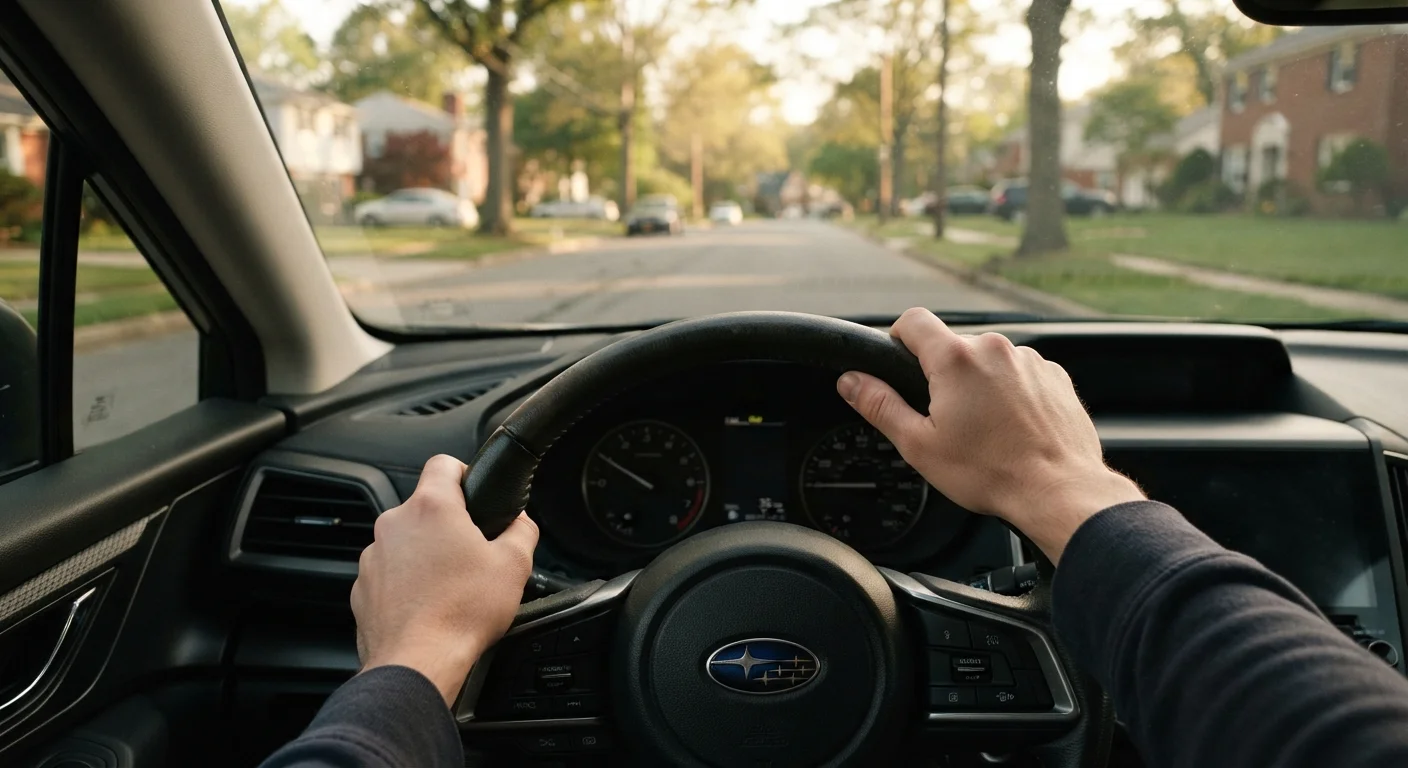
How Good Drivers Develop Bad Habits
Safe driving isn't a fixed skill you earn once and keep forever. It's an active practice — and one that's surprisingly easy to let slide, particularly for experienced drivers who feel confident behind the wheel. The longer you drive without incident, the more your brain interprets current habits as effective ones, even when they've drifted from what's actually safe.
This quiet erosion rarely announces itself. There's no single moment where a driver decides to become less careful. Instead, small adjustments accumulate: a slightly shorter following distance, fewer mirror checks, a rolling stop here and there. Individually, each feels inconsequential. Together, they reshape how you drive without you noticing.
Complacency Is a Real Crash Risk
Traffic safety research consistently shows that a significant proportion of collisions occur close to home, on routes drivers know well. Familiarity breeds inattention, not safety. Treating every drive — however routine — with full attention is one of the most effective things any driver can do.
Understanding which habits tend to erode — and why — is the first step toward correcting them before they create a problem on the road.
The Most Common Habits That Quietly Undermine Safety
The mistakes below are not the obvious errors of new drivers. They are the gradual drift that affects people who have been driving for years and feel comfortable in that confidence.
Reducing attention on familiar routes because the road 'feels' safe.
Why it happens: Repetition creates mental shortcuts. When your brain predicts what's ahead, it allocates less conscious attention to monitoring the environment.
Rolling through stop signs or treating yield signs as optional during light traffic.
Why it happens: When a driver rarely encounters cross-traffic at a particular junction, the full stop begins to feel unnecessary, and the habit erodes gradually.
Following other vehicles too closely, especially at highway speeds.
Why it happens: Drivers often match the spacing of surrounding traffic and lose awareness of how little time they have to react if the vehicle ahead brakes suddenly.
Driving while mentally preoccupied — replaying conversations, planning tasks, or problem-solving.
Why it happens: Cognitive distraction feels invisible. Unlike phone use, there is no device to put down, so drivers rarely recognize they are impaired.
Skipping pre-drive checks on tyre pressure, mirrors, and lights.
Why it happens: These checks feel low-stakes and time-consuming when nothing has visibly gone wrong recently.
~52%
Crashes occurring within 5 miles of home
U.S. traffic safety studies have consistently found that the majority of collisions happen close to home, where drivers feel most familiar and least alert.
2 seconds
Minimum recommended following distance
The two-second rule is a widely taught benchmark from driver safety programs; at highway speeds, this equates to roughly 200 feet of stopping room.
If you regularly drive both highways and city streets, it's worth recognising that the risk profile shifts significantly between those environments. Our article on motorway driving vs. urban roads explores how safe habits need to adapt depending on where you are.
Resetting Your Habits Without Starting From Scratch
Correcting entrenched habits doesn't require a driving course or major lifestyle change. It requires deliberate attention — applied consistently over time. A few practical approaches make this easier:
- Periodic self-review: After a typical commute, mentally replay one or two moments where you made a judgment call. Did you maintain a safe gap? Did you fully stop? Honest reflection surfaces patterns you'd otherwise miss.
- Use long drives as a reset: Road trips require sustained focus and tend to reactivate good habits. They're also a natural opportunity to reconnect with the fundamentals. Our road trip planning hub includes preparation tips that support safer driving over longer distances.
- Treat fatigue seriously: Tiredness compounds every other risk factor on this list. When you're fatigued, attention lapses faster, reaction times slow, and overconfidence increases. Learn more in our piece on why fatigue is a road trip's biggest hidden risk.
Familiarity Doesn't Equal Predictability
Even a road you drive daily can present new hazards: a child running from a driveway, a delivery truck blocking sightlines, a pothole that appeared overnight. Familiarity affects your alertness, not the road's hazard level. Staying engaged on routes you know well is an active choice, not a passive default.
The goal isn't perfection — it's awareness. Drivers who regularly examine their own habits are better positioned to catch drift early, before it becomes a pattern that matters when conditions change.