Why Your Risk Profile Isn't Fixed
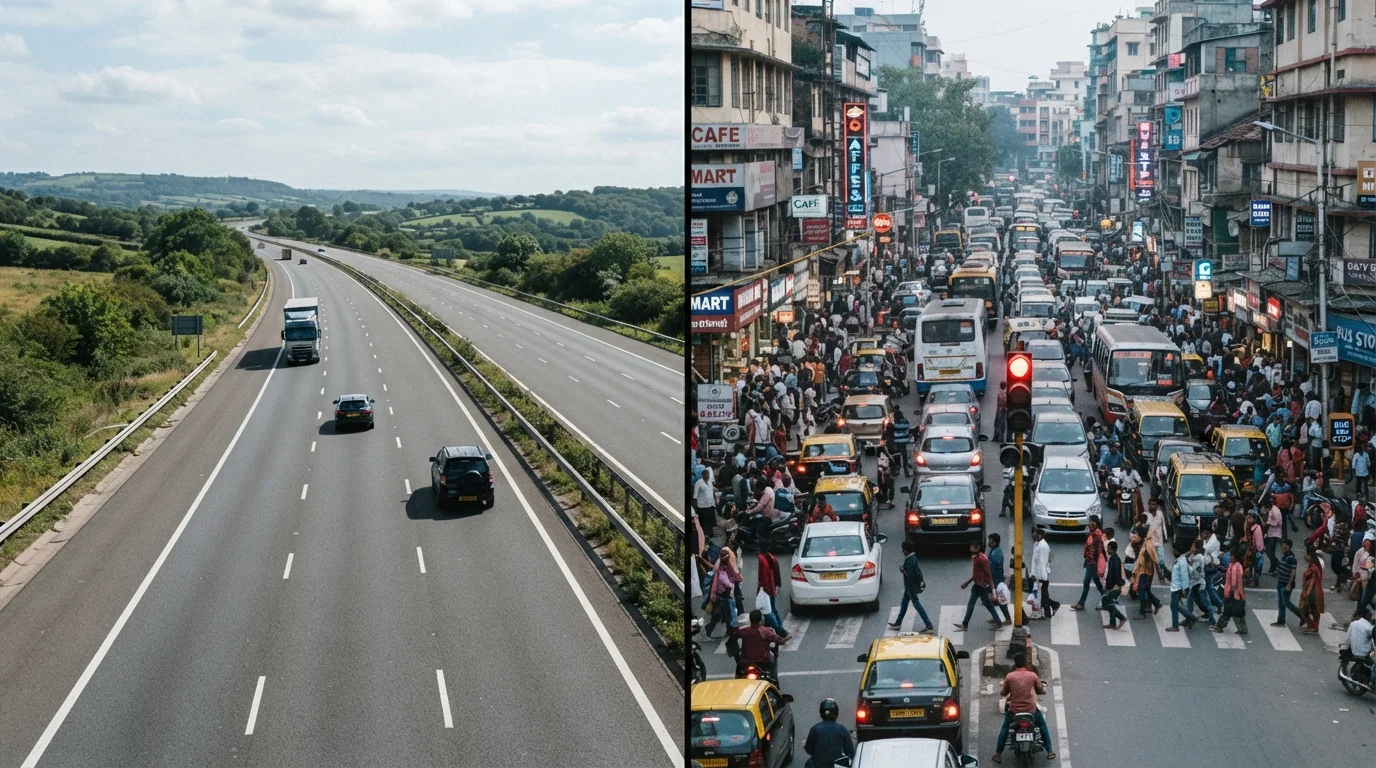
Most drivers mentally file road risk into a single category — a general sense of how careful they need to be. In reality, the type of road you're on reshapes your hazard landscape almost entirely. Motorways and urban roads don't just differ in speed limits; they present distinct crash types, different cognitive demands, and separate physical consequences.
Understanding how risk shifts between these two environments is the foundation of genuinely adaptive, safer driving. As we explore at length in our look at habits that quietly erode safe driving, complacency with familiar routes is one of the most underestimated dangers — and it manifests differently depending on whether you're on a freeway or navigating city blocks.
| Criterion | Motorway Driving | Urban Road Driving |
|---|---|---|
| Crash frequency | Lower per mile traveled | Higher overall volume |
| Crash severity | Higher — impact speeds greater | Lower average severity |
| Primary hazard | Fatigue and tailgating | Intersections and distraction |
| Vulnerable road users | Minimal exposure | High — pedestrians and cyclists |
| Driver cognitive load | Monotonous; fatigue risk | High; constant decisions |
| Following distance needed | 3+ seconds minimum | 2–3 seconds, variable |
| Speed misperception risk | High on exit from motorway | Lower — speed changes frequent |
| Pre-journey vehicle checks | More critical — breakdown at speed | Important but lower-speed exposure |
Motorway Hazards: Speed, Fatigue, and the Illusion of Safety
Statistically, motorways and interstate highways carry a lower crash rate per mile traveled than urban roads. Their design — controlled access points, no pedestrian crossings, consistent traffic flow — removes many common collision triggers. But when crashes do occur at highway speeds, their severity is dramatically higher.
The dominant risks on motorways include:
- Driver fatigue: Monotonous conditions — constant speed, minimal steering input, repetitive scenery — accelerate cognitive fatigue faster than most drivers expect. Microsleep events lasting even two to three seconds at 70 mph cover over 300 feet of road with no driver input.
- Tailgating: Inadequate following distance removes the reaction time needed when traffic ahead slows suddenly. A standard rule of thumb in the US is a minimum three-second gap in dry conditions, extended further in poor weather.
- Speed misperception: Extended high-speed travel recalibrates your brain's sense of normal speed. Exiting onto surface roads afterward, 40 mph can feel almost stationary — a well-documented contributor to post-motorway crashes.
- Late lane-change decisions: Missing an exit and making sharp, last-second maneuvers is among the most dangerous actions a motorway driver can take.
Before any extended motorway trip, a basic vehicle check — tires, fluids, lights — is especially worthwhile. Our car maintenance hub covers what to inspect before long-haul drives.
~50%
Of US traffic fatalities on rural/highway roads
According to NHTSA data, rural roads including highways account for roughly half of all US traffic deaths despite carrying less than half of total vehicle miles traveled.
40%
Of urban crashes occurring at intersections
Federal Highway Administration research consistently identifies intersections as the site of a substantial share of urban collision events.
300+ ft
Covered in a 3-second microsleep at 70 mph
At highway speeds, even a brief lapse in consciousness covers enough distance to miss a critical hazard — illustrating why fatigue management matters most at speed.
Urban Road Hazards: Complexity, Distraction, and Unpredictability
Urban driving generates more crashes by volume than motorway travel, primarily because of sheer complexity. Every block introduces new variables: pedestrians stepping off curbs, cyclists filtering through lanes, delivery vehicles double-parked, and signal changes demanding constant decisions.
Key urban risk factors include:
- Intersection hazards: A significant proportion of urban crashes occur at or near intersections. Red-light violations, failure to yield on turns, and obstructed sight lines all concentrate danger at crossing points.
- Distracted driving: The stop-start rhythm of city traffic tempts drivers to glance at phones, adjust navigation, or lose focus during stationary periods — then accelerate back into moving traffic without full attention restored.
- Vulnerable road users: Pedestrians, cyclists, and motorcyclists are disproportionately present in urban environments and absorb a greater share of crash consequences due to their physical exposure.
- Tight spacing and blind spots: Lane-changing in dense city traffic demands active mirror use and awareness of vehicles that can disappear into blind spots at close range.
Proactive hazard scanning — looking two to three cars ahead, tracking pedestrian body language, checking mirrors every five to eight seconds — makes a measurable difference in urban environments. This is a habit worth reviewing alongside common road safety myths many experienced drivers still hold onto.
Speed Limits Alone Don't Define Risk
A road's posted speed limit tells you the maximum legal speed, not the actual danger level of the environment. A 25 mph urban street crowded with pedestrians and cyclists can present more complex hazards per minute than an uncongested 65 mph freeway. Risk assessment should be based on what's actually present in your driving environment — not the number on the sign.
Adjusting Your Habits at the Transition Point
The transition between road types is itself a moment of elevated risk. Drivers exiting a motorway after an hour or more at speed need to actively recalibrate — checking the speedometer rather than relying on feel, increasing scan frequency, and raising following-distance awareness as the environment compresses.
Similarly, drivers entering a motorway from urban roads benefit from a short mental checklist: confirming mirrors are adjusted, understanding the next few junctions, and ensuring the vehicle is in appropriate condition for sustained highway speed. Our road trip planning hub includes practical preparation guidance for longer drives that begin or end in urban zones.
Weather adds a further layer of complexity to both environments. Adapting your habits for rain, fog, and snow is critical regardless of road type, but the specific adjustments differ — reduced following distance margins on a wet motorway operate very differently from navigating a flooded urban intersection.
Ultimately, the safest drivers aren't those who are cautious only in one environment. They're the ones who actively read which risk profile applies to their current road — and adjust their habits accordingly.