Why the Difference Matters
Many people keep all their savings in one place and call it a day. That approach works — until it doesn't. When a car breaks down or a medical bill arrives, it's tempting to dip into whatever pot is available. The problem is that raiding your vacation fund or home-deposit savings leaves you scrambling later, while raiding an emergency fund on a non-emergency leaves you exposed when a real crisis hits.
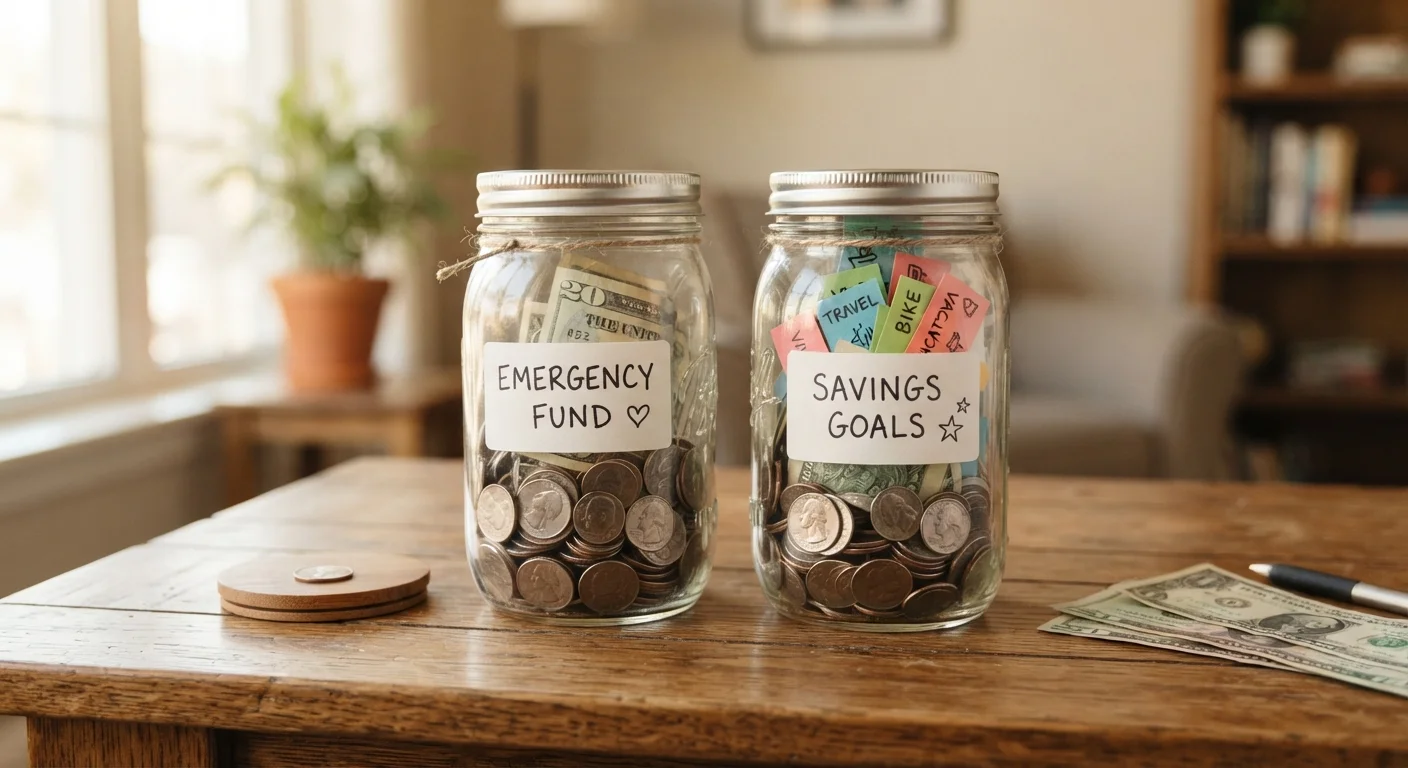
The distinction between an emergency fund and a savings account isn't just semantic. Each serves a fundamentally different financial job, and treating them as one blurs lines that are genuinely useful. Think of it like having a fire extinguisher in your kitchen — you want it there, untouched, until the moment you actually need it.
Understanding both tools clearly is part of building a solid budgeting foundation that holds up under pressure.
| Criterion | Emergency Fund | Savings Account |
|---|---|---|
| Primary purpose | Unexpected financial shocks | Planned future goals |
| Typical target amount | 3–6 months of essential expenses | Whatever the goal requires |
| When you access it | Only in a genuine crisis | When the goal is reached or due |
| Account type | Separate, liquid, easily accessible | Often a standard or high-yield savings account |
| Emotional role | Peace of mind and stability | Motivation and progress toward goals |
| How often you contribute | Until target is met; replenish after use | Regularly until goal is funded |
What an Emergency Fund Actually Is
An emergency fund is a reserved pool of cash earmarked exclusively for genuine, unforeseen financial shocks — job loss, urgent medical expenses, a broken boiler, or an unexpected car repair. The defining characteristic is that you hope never to use it, but you need it available if you do.
Most financial educators — including guidance published by the Consumer Financial Protection Bureau (CFPB) — suggest aiming for three to six months of essential living expenses. For many households, that feels like an enormous target, which is why starting smaller is both reasonable and encouraged. Even a $500 to $1,000 starter emergency fund can prevent a surprise expense from becoming high-interest debt.
~37%
Americans who cannot cover a $400 emergency
According to Federal Reserve survey data, a significant share of U.S. households would need to borrow or sell something to cover a $400 unexpected expense.
3–6 months
Recommended emergency fund size
The Consumer Financial Protection Bureau (CFPB) and many financial educators consistently recommend this range as a baseline for financial resilience.
The critical rule: an emergency fund should not be touched for planned expenses, no matter how appealing or urgent they feel in the moment. Once you dip into it for non-emergencies, it stops functioning as a safety net. If you're curious about structured approaches to keeping spending in separate lanes, envelope budgeting methods offer a framework worth exploring.
What a Savings Account Is For
A savings account, in everyday usage, is a goal-oriented holding place for money you plan to spend — just not yet. That might mean saving for a vacation, a new laptop, a wedding, a home down payment, or a new baby. The common thread is intention: you know roughly what the money is for and when you'll need it.
Savings accounts at banks and credit unions are federally insured (FDIC for banks, NCUA for credit unions) up to $250,000, making them safe vehicles for short- to medium-term goals. High-yield savings accounts, available at many online banks, can offer meaningfully higher interest rates than traditional accounts — though rates fluctuate with broader monetary policy and are not guaranteed.
The key insight is that a savings account can hold many different goals simultaneously, but clarity matters. If you're saving for three things at once in a single account, it's easy to lose track. Some people open separate accounts for each goal; others use a spreadsheet to mentally divide one account. Both approaches work — what matters is that you know what each dollar is earmarked for.
For readers wondering whether to contribute steadily or in lump sums, our piece on lump-sum saving versus regular contributions breaks down the trade-offs honestly.
Building Both on a Real-Life Budget
The most common objection to maintaining two separate pots is simple: I barely have enough for one. That's a legitimate constraint, not a personal failing. The practical answer is sequencing rather than perfection.
A reasonable starting sequence for most households:
- Build a small emergency buffer first — even $500 covers a surprisingly wide range of minor crises and creates psychological stability.
- Open or designate a separate savings account for your nearest-term goal, even if contributions start at $10 or $20 a month.
- Grow the emergency fund gradually toward one to three months of expenses before accelerating goal-based saving.
Automation is a powerful ally here. Setting up an automatic transfer — even a modest one — to each account on payday removes the decision from your to-do list entirely. Our guide on automating your savings explains how to set this up practically. If funds are genuinely tight, saving on a tight budget offers a judgment-free starting point.
Where to Keep Each Pot
Both funds can live at the same bank — many institutions let you open multiple savings accounts and label them individually. The point isn't physical separation but mental clarity. Keeping them in clearly named accounts makes it far less likely you'll accidentally spend emergency money on a non-emergency, or vice versa. Some people also choose to keep their emergency fund at a different bank from their checking account, adding a small friction barrier that discourages impulsive withdrawals.
This article is for general informational purposes only and does not constitute personalized financial advice. Consult a licensed financial professional for guidance tailored to your specific circumstances.