Why Small Pets Hide Stress So Well
Rabbits, guinea pigs, hamsters, gerbils, and pet birds share an important evolutionary trait: they are prey animals. In the wild, showing weakness invites predation, so these species have evolved to suppress outward signs of pain, fear, and illness until symptoms become severe. This survival instinct doesn't disappear in domestic life — it just makes your job as an owner harder.
The result is that many small pets experience significant stress for days or weeks before an owner notices anything is wrong. By the time obvious symptoms appear, the animal may already be dealing with a serious physical or psychological problem. Learning to read the early, subtle cues is one of the most valuable skills a small-pet owner can develop.
The signs below apply broadly to common small pets, though individual species have their own communication styles. Our guide to rabbit body language covers species-specific signals in more depth if you share your home with a bunny.
Appetite changes — eating less or eating obsessively
A reduction in food intake is one of the earliest measurable stress indicators in small animals. Rabbits and guinea pigs are particularly sensitive: because they have continuously moving digestive systems, even a few hours without eating can be a red flag. Hamsters, conversely, may begin hoarding food aggressively when anxious — filling cheek pouches and caching supplies beyond normal behaviour.
Weigh your pet regularly using a small kitchen scale. A weight loss of 10% or more warrants a vet visit, even if the animal still appears active.
Even a few hours without eating can signal serious stress in rabbits and guinea pigs.
Over-grooming or complete grooming neglect
Both extremes of grooming behaviour point to a problem. Small rodents and rabbits under stress may groom compulsively — pulling fur, barbering cage-mates, or creating bald patches. Birds may over-preen to the point of feather plucking, which is a recognised stress response in parrots and cockatiels.
At the other extreme, an animal that has stopped grooming — appearing unkempt, matted, or dull-coated — is often too unwell or too stressed to maintain normal self-care. Either pattern deserves attention. You can find similar grooming-based cues discussed in our small pet myths article, which addresses common misconceptions about what 'normal' looks like.
Feather plucking in birds and fur-pulling in rodents are recognised physical responses to chronic stress.
Hiding far more than usual
Most small animals spend some time in hides or sheltered areas — that's healthy. The concern arises when an animal that previously explored or interacted with its environment begins spending nearly all its time concealed and resists coming out even for food. This shift in baseline behaviour is a reliable indicator that the animal feels unsafe or unwell.
Check whether the enclosure has enough cover to begin with. Paradoxically, a pet with no hide at all may become chronically stressed from never being able to retreat. If adequate hides are already provided and hiding has suddenly increased, look for an external trigger.
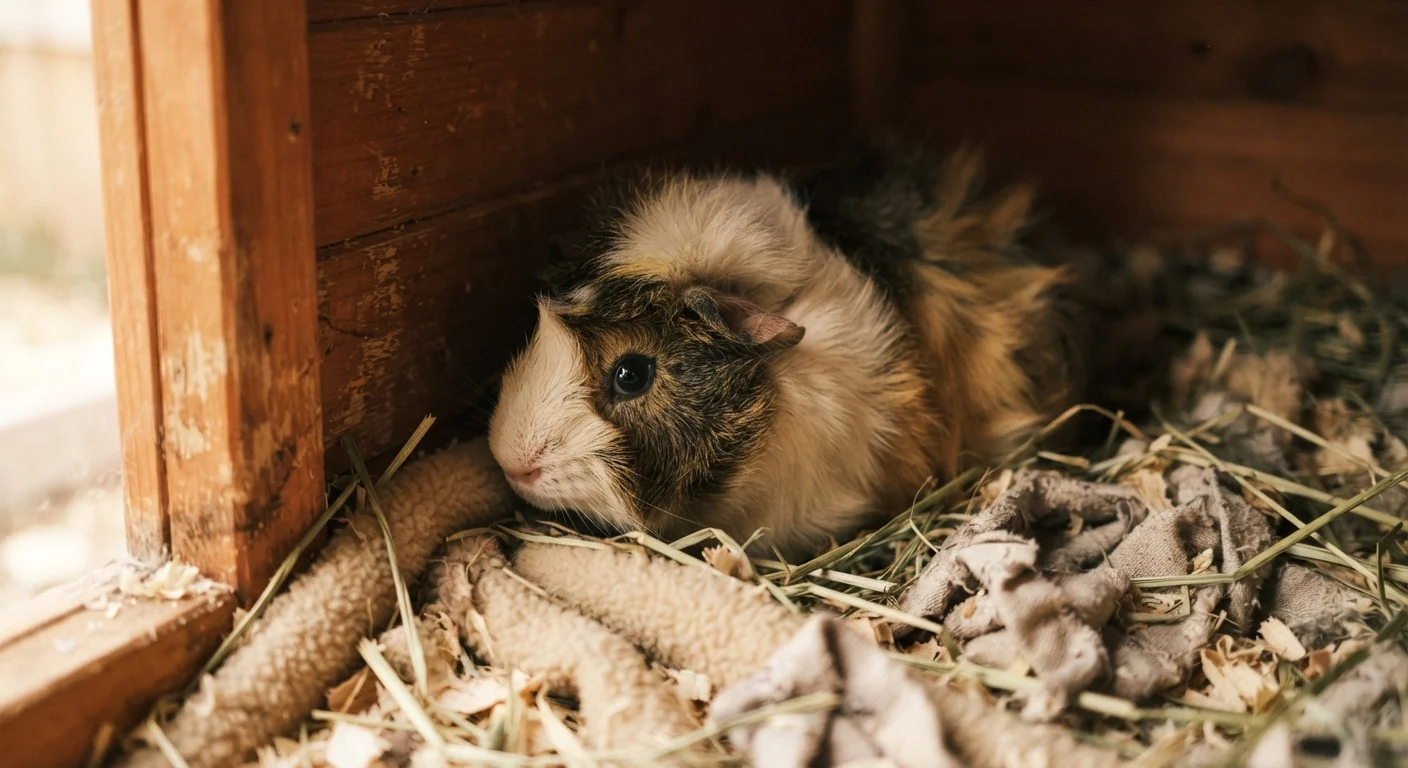
A sudden shift to near-constant hiding is one of the most reliable early indicators that something is wrong.
Teeth grinding, bar-biting, or repetitive movements
Stereotypies — repetitive, apparently purposeless behaviours — are a hallmark sign of chronic stress in captive animals. Examples include a hamster repeatedly running in tight circles outside its wheel, a rabbit bar-chewing on its enclosure, or a parrot rocking back and forth. These behaviours develop when an animal lacks sufficient space, enrichment, or stimulation.
Bar-biting in particular is often mistaken for a quirky habit, but it typically indicates frustration and insufficient environmental complexity. Increasing foraging opportunities, varying the layout of the enclosure, and ensuring minimum space requirements are met can significantly reduce stereotypic behaviour over time. For ideas on enrichment that translate across species, see our enrichment strategies guide — many principles apply to small pets too.
Repetitive, purposeless movements in captive animals are a hallmark sign of chronic, unaddressed stress.
Unusual vocalisation — or sudden silence
Small pets communicate vocally in ways that are easy to miss if you don't know what to listen for. Guinea pigs normally produce a range of sounds; persistent teeth-chattering (a rapid, high-pitched clicking) signals fear or aggression. Rabbits are largely quiet but may thump or grind their teeth when distressed. Birds that have become notably quieter than usual — or that are vocalising constantly and urgently — are both showing signs worth investigating.
The key is knowing your individual animal's baseline. A naturally vocal species going silent is as concerning as a quiet species suddenly vocalising excessively.
Knowing your pet's vocal baseline makes sudden silence or excessive noise much easier to catch early.
Aggression toward a familiar person or companion
If an animal that was previously tolerant of handling begins biting, lunging, or fleeing consistently, pain and stress are the most likely explanations — not a change in personality. The same applies to sudden aggression between bonded pair animals (such as two rabbits or guinea pigs). Pain lowers an animal's threshold for defensive behaviour, and stress can destabilise social bonds that previously seemed solid.
Never assume a prey animal has simply 'turned mean.' A vet check to rule out underlying pain or illness is the appropriate first response, before any handling or bonding work is attempted.
Sudden aggression in a previously gentle animal is more likely a pain or stress signal than a personality change.
When to Act — and What to Do Next
Spotting one stress sign on a single day doesn't automatically mean something is seriously wrong. Animals have off days just like people do. The pattern to watch for is persistence — the same behaviour recurring daily for several days, or multiple signs appearing together.
Keep a simple behaviour log
Tracking your pet's behaviour in a basic notebook or notes app — eating, activity level, grooming, socialisation — for even a week can make patterns much clearer. This log is also invaluable to share with a vet, giving them a picture of change over time rather than just a single snapshot.
When you do notice a cluster of warning signs, start by reviewing the environment: Has anything changed recently? New pets in the home, a moved enclosure, a change in routine, or even a new scent can trigger a stress response. Many cases resolve once the trigger is identified and removed.
If environmental adjustments don't bring improvement within a few days, or if the animal stops eating, loses significant weight, or shows signs of physical illness, consult a veterinarian with experience treating small exotic animals. General practitioners don't always have specialist training in rabbits, rodents, or birds, so it's worth asking. Our article on veterinary care for small pets outlines what to expect from those appointments.
New pets and settling-in stress
Many of the signs listed here are normal during the first two to four weeks after a small animal arrives in a new home. Hiding, reduced appetite, and wariness are expected while the animal adjusts. If you've recently brought a new pet home, our guide for new small pet owners outlines what a healthy settling-in period looks like and when to be concerned.
This article is for general informational purposes only and is not a substitute for professional veterinary advice. If you are concerned about your pet's health or behaviour, please consult a qualified veterinarian.