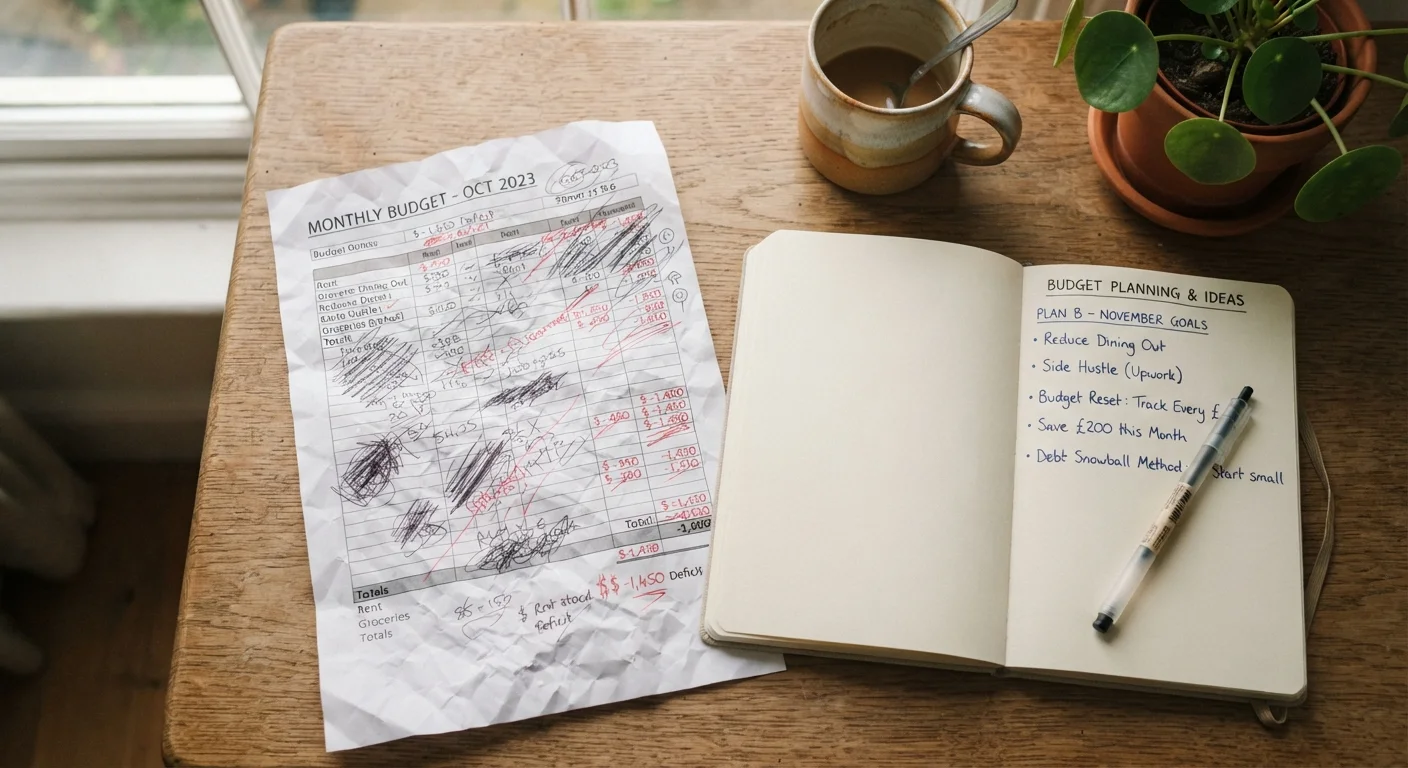
The Second-Month Slump Is Real
January budgets tend to start strong. There's motivation, a clean slate, and a clear goal. But by February — or whatever the second month looks like for you — the cracks appear. An unexpected car repair lands. A birthday dinner gets added to the calendar. The carefully planned numbers stop matching reality, and quietly, the budget gets shelved.
This pattern is extremely common. The first month of budgeting benefits from novelty and momentum. The second month tests whether the structure you built can actually survive contact with real life. For most people, it can't — but not because budgeting doesn't work. It's because of a handful of fixable mistakes.
Understanding why budgets fail at this specific point can help you build one that lasts. This article is general financial information and is not personalized financial advice. For guidance specific to your situation, consider speaking with a licensed financial professional.
Common Mistakes That Sink Second-Month Budgets
The following mistakes show up repeatedly among people who start budgets with good intentions but abandon them within 60 days. Recognizing them is the first step toward fixing them.
Treating month one as a trial run and month two as the real start — then discovering the numbers were never realistic.
Why it happens: The first month often involves extra motivation that masks overspending. People track more carefully, cut back more deliberately, and treat it as a test rather than a permanent system.
Forgetting irregular but predictable expenses like annual subscriptions, quarterly insurance payments, or seasonal costs.
Why it happens: These costs don't appear in a typical month, so they're easy to exclude when building a budget. When they hit in month two or three, they feel like surprises even though they were always coming.
Building a budget so strict that a single overspent category feels like total failure, triggering abandonment.
Why it happens: Many people approach budgeting with an all-or-nothing mindset. One restaurant meal over budget becomes evidence that "budgeting doesn't work for me."
Relying on memory to track spending instead of recording it in real time.
Why it happens: Logging expenses feels tedious, so people plan to do it later. Later rarely comes, and by the time they review the month, the details are gone and the damage is done.
Setting savings goals that are too aggressive, leaving insufficient margin for normal life spending.
Why it happens: Early motivation leads people to set ambitious savings targets. When everyday expenses inevitably require that money, the plan collapses and savings contributions get dropped entirely.
If you're building your first structured spending plan, the step-by-step guide to building a monthly budget covers the groundwork that makes these mistakes easier to avoid from the start.
What the Data Suggests About Budgeting Habits
Research on personal finance behavior consistently shows that people underestimate irregular spending and overestimate their ability to track money mentally. These aren't character flaws — they reflect how our brains naturally process recurring versus one-time costs.
~33%
Adults without a formal monthly budget
Surveys conducted by financial literacy organizations consistently find roughly a third of U.S. adults do not follow a written or tracked budget in any given month.
20–30%
Typical underestimate of irregular spending
Behavioral finance research suggests people regularly underestimate their non-fixed monthly expenses by 20–30%, contributing to budget shortfalls in months two and three.
66 days
Average time to form a new habit
Research published in the European Journal of Social Psychology found habit formation takes an average of 66 days — meaning most people quit budgeting before the habit fully sets.
Habits that seem small — a streaming add-on here, a takeout meal there — accumulate faster than most people expect. Our guide on small daily habits that quietly reshape a monthly budget explores this dynamic in practical detail.
Don't Mistake a Bad Month for a Failed Budget
One overspent month doesn't mean your budget is broken — it means your budget needs adjusting. Abandoning the system entirely after a difficult month is the single most common reason budgets don't deliver long-term results. Treat a rough month as data, not defeat. Review what happened, update your categories, and continue.
How to Give Your Budget a Fighting Chance
The goal isn't a perfect budget — it's a resilient one. A budget that bends without breaking is far more useful than one that demands flawless execution every single week.
Start by building in a "miscellaneous" or buffer category of 5–10% of your monthly take-home pay. This isn't permission to overspend — it's an honest acknowledgment that life generates costs that don't fit neatly into fixed categories. When that buffer absorbs a surprise, the rest of your budget stays intact.
Review your spending weekly, not just at month's end. A quick 10-minute check-in on Wednesday can catch a category running hot before it blows the whole month. Our monthly budget health check gives you a practical checklist to make this routine straightforward.
If the structure itself feels wrong, it may be worth exploring whether a different framework fits your habits better. Comparing zero-based budgeting with the 50/30/20 rule can help you find an approach that requires less willpower to maintain. Also consider reading about budgeting myths that keep people stuck — some of the beliefs holding you back may not be based in fact.
Flexibility Is a Feature, Not a Flaw
A budget that you actually follow — even imperfectly — will outperform a technically perfect budget that you abandon. Build in flexibility deliberately: a buffer category, a mid-month check-in, and permission to adjust categories when life changes. The goal is financial progress over time, not precision for its own sake.
This article is for general informational and educational purposes only and does not constitute personalized financial advice. Consult a qualified financial professional before making decisions about your personal finances.