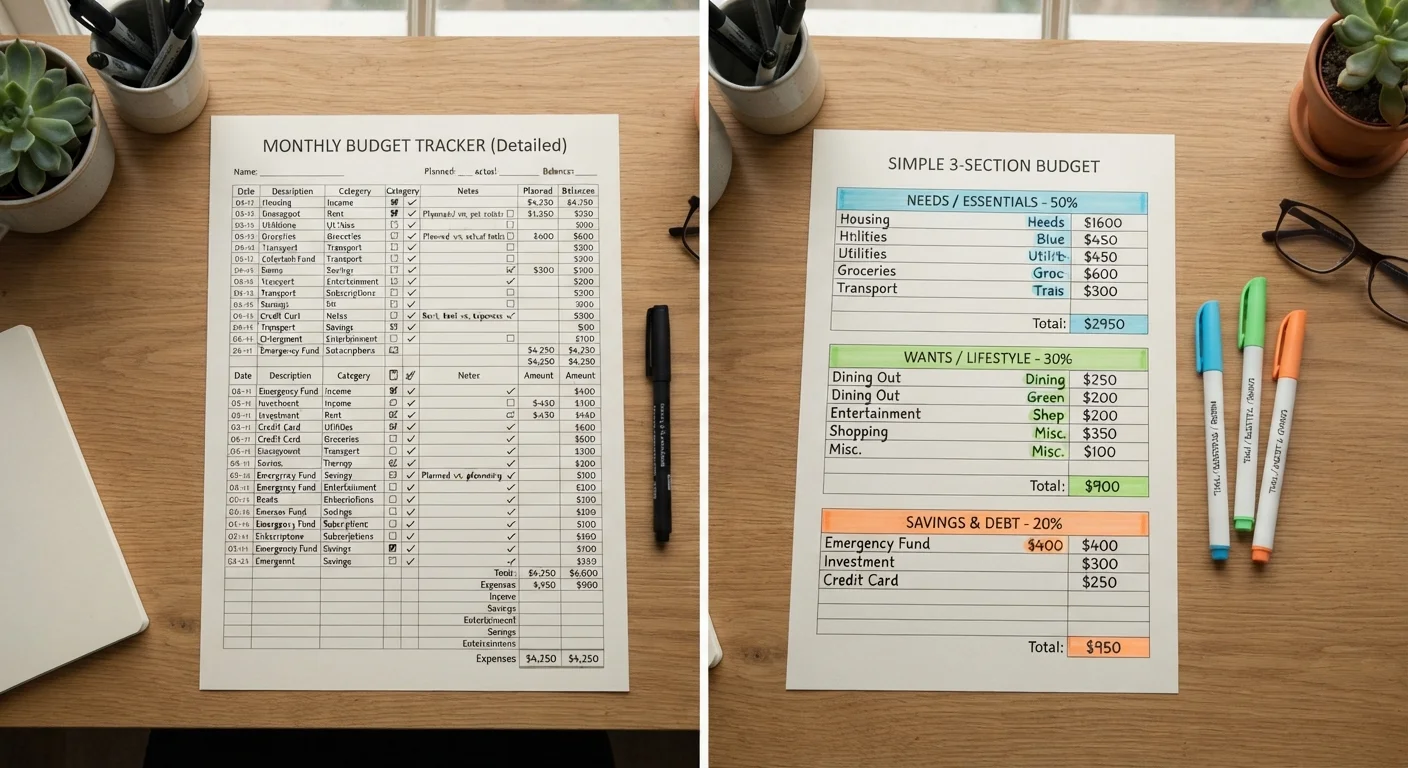
How Each Method Actually Works
Understanding the mechanics of each approach is the first step to choosing between them.
Zero-based budgeting (ZBB) starts with your total monthly income and requires you to allocate every single dollar to a named category — housing, groceries, savings, entertainment, and so on — until the remaining balance reaches zero. That zero doesn't mean you've spent everything; it means every dollar has a designated purpose, including savings and debt payments. You rebuild this plan from scratch each month.
The 50/30/20 rule, a framework popularized in personal finance literature, divides after-tax income into three fixed percentages: roughly 50% toward needs (rent, utilities, groceries), 30% toward wants (dining out, subscriptions, hobbies), and 20% toward savings and debt repayment. Instead of line-by-line categories, spending is judged by which bucket it falls into.
If you're starting from zero on budgeting concepts, the step-by-step guide to building your first monthly budget walks through foundational groundwork that complements either method.
| Criterion | Zero-Based Budgeting | 50/30/20 Rule |
|---|---|---|
| Core concept | Every dollar assigned a job | Income split by percentages |
| Monthly setup time | High — rebuilt each month | Low — percentages stay fixed |
| Ongoing tracking effort | Frequent check-ins needed | Periodic reviews sufficient |
| Works with variable income | Yes — adapts month to month | Less ideal — percentages shift |
| Spending control level | Granular, category-by-category | Broad, bucket-level |
| Best starting point | Motivated, detail-oriented planners | Budgeting beginners or busy schedules |
| Risk of abandonment | Higher if over-complicated | Lower due to simplicity |
Time Investment and Ongoing Effort
The practical gap between these two methods shows up most clearly in how much time you spend on them each month.
Zero-based budgeting is front-loaded with effort. Before the month begins, you'll typically categorize anticipated expenses, revisit last month's actuals, and adjust allocations accordingly. Many people who use ZBB review their spending weekly — sometimes more. The upside is that nothing slips through unnoticed. Irregular expenses like annual subscriptions or car maintenance are planned for rather than absorbed as surprises.
The 50/30/20 rule demands far less ongoing attention. Once you understand which expenses are needs versus wants, you mainly track whether total spending in each bucket stays within its percentage. A quick monthly review — perhaps 15 to 30 minutes — is often enough to course-correct.
~33%
Americans with a detailed monthly budget
Gallup polling has consistently found that fewer than one in three U.S. adults maintains a detailed household budget.
60%+
Income consumed by needs in high-cost metros
Housing cost analyses suggest residents in cities like San Francisco or New York frequently spend well above the 50% needs threshold on housing alone.
Neither level of effort is inherently better; the right choice depends on your available time and your financial situation. Tight margins or high financial stress often reward the closer attention ZBB provides. Stable income with reasonable expenses may not require that level of scrutiny.
Flexibility, Limitations, and Common Pitfalls
Every budgeting method has failure modes. Knowing them in advance helps you sidestep the most common ones.
Zero-based budgeting can become exhausting if you treat every small purchase as a separate category decision. Over-segmenting — creating 40-plus categories for a modest income — often leads to abandonment by the second month. The method also assumes relatively predictable income, making it trickier (though not impossible) for freelancers or hourly workers with variable pay. For a detailed look at why structured budgets often unravel, see why budgets fail in the second month.
The 50/30/20 rule has its own limitations. The percentages are guidelines, not universal truths. For someone in a high cost-of-living city, needs alone can easily consume 60–70% of take-home pay, leaving the math broken before you start. The want/need distinction is also genuinely blurry — is a gym membership a need or a want? Without clear personal definitions, the 30% wants bucket can quietly expand.
Needs vs. Wants: Define Them First
One of the most practical steps before adopting the 50/30/20 rule is writing out your personal definitions of needs and wants. A streaming service might be a want for one household and a primary entertainment need for another. Setting those definitions in writing removes ambiguity and keeps your 30% wants bucket honest. Revisiting those definitions quarterly is a good habit — life circumstances change.
If you're drawn to a more cash-centric approach, envelope budgeting in the digital age offers a third alternative worth comparing.
This article is for general informational purposes only and does not constitute personalized financial advice. Consult a qualified financial professional for guidance specific to your situation.