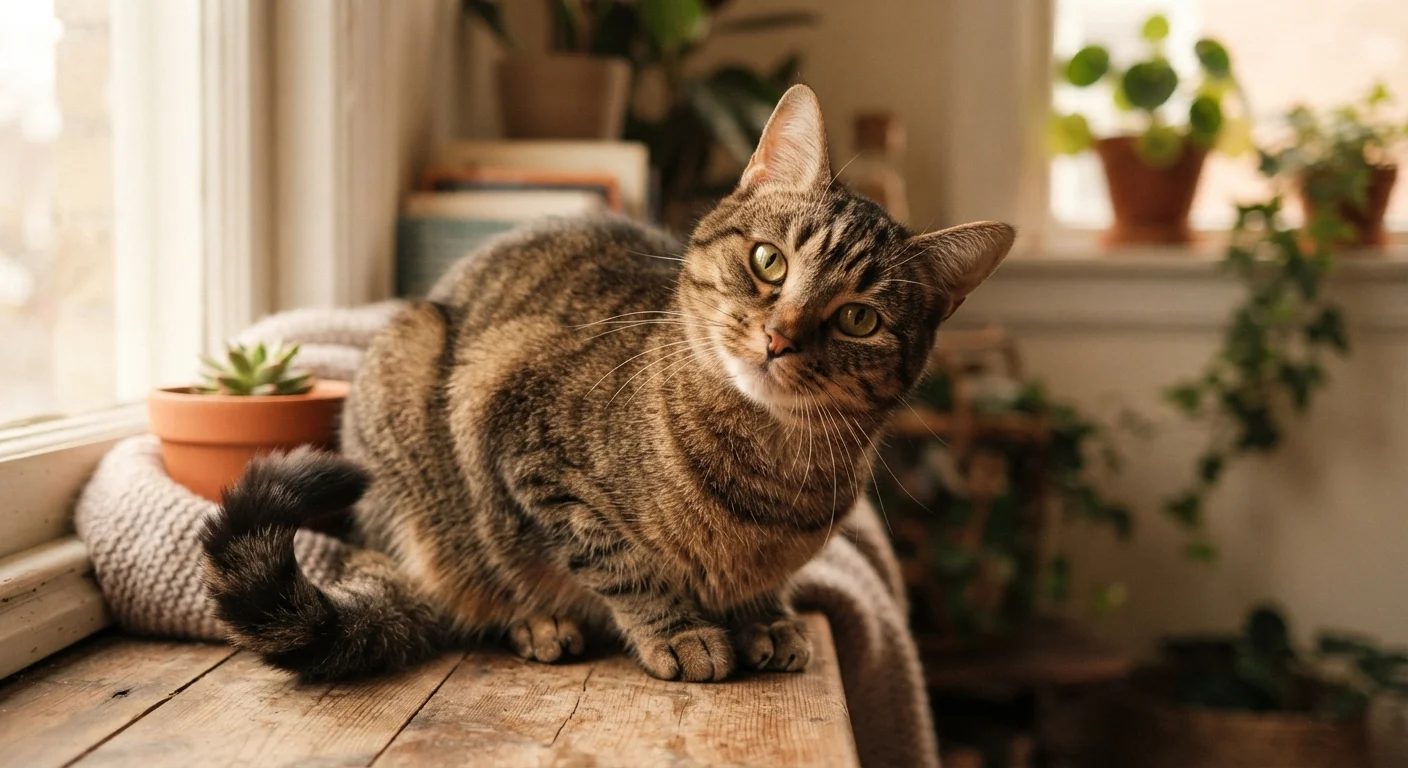
Why Cat Body Language Is Worth Learning
Cats communicate constantly — they just don't use words. Every flick of the tail, shift of the ears, or slow blink carries meaning, and reading those signals helps you respond to your cat's needs more effectively and build genuine trust over time.
Unlike dogs, cats rarely broadcast their emotions in obvious ways. A stress response can be as subtle as slightly flattened ears or a low-carried tail. Learning these signals early matters — missed cues can lead to misread moods, unwanted interactions, or delayed recognition of discomfort. If you're new to cat ownership, a solid grasp of body language pairs well with the broader grounding in what new cat owners need to know before and after bringing a cat home.
| Primary communication channels | Tail, ears, eyes, whiskers, posture, vocalizations |
| Slow blink meaning | A feline affiliative signal indicating trust and comfort (Animal Cognition research, 2020) |
| Tail-up greeting | Confident, friendly approach — most common between bonded cats and trusted humans |
| Ears flattened | Fear or imminent aggression — avoid touching the cat |
| Belly exposure | High trust signal, not always an invitation for belly contact |
| Piloerection (puffed coat) | Defensive fear response — cat is trying to appear larger |
Tail Signals: The Mood Meter
The tail is one of the most reliable real-time indicators of a cat's emotional state. Here's what common tail positions typically mean:
- Tail held high, tip slightly hooked: A confident, friendly greeting. This is a cat who's happy to see you.
- Tail puffed out (piloerection): Fear or agitation — the cat is trying to appear larger. Give space immediately.
- Tail tucked low or between legs: Anxiety or submission. Something in the environment is unsettling your cat.
- Slow, wide tail sweep: Concentration or mild irritation, often seen during prey-focused watching.
- Rapid flicking at the tip: Arousal or escalating frustration. Petting should stop before this progresses.
276+
Distinct facial muscle movements identified in cats
A 2023 study published in Behavioural Processes identified over 276 distinct facial action combinations in domestic cats.
~45°
Ear rotation range per side
Each cat ear can rotate independently up to roughly 180 degrees total, giving fine-grained directional hearing and expressive range.
Tail reading becomes more accurate when combined with other signals — never interpret a single cue in isolation.
Ears, Eyes, and Facial Cues
A cat's ears rotate independently and can shift dramatically in seconds. Forward-facing ears signal engagement and curiosity. Ears rotated sideways — sometimes called "airplane ears" — indicate mild unease or overstimulation. Ears flattened tight to the skull signal fear or imminent aggression; if you see this, do not attempt to pet or restrain the cat.
Eyes offer equally clear signals. Dilated pupils in normal lighting often mean excitement, fear, or high arousal. Constricted pupils in a calm setting suggest contentment. The slow blink — a soft, deliberate closing and opening of the eyes — is widely understood among animal behaviorists as a feline affiliative signal, sometimes described as a "cat kiss." Returning a slow blink to your cat can reinforce a sense of safety and connection.
Piloerection
The involuntary raising of fur along the back and tail, making the cat appear larger. It occurs in response to fear or intense agitation and is controlled by the sympathetic nervous system.
Affiliative signal
A behavior that promotes bonding and goodwill between individuals. In cats, slow blinking and head bunting are common affiliative signals directed toward trusted companions.
Head bunting
When a cat presses the top of their head firmly against a person or object. It deposits scent from facial glands and communicates comfort and social bonding.
Overstimulation
A state in which a cat has received more physical contact or sensory input than they can comfortably tolerate, often triggering sudden aggression or withdrawal. Common during extended petting sessions.
Airplane ears
An informal term for ears rotated sideways and slightly downward, indicating mild stress, uncertainty, or the early stages of overstimulation.
Whisker position is another useful cue: whiskers fanned forward suggest alertness or playfulness, while whiskers pulled back flat against the face indicate stress or defensiveness.
Posture and Overall Body Language
The whole body tells a story. A cat who rolls onto their back and exposes the belly is expressing trust — but this is not necessarily an invitation for a belly rub, which many cats find overstimulating. Approach this display with caution and let the cat guide contact.
A crouched, low posture with weight shifted backward signals defensiveness or fear. An arched back paired with a puffed tail is a classic fear response. By contrast, a cat sitting with weight evenly distributed and eyes half-closed is relaxed and at ease.
Head bunting — when a cat presses their forehead against you — and slow rubbing of the cheeks or chin along your hand or furniture are marking behaviors that also communicate affiliation and comfort. These are positive signs in any cat interaction.
Context Always Changes the Meaning
No single signal definitively tells you what a cat is feeling — always read the full picture. A dilated pupil in dim light is normal; the same pupil in bright light alongside a crouched posture suggests fear. The more you observe your individual cat's baseline, the more accurately you'll interpret deviations from it.
Curious how body language compares across species? See what your dog's body language signals for a useful contrast.
When Body Language Points to a Problem
Some signals indicate that a cat may be in physical discomfort rather than just an emotional state. Persistent hiding, a hunched posture with a tucked head, slow or labored movement, or a tail held rigidly low over an extended period can all be signs that something is physically wrong — not just behavioral.
If you notice a sudden, unexplained change in your cat's normal posture or demeanor that persists for more than a day or two, a veterinary evaluation is the appropriate next step. Behavioral changes are sometimes the first visible sign of illness in cats, who are naturally inclined to mask discomfort. Your vet can help distinguish stress-related signals from those pointing to a health concern — something worth discussing at your cat's annual wellness visit.
This article provides general information about cat behavior for educational purposes only and is not a substitute for professional veterinary advice. If you have concerns about your cat's health or behavior, consult a qualified veterinarian.