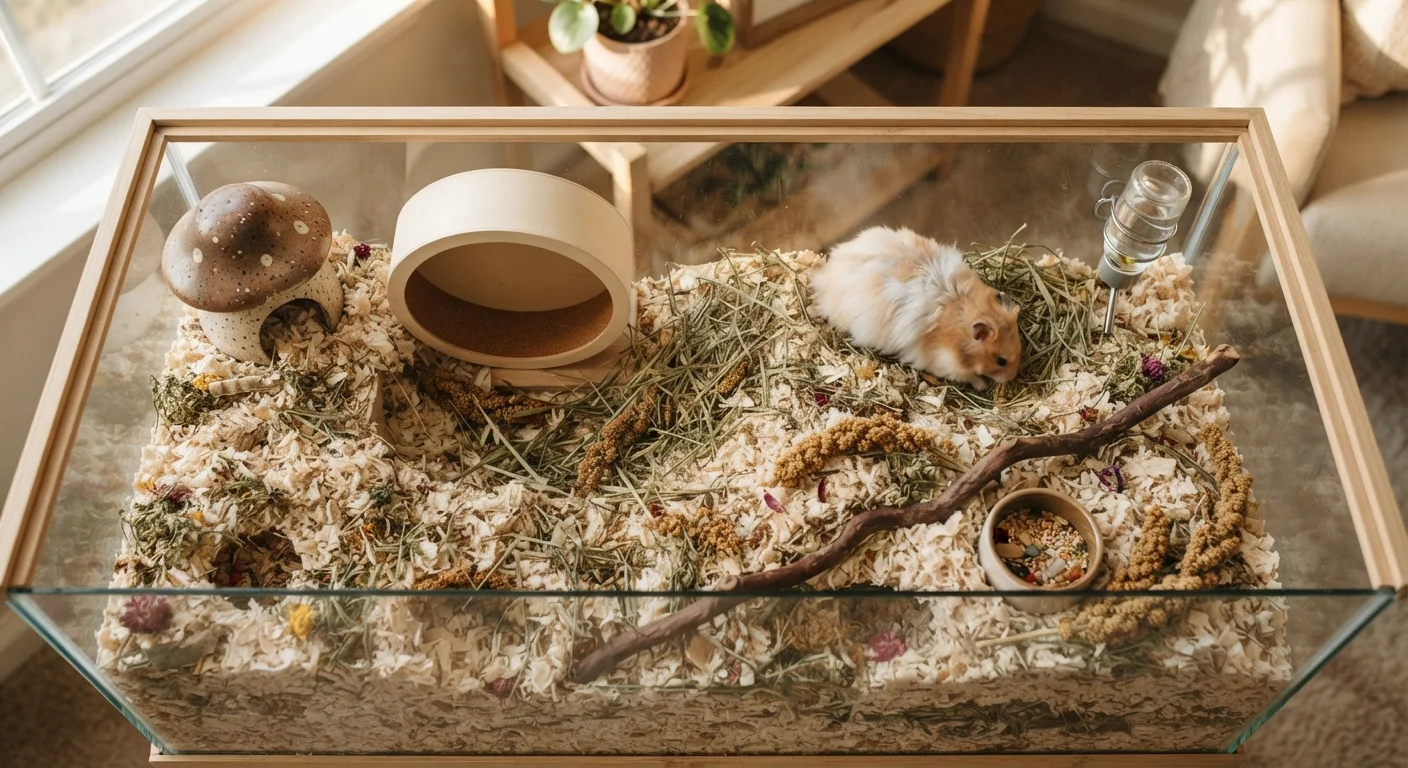
Why Hamster Habitat Design Matters More Than Most Owners Realise
Hamsters are frequently marketed as straightforward starter pets, but their behavioural and environmental needs are more specific than that reputation suggests. In their natural range across Central Asia and the Middle East, hamsters spend nights travelling long distances, digging complex burrow systems, and hoarding food — activities that are deeply ingrained in their biology.
When a home habitat fails to support these behaviours, hamsters commonly develop stereotypies — repetitive behaviours such as bar-chewing, corner-digging, or pacing — that signal chronic stress rather than entertainment. Understanding what your hamster is wired to do is the starting point for building a space that lets them do it.
It's also worth noting that hamsters are solitary by nature. Unlike guinea pigs or rabbits, keeping two hamsters together — even of the same species — typically results in serious fighting. If you're comparing small pet options, our guide on guinea pigs versus rabbits covers social needs and housing requirements for those species.
Hamsters Are Not Low-Maintenance Pets
Many owners underestimate what hamsters genuinely need to stay healthy. Inadequate space, shallow substrate, and poor enrichment are leading causes of stress and stereotypic behaviour — repetitive actions like bar-chewing or pacing. If you're new to small pet ownership, read our article on common small pet misconceptions before setting up your enclosure.
Before you gather materials, review the prerequisites and tools below. Setting up the habitat correctly from the start is far easier than trying to upgrade a stressed hamster's environment later.
What you will need
Large enclosure (450+ sq in floor space)
Provides enough room for movement, burrowing zones, and separated activity areas.
Paper-based or kiln-dried wood shaving substrate
Allows deep burrowing; avoid cedar or pine shavings, which release harmful aromatic oils.
Solid-surface, silent running wheel (10–11 inches for Syrian hamsters)
Supports the hamster's nightly exercise needs without causing back injury from a wheel that is too small.
Multiple hides and a nesting material supply
Gives the hamster safe retreats and materials to construct its own sleeping nest.
Heavy ceramic food dish and sipper bottle or drip-free water bowl
Stable feeding and hydration options that resist tipping and contamination.
Chew toys and wooden gnawing items
Supports dental health and satisfies the natural urge to gnaw.
Dig box or sand bath container
Provides additional sensory enrichment and a space for self-grooming via fine dust-free sand.
Step-by-Step: Building a Behaviour-Supportive Hamster Habitat
Choose an appropriately sized enclosure
Floor space is the single most important factor in your hamster's quality of life. Animal welfare organisations generally recommend a minimum of 450 square inches of unobstructed floor space, though larger is always better. For Syrian hamsters, a 40-gallon breeder-style tank or a purpose-built large bin cage works well. Dwarf species can manage slightly smaller footprints, but the same principle applies.
Prioritise floor area over height — hamsters live horizontally, not vertically. Tall cages with multiple platforms can cause dangerous falls and do not replace ground-level roaming space.
Add deep substrate for burrowing
In the wild, hamsters construct elaborate multi-chamber burrow systems that regulate temperature and provide security. Replicating this requires a minimum of 6–8 inches of substrate across at least part of the enclosure — with some owners successfully providing 10–12 inches in a designated burrowing corner.
Paper-based bedding or kiln-dried aspen shavings are widely considered appropriate options. Avoid scented, dusty, or cedar/pine-based products. Pack the substrate firmly in one corner to encourage stable tunnel construction.
Install a correctly sized, solid-surface wheel
Hamsters are crepuscular to nocturnal and can travel 5–8 miles in a single night. A wheel is not a luxury — it is a welfare essential. For Syrian hamsters, use a 10–11 inch diameter solid-surface wheel. Dwarf hamsters generally do well with 8-inch wheels. Always choose a model with no rungs or mesh that could trap paws.
Silent spinning wheels prevent noise disruption for the household and encourage the hamster to use the wheel freely without being startled by squeaking.
Set up multiple hiding spots and a nesting area
Hamsters feel safest when they have multiple retreat points throughout their enclosure. Provide at least two to three hides — one that can serve as a main sleeping nest and one or two others positioned in different areas. Ceramic or wood hides are preferable to plastic, which can harbour bacteria.
Supply unscented tissues, torn paper, or hay as nesting material. Hamsters will arrange this themselves to build a sleeping area that suits them. Avoid pre-made cotton nesting pads for the reasons noted above.
Incorporate foraging and enrichment opportunities
Hamsters are driven by the need to explore, hoard, and forage. Scatter portions of their daily food throughout the substrate rather than placing everything in one bowl. Add wooden chews, tunnels, cork logs, and occasional cardboard tubes to support gnawing and exploratory behaviour.
A sand bath using fine, dust-free reptile or small animal sand gives hamsters a self-grooming outlet and an additional textural enrichment zone. Rotate enrichment items weekly to maintain novelty without causing distress through extreme change.
Position the enclosure in a stable, low-stress location
Place the finished enclosure in a room that maintains a temperature between 65–75°F (18–24°C) and is free from drafts, direct sunlight, and loud, sudden noises. Hamsters can enter a dangerous torpor-like state in temperatures below 60°F, which is sometimes mistaken for hibernation but is actually a sign of thermal stress.
Keep the enclosure away from the household's main activity hub during the day so the hamster can sleep undisturbed. Once set up, monitor for signs of stress in your hamster such as bar-chewing, excessive digging at enclosure walls, or hiding for extended periods during active hours.
Scatter Feed Instead of Using a Bowl
Hiding food portions throughout the substrate mimics the foraging your hamster would do in the wild, turning feeding time into mental stimulation. This simple change can meaningfully reduce idle pacing and bar-chewing. Rotate hiding spots regularly to keep the activity engaging.
Avoid Wire-Bottom and Aquarium Cages Without Ventilation
Wire-bottom cages cause painful foot injuries called bumblefoot and prevent natural substrate depth. Fully sealed glass tanks without mesh lids restrict airflow and cause ammonia buildup from waste. Always choose an enclosure with solid flooring and adequate top ventilation.
Once your habitat is fully set up, give your hamster 48–72 hours to explore and settle in before handling begins. A newly placed hamster needs time to map its environment and establish a scent-marked home territory. For a complete guide to the arrival period, see our article on bringing a small pet home for the first time.
This article is for general informational purposes. If your hamster shows signs of illness, injury, or persistent abnormal behaviour, consult a veterinarian experienced in small animal care.