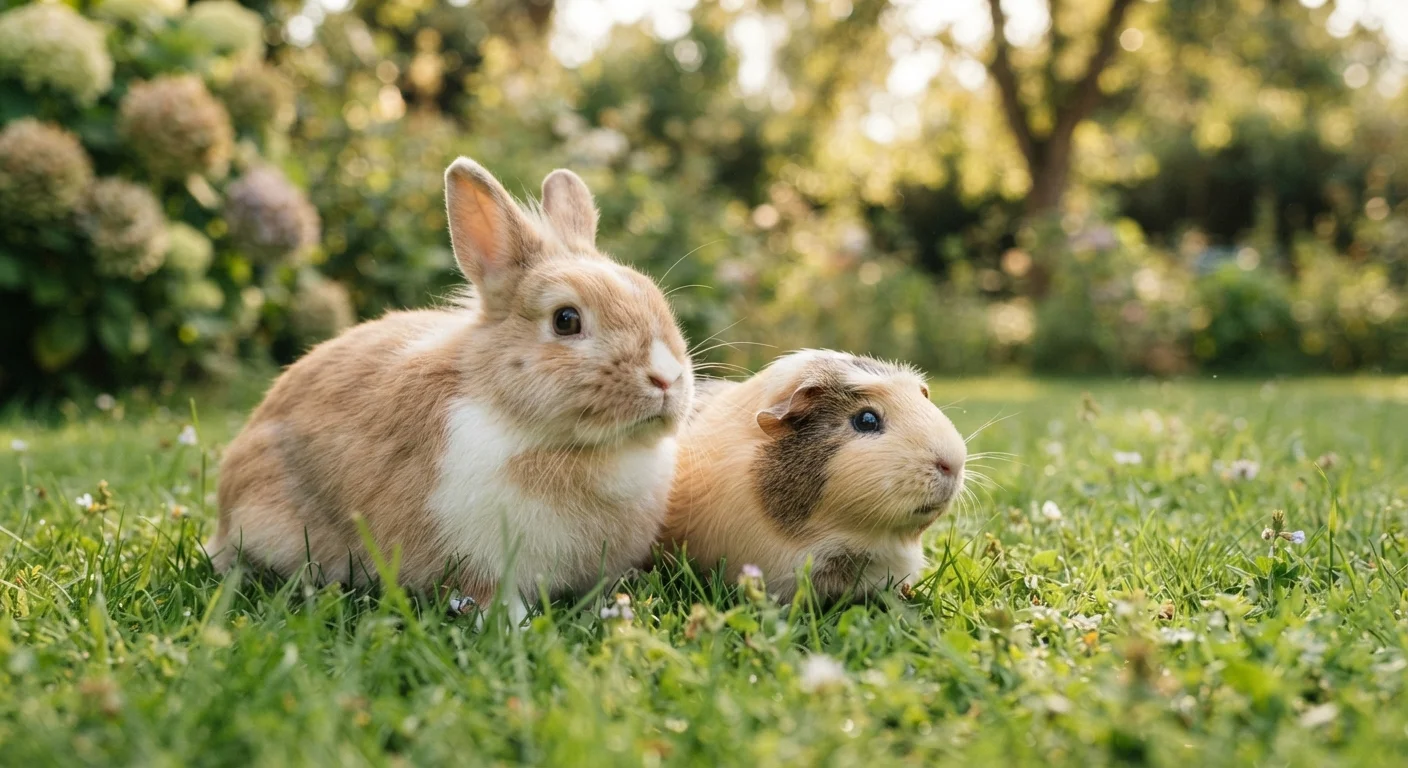
Social Needs and Companionship
Guinea pigs are herd animals by nature. Keeping a single guinea pig is widely discouraged by animal welfare organisations, as isolation can lead to stress and depression. Same-sex pairs or small groups work well, provided introductions are handled carefully. Their communicative range — from purring contentment to wheeking excitement — makes them unusually expressive companions.
Rabbits are social too, but in a different way. They can bond closely with a human owner and also benefit from rabbit companionship. A bonded pair of rabbits will groom each other and reduce each other's stress. However, rabbit introductions require more patience and a gradual process. An unbonded rabbit forced together with another can fight seriously. Understanding rabbit communication is an important part of ownership — our guide to rabbit body language breaks down what those postures and movements really mean.
A Note on Mixed-Species Housing
Guinea pigs and rabbits are sometimes housed together, but this is not recommended by most animal welfare experts. Rabbits can injure guinea pigs accidentally through kicking, and they communicate differently enough that cohabitation often causes chronic stress for the guinea pig. Each species thrives best with companions of its own kind.
Space, Exercise, and Housing
Both species need more room than the small cages often sold in pet stores. For guinea pigs, a minimum enclosure of 7.5 square feet for two animals is a commonly cited welfare guideline, though larger is always better. They don't jump or climb significantly, so a single-level pen works well.
Rabbits have much higher exercise demands. They need several hours of supervised free-roaming time outside their enclosure each day, plus a living space large enough to allow multiple full hops and upright stretching. Indoor rabbit-proofing — covering cables, blocking access to hazardous areas — is essential. A rabbit kept in too small a space is prone to skeletal problems, obesity, and behavioural frustration.
| Criterion | Guinea Pigs | Rabbits |
|---|---|---|
| Typical lifespan | 4–7 years | 8–12 years |
| Social housing | Pairs or groups strongly advised | Bonded pair beneficial; solo possible |
| Daily exercise needs | Moderate; large pen adequate | High; several hours free-roaming required |
| Vitamin C requirement | Yes — must come from diet | No special requirement |
| Ease of handling | Generally tolerant and calm | Can kick or scratch if startled |
| Suitability for children | Good with supervision | Better for older children |
| Vocalisations | Frequent and expressive | Mostly silent; uses body language |
| Indoor proofing needed | Minimal | Extensive cable and hazard-proofing |
Before bringing either animal home, it pays to plan carefully. Our article on bringing a small pet home for the first time covers housing setup, diet basics, and the settling-in period in practical detail.
Diet and Nutritional Needs
Fresh grass hay — timothy hay being the most commonly recommended — should form the majority of both species' diets. It provides the fibre essential for healthy gut motility and dental wear, since both animals have continuously growing teeth.
Guinea pigs have one notable nutritional requirement that rabbits do not: they cannot synthesise vitamin C and must obtain it through their diet daily. Fresh leafy greens like romaine lettuce, bell peppers, and parsley are good sources. Commercially available vitamin C supplements can help but should not replace whole-food sources. Pellets formulated specifically for guinea pigs should be plain and hay-based, not seed mixes.
Rabbits also benefit from daily leafy greens alongside unlimited hay, with pellets playing a smaller supplementary role for adult animals. Fruits and starchy vegetables should be given only as occasional treats. Overfeeding pellets is a common mistake that contributes to obesity and dental disease in rabbits.
80%+
Of diet that should be hay
Veterinary small-animal guidelines consistently recommend that hay make up the vast majority of both guinea pig and rabbit diets to support gut and dental health.
4–7 yrs
Average guinea pig lifespan
The American Veterinary Medical Association notes that guinea pigs typically live 4–7 years under good care conditions.
8–12 yrs
Average domestic rabbit lifespan
Domestic rabbits commonly live 8–12 years, underscoring the long-term commitment involved in rabbit ownership.
Lifespan, Health, and Veterinary Care
Guinea pigs typically live 4–7 years, while domestic rabbits commonly reach 8–12 years — a significant difference when considering the long-term commitment involved. Both animals are prey species and instinctively hide signs of illness, which means health problems can be well advanced before an owner notices anything wrong.
Regular veterinary check-ups with a vet experienced in exotic animals or small mammals are important for both species. Common guinea pig health concerns include dental problems, respiratory infections, and skin conditions like mange. Rabbits are prone to GI stasis (a life-threatening slowdown of the digestive system), dental disease, and urinary problems. Spaying or neutering is generally recommended for rabbits for both health and behavioural reasons and should be discussed with a qualified vet. For a fuller picture of what small-pet veterinary care involves, see our article on why small pets still need veterinary care.
It's also worth challenging some common assumptions before choosing either pet. Our piece on small pet myths that cause more harm than good addresses several misconceptions about small animals that can lead to unintentional neglect.
This article is for general informational purposes only and does not constitute veterinary advice. Always consult a qualified veterinarian for guidance specific to your pet's health and care needs.