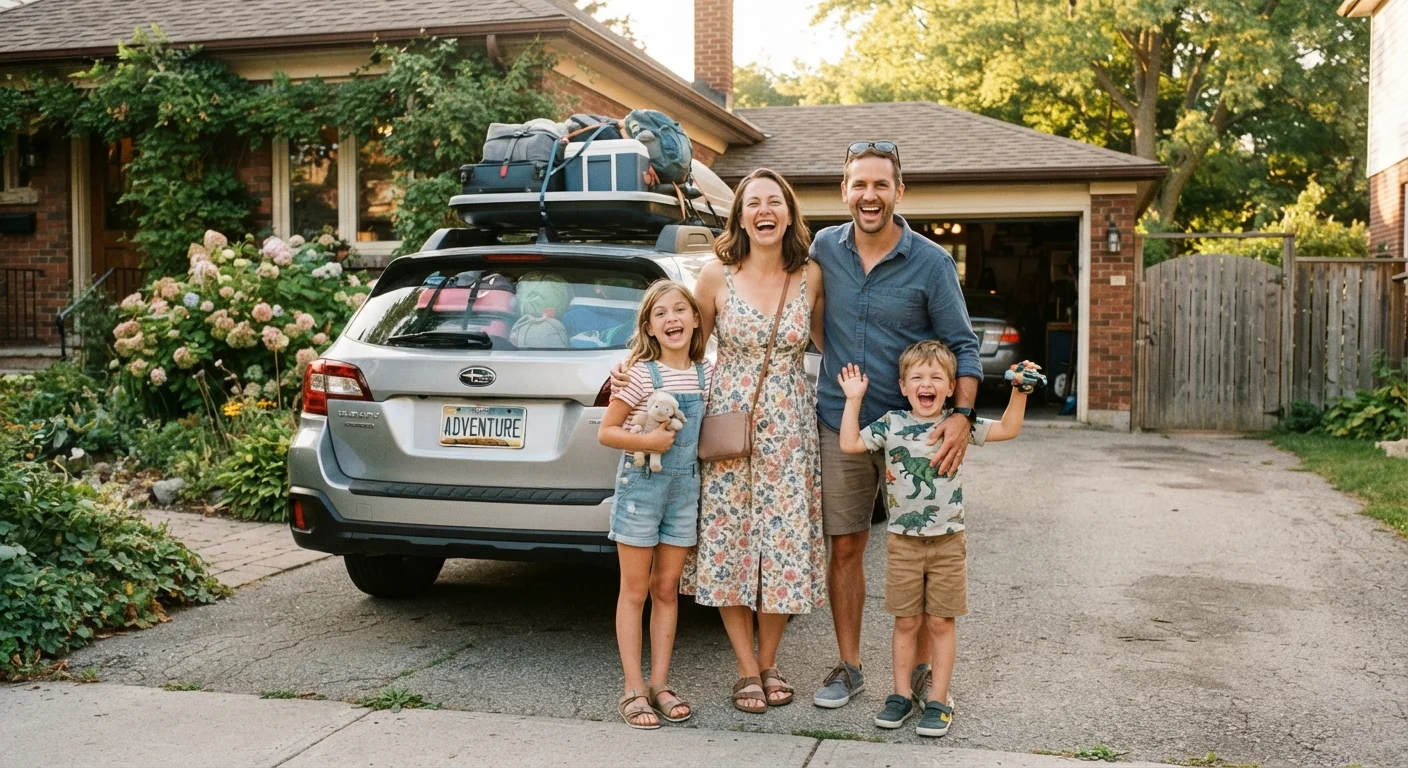
Why First Family Trips Feel So Overwhelming
Planning a vacation with kids for the first time tends to trigger a specific kind of paralysis: too many variables, too much conflicting advice, and a nagging fear that a wrong call will ruin the whole experience. Most of that anxiety is louder than it needs to be.
The real challenge isn't logistics — it's recalibrating your expectations. A successful family trip isn't measured against the spontaneous travel you did before kids. It's measured against whether your family came home having enjoyed something together. That's a much more achievable bar.
If you've ever tackled a big organizational project and felt that same initial overwhelm, you already know the fix: break it into smaller pieces and start with what you can control. The same principle applies here — start small, build confidence, then scale up.
Anchor activity
The one planned highlight of a travel day — a park visit, a museum, a swim. Everything else is optional, which keeps the schedule from becoming a pressure cooker.
Shoulder season
The period just before or after a destination's peak tourist season. Prices are typically lower, crowds thinner, and conditions often still pleasant.
Contingency buffer
A percentage of your travel budget set aside for unplanned costs — things that come up unexpectedly when traveling with kids, as they reliably do.
Kid-scale activities
Attractions and experiences sized to what your child can physically and emotionally handle — not just child-friendly in name, but genuinely engaging for their age.
Self-catering accommodation
A rental or lodging with a kitchen, allowing families to prepare some meals rather than eating out for every meal, which saves money and gives kids familiar food options.
Choosing the Right Destination for Your Family
For a first trip, the best destination is usually the one with the lowest stakes, not the most impressive Instagram backdrop. A state or national park within a few hours of home, a beach town you've visited before, or a mid-sized city with reliable family infrastructure (playgrounds, easy dining, walkable attractions) are all solid candidates.
When evaluating a destination, run it through three filters: proximity (can you get there without a full travel day?), flexibility (does it have easy alternatives if a plan falls apart?), and kid-scale activities (are there things your specific child will genuinely enjoy, not just tolerate?).
For families considering their first longer drive, planning a US road trip from scratch covers route selection and logistics in detail. If air travel is on the table, it's worth understanding what makes flying with young children harder than expected before you commit to tickets.
Test the trip before you book it
Before committing to a full vacation, try an overnight trip to a nearby destination. You'll quickly learn how your family handles packing, transit, and sleeping in an unfamiliar place — and you'll carry those lessons into your first real trip with far less guesswork.
Pacing: The Single Biggest Factor in Family Travel
Experienced family travelers will tell you the same thing: they planned too much on their first trip. A packed itinerary that would suit a couple in their 20s will exhaust a family with a 4-year-old by 11am on day two.
A general rule worth adopting: plan one anchor activity per day and treat everything else as optional. This leaves room for the inevitable — a tantrum, a nap that runs long, a spontaneous detour that turns out to be the highlight of the trip.
Build in transition time between locations. If you're driving, schedule genuine stops rather than white-knuckling through to the destination. Road trips with kids work best when the journey itself has moments worth stopping for, not just an endpoint to endure.
Don't confuse a busy itinerary with a good trip
Trying to see and do everything on a family trip is one of the most common first-time mistakes. Children don't experience vacations the way adults do — they need downtime, familiar routines, and space to just be somewhere new. An overscheduled trip often leads to meltdowns, exhaustion, and a family that swears off traveling for years.
Building a Realistic Family Travel Budget
Family travel costs more than solo or couple travel — that's simply true. But the gap is often smaller than parents fear, particularly for domestic trips where you control the variables. The key is building a budget from actual line items rather than a rough guess.
Start with your non-negotiables: accommodation, fuel or transport, meals, and one or two paid activities. Then add a contingency buffer of roughly 15–20% for unplanned costs (a restaurant visit when the picnic plan fails, a pharmacy run, a souvenir your child will genuinely treasure).
Budget travel strategies — like traveling in the shoulder season, choosing self-catering accommodation, or using national park passes — can make a meaningful difference without sacrificing the experience. The goal isn't to spend nothing; it's to spend intentionally so you're not stressed mid-trip.
Costs vary widely by destination and season
The figures and strategies mentioned here are general guidance, not guarantees. Actual travel costs depend on your region, travel dates, accommodation choices, and how many people are in your family. Always verify current prices directly with providers, and remember that conditions can change between planning and departure.
Getting Out the Door Without the Chaos
The day before departure is where first-time family trips often start to unravel. Overpacking, forgotten essentials, and last-minute scrambling are all avoidable with a simple preparation checklist built a week in advance — not the night before.
Assign each family member a packing responsibility appropriate to their age. Even a 5-year-old can choose which stuffed animals come. This reduces your mental load and gives kids a sense of investment in the trip.
If you're driving, review what first-time long-distance drivers should know before hitting the highway — vehicle prep and route planning make a real difference when you've got a carful of kids depending on a smooth ride. Then focus on the thing that matters most: leaving with realistic expectations and a willingness to adapt. The families who enjoy travel most aren't the ones who planned perfectly — they're the ones who stayed flexible.
US National Park Service
The official NPS website lists every national park, entrance fees, family amenities, and seasonal hours. A practical starting point for families considering a nature-based first trip.
Road Trip Planning Hub
Our road trip planning hub covers vehicle prep, route pacing, and logistics for families hitting the highway for the first time.
Budget Travel Strategies
Explore budget travel approaches suited to families — from off-season timing to accommodation choices that stretch your dollar without sacrificing comfort.