Why This Checklist Exists
Ask most drivers what they pack for a road trip and you'll hear the same answers: snacks, phone charger, bag of clothes. That covers the obvious — but it leaves a surprising number of critical items on the garage floor. The gaps tend to cluster in three areas: vehicle safety gear, document backups, and the small comfort tools that prevent minor discomforts from becoming trip-wrecking problems.
This checklist is built around those blind spots. Whether you're crossing two states or two time zones, it's designed to help you audit what's already in your car and identify what genuinely isn't. For a deeper look at the mechanical side of pre-trip preparation, see The Pre-Departure Vehicle Check Every Road Tripper Should Run — this list picks up where that one leaves off.
Portable Jump Starter
Lets you restart a dead battery without needing another vehicle — essential on remote or low-traffic stretches.
Offline Navigation App
Provides turn-by-turn directions when cell service drops, which is common across large portions of rural US highways.
High-Capacity Power Bank
Keeps phones, GPS devices, and other electronics charged during extended stops away from the vehicle.
Roadside Emergency Kit (Pre-Assembled)
Bundles reflective triangles, basic tools, and a tow rope in one bag — useful if you prefer not to source items individually.
Paper Road Atlas
Provides full-route visibility and backup navigation when digital systems fail or battery runs low.
Insulated Cooler Bag
Keeps perishable snacks and drinks cold without requiring ice, reducing food waste and unplanned pit stops.
The Full Packing Checklist
Work through each category before loading your vehicle. Items marked must are non-negotiable for safe, legal, and functional travel. Should items are strongly recommended for any trip over a few hours. Nice-to-have entries add meaningful comfort and convenience without being essential.
Vehicle Safety & Emergency
Navigation & Documents
Power & Connectivity
Comfort & Fatigue Management
Cleanliness & Incidentals
Weather & Environmental Readiness
Don't Rely Solely on Digital Documents
Several US states require physical proof of insurance and registration during a traffic stop — screenshots and app-based versions may not be accepted by all officers. Always carry paper copies, even if you also use a digital wallet. If you're unsure of your state's requirements, verify with your state DMV before departing.
If you're traveling with kids, the comfort and entertainment categories expand considerably — Road Trips With Kids: What Actually Makes Them Work covers those specifics in detail. And if budget tracking is a priority, The Hidden Costs of US Road Trips can help you plan for the expenses most travelers miss.
Loading Smart Once You've Got It All
Packing the right items is only half the equation — where and how you load them matters too. Heavy items like spare tires, tool kits, and coolers belong low and toward the center of the cargo area to preserve handling balance. Frequently accessed items (snacks, phone chargers, first-aid kit) should stay within reach of front-seat passengers without requiring you to stop and dig.
Accessibility to Emergency Gear Is Non-Negotiable
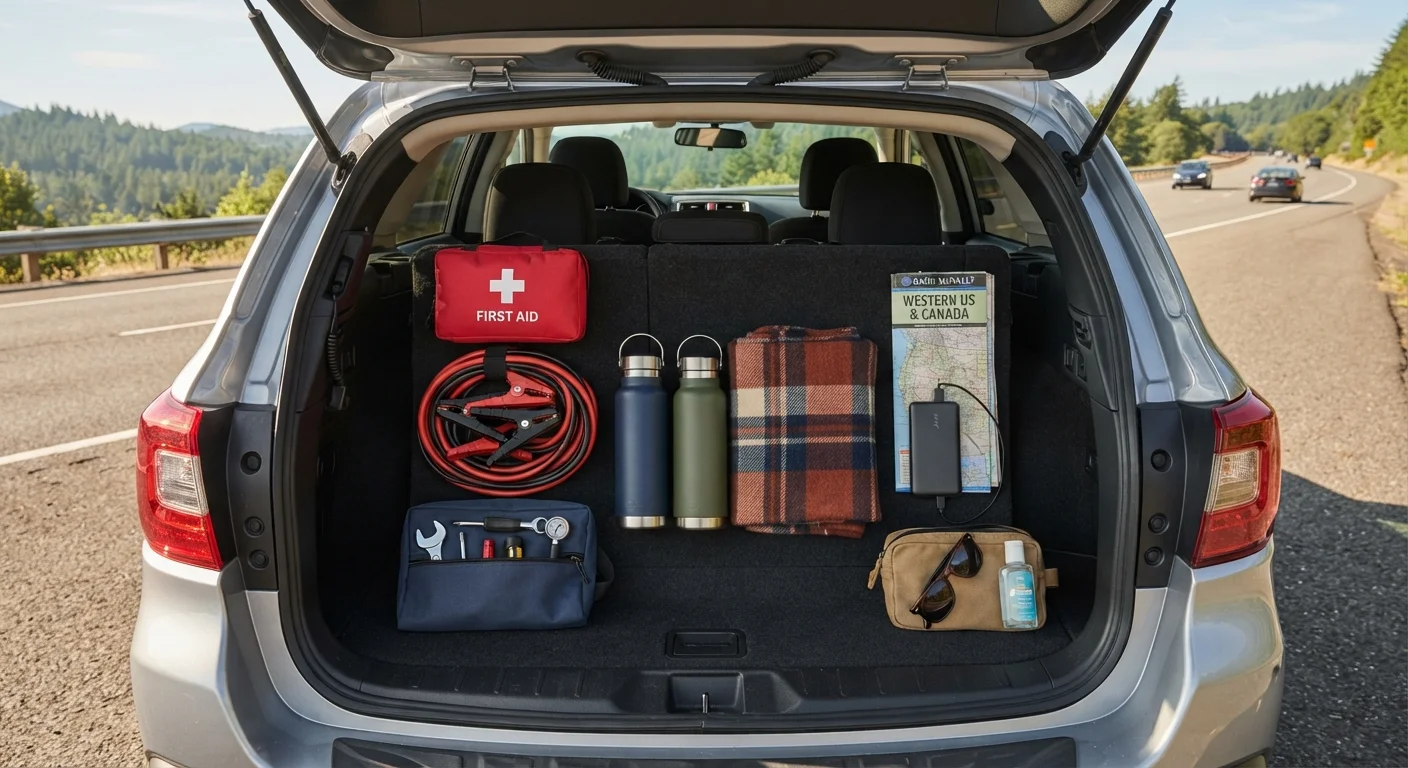
A first-aid kit buried under luggage is nearly useless in an emergency. Emergency items — including your flashlight, first-aid kit, jumper cables, and warning triangles — should be retrievable within 60 seconds without moving other bags. Practice locating them before you leave home, not after something goes wrong.
Keep your emergency gear — jumper cables, reflective triangles, flashlight — accessible without having to unload the entire trunk. A dedicated bag or mesh organizer makes a real difference at 2 a.m. on a dark interstate. For the full picture on load strategy, Packing the Car Smartly goes into detail on weight distribution and visibility. Once you're on the road, safe driving habits and planned rest stops will do as much for your trip as anything in the trunk.