What Each Route Type Actually Offers
At their core, motorways and scenic routes serve fundamentally different purposes — and recognizing that distinction is the first step to planning confidently.
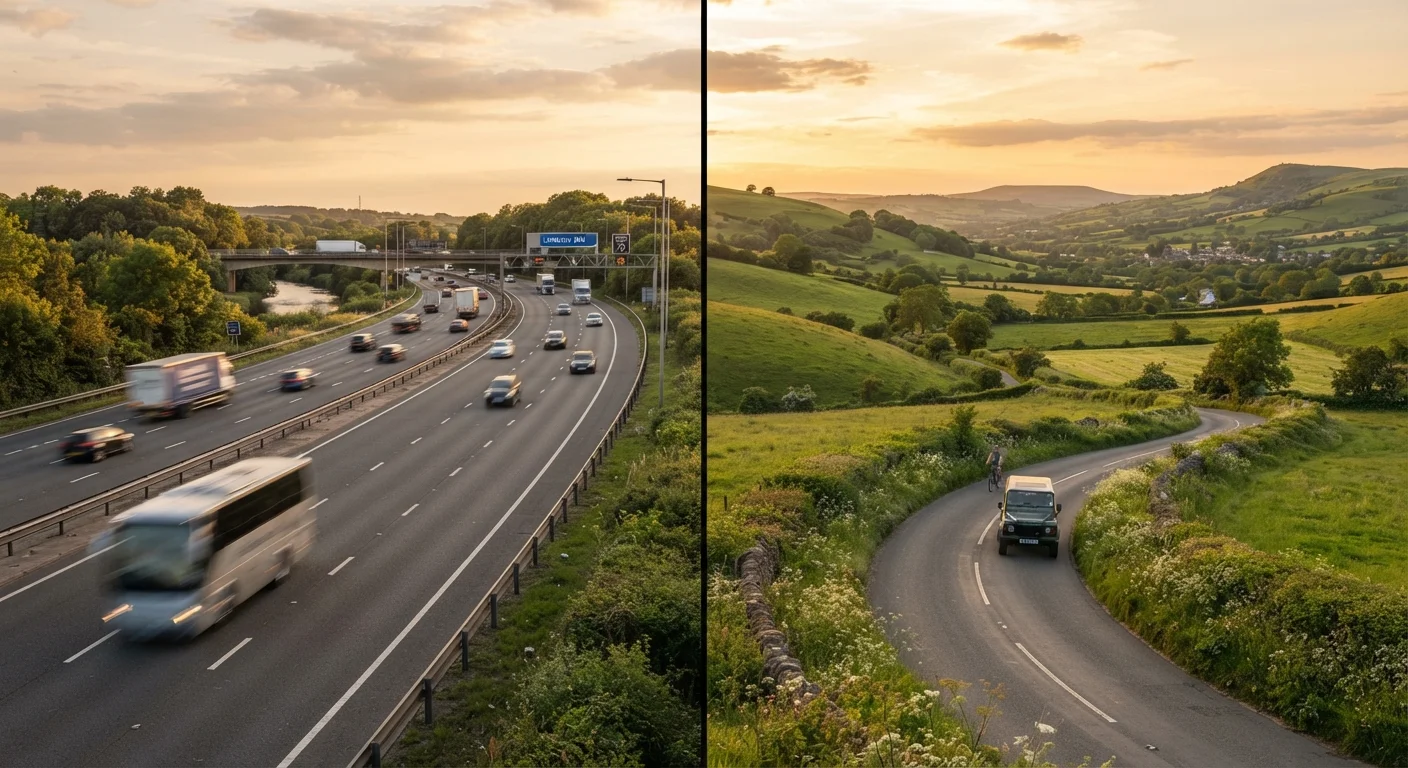
Motorways (including US interstates and major highways) are engineered for efficiency. Wide lanes, controlled access points, consistent speed limits, and regular service plazas combine to make long-distance travel faster and more predictable. Navigation is straightforward, and emergency services are generally closer at hand.
Scenic routes — state highways, back roads, national park byways, and rural county roads — are a different proposition entirely. They're rarely optimized for speed. Instead, they thread through landscapes, small towns, and areas of natural interest that motorways deliberately bypass. Expect narrower lanes, variable road surfaces, fewer fuel stations, and more frequent turns.
For a deeper look at how road environments shape your driving habits and hazard exposure, see our article on how your risk profile changes between motorway and urban driving.
| Criterion | Motorway | Scenic Route |
|---|---|---|
| Travel speed | Faster, consistent | Slower, variable |
| Navigation complexity | Low — straightforward | Higher — more turns, decisions |
| Fuel station access | Frequent, predictable | Infrequent, plan ahead |
| Roadside services | Regular rest areas and plazas | Limited, town-dependent |
| Scenery and experience | Functional, repetitive | Varied, often spectacular |
| Flexibility for detours | Low — controlled access | High — stop almost anywhere |
| Road surface quality | Generally maintained | Variable — check conditions |
| Best for | Time-sensitive trips | Leisure and exploration |
Time, Fuel, and Vehicle Readiness
The efficiency gap between routes is real and worth quantifying before you set out. A scenic alternative can add anywhere from 30 minutes to several hours depending on distance and terrain — that's not a trivial consideration if you're covering several hundred miles.
Fuel planning deserves particular attention on back roads. Service stations may be spaced 50 or more miles apart in rural areas, and remote stretches — think desert highways or mountain passes — can push that further. On a motorway, fuel anxiety is rarely a concern; on a scenic route, it can define your itinerary.
~50 mi
Average gap between rural fuel stations
In remote areas of the American West, fuel stations on scenic routes can be spaced 50 miles or more apart, requiring deliberate planning.
30–120 min
Typical added travel time on scenic routes
Scenic alternatives commonly add between 30 minutes and two hours compared to equivalent motorway distances, depending on terrain and road type.
Vehicle condition matters more when services are scarce. Before taking any extended back-road trip, verify tire pressure and tread depth, confirm your spare is in good condition, check engine coolant and oil levels, and ensure your roadside kit includes a charged phone power bank. A breakdown on a quiet rural road involves a very different wait time than one on a busy interstate.
Drivers planning cross-country travel can also weigh up these considerations in our guide to coastal highways versus inland interstates.
Experience, Flexibility, and Who's in the Car
Route choice isn't purely logistical — it's also about what kind of trip you want to have. Motorways compress travel into a means to an end; scenic routes make the driving itself part of the destination.
For families with young children, motorways offer a practical advantage: predictable rest stops with restrooms, food, and space for kids to stretch. Unplanned stops on back roads require pulling off safely on narrow shoulders or finding facilities in small towns. Our article on road trips with kids covers strategies for managing long drives regardless of route type.
Solo drivers and those travelling for leisure often find scenic routes more rewarding. The freedom to stop at an overlook, wander through a small town, or follow a detour on instinct is genuinely difficult to replicate on a controlled-access highway. If that exploratory quality matters to your trip, see our piece on how solo and group road trips differ for perspective on how travel style shapes these decisions.
Check Road Conditions Before You Go
Scenic and rural roads are more susceptible to seasonal closures, flooding, and surface damage than major highways. Mountain passes in particular may close during winter months or after severe weather events. Always check state department of transportation road condition reports and any relevant national park advisories before committing to a back-road route. Building in a motorway contingency is a sensible backup plan.
For route inspiration, our overview of iconic American road trip routes highlights scenic drives that balance accessibility with genuine reward.