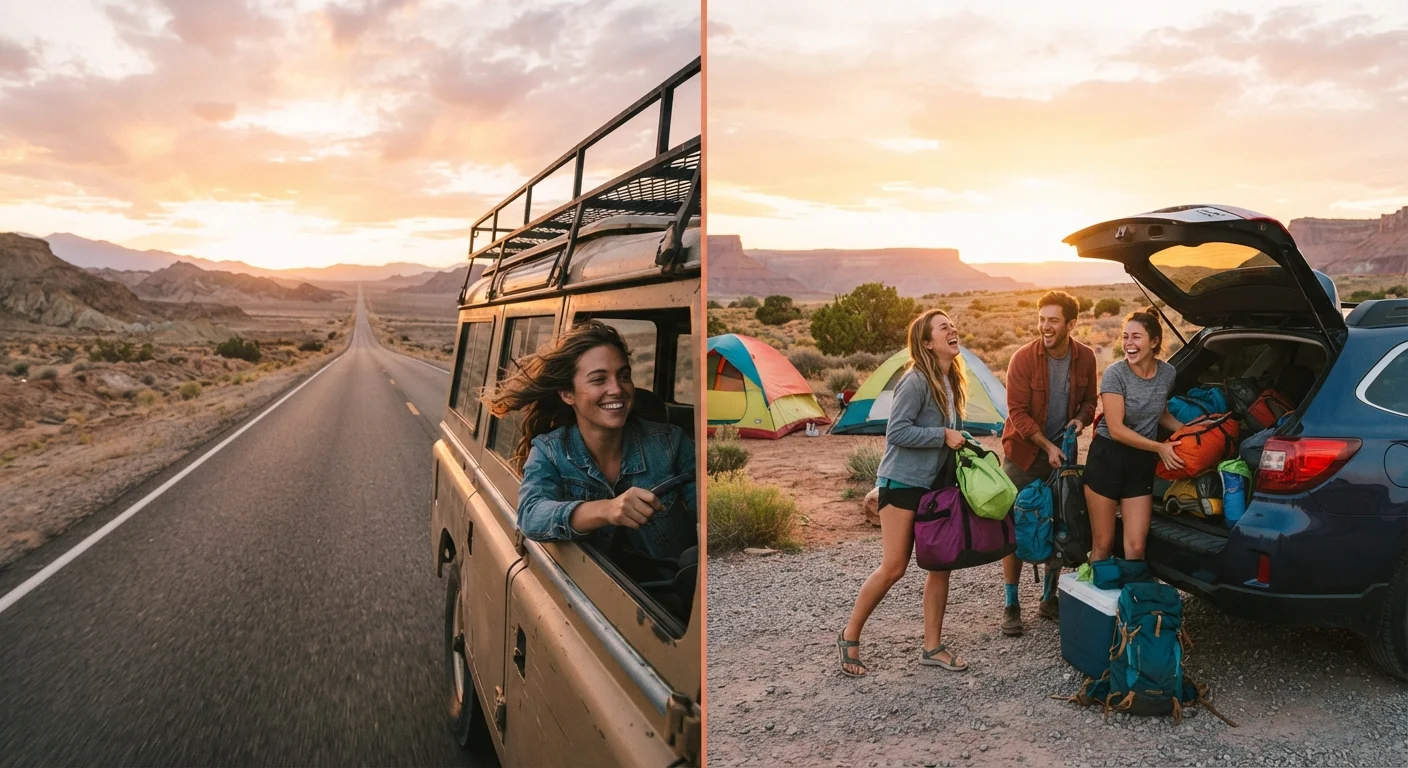
The Core Difference: Decision-Making
The single biggest gap between solo and group road trips isn't the car, the route, or the budget — it's who holds the wheel on every decision. When you travel alone, every call is yours: when to stop, where to eat, how long to linger at a viewpoint. That freedom is exhilarating, but it also means every logistical problem lands squarely on your shoulders.
Group trips distribute that mental load, but they also dilute total control. Even a well-matched group of two will spend some trip energy on negotiation — whether to detour for a roadside attraction or push through to the next campground. Before choosing your format, it's worth being honest about whether you thrive with total autonomy or genuinely enjoy collaborative planning. See our guide to planning a US road trip from scratch for a useful framework either way.
| Solo Road Trip | Group Road Trip | |
|---|---|---|
| Decision-making | Total autonomy | Shared, requires compromise |
| Per-person cost | Higher — all expenses on one person | Lower — costs split among travelers |
| Route flexibility | Maximum spontaneity | More fixed itinerary needed |
| Driving fatigue | Full driving load on one person | Driving duties can be shared |
| Safety buffer | Lower — no on-hand support | Higher — others present to assist |
| Social energy | Solitary, reflective | Shared memories, social dynamic |
| Pre-trip planning effort | Moderate — one person decides | Higher — coordination required |
Cost: Where the Numbers Actually Land
Budget is one area where the group format has a clear structural advantage. Fuel, accommodation, and even groceries for a cooler all divide across however many people are sharing the ride. A solo driver absorbs 100% of every expense — and that adds up fast on a cross-country route.
2–4x
Relative solo cost vs. group per person
General travel cost-sharing estimates suggest a solo traveler typically pays two to four times more per person than someone in a group of four splitting the same fixed expenses.
~30%
Of US road trippers travel solo
Survey data from travel research firms has consistently found roughly a quarter to a third of American road trippers take at least one solo trip annually.
That said, solo travel can reclaim some ground with flexibility. One person can pivot to a cheaper motel, skip a paid attraction, or eat from a gas station without any social friction. Groups, conversely, sometimes spend more than budgeted because consensus tends toward comfort. For general strategies on keeping costs manageable on either format, the budget travel hub covers practical approaches worth reviewing before you depart.
Designate a Trip Treasurer for Group Trips
Money disagreements are one of the most common sources of friction on group road trips. Before departure, agree on a shared fund for joint expenses like gas and accommodation, with one person tracking the balance. Apps that split costs can help keep things transparent and reduce end-of-trip awkwardness.
Safety and Peace of Mind on the Road
Safety dynamics shift noticeably depending on whether you're alone or with others. Solo drivers carry greater personal risk if a breakdown, medical issue, or wrong turn occurs in a remote stretch — there's no one to help troubleshoot, share driving fatigue duties, or stay with the vehicle while you seek assistance. Roadside assistance membership and a fully charged phone are especially non-negotiable when travelling alone.
Groups provide a built-in safety buffer: shared driving reduces fatigue, and having another set of eyes helps with navigation and spotting hazards. However, groups can also breed overconfidence — the social atmosphere sometimes leads to later nights and longer drives than a solo traveller might push.
Don't Skip Fatigue Management When Driving Solo
Drowsy driving is a serious safety risk, and solo drivers have no co-pilot to take over when alertness drops. Plan rest stops every two hours or so, avoid driving late at night if you're already tired, and don't rely solely on caffeine to push through. If you feel genuinely fatigued, stopping for the night is always the right call.
Whatever your format, the pre-trip vehicle checklist stays the same. Our first long-distance drive guide covers the preparation basics that apply regardless of how many passengers you're carrying.
Route Flexibility and the Stop Experience
Solo road trips are uniquely well-suited to spontaneity. Spotting an unmarked canyon trail or a small-town diner that looks interesting? You stop. No one to consult, no schedule to defend. This makes solo travel especially rewarding on routes built around exploration, like the Blue Ridge Parkway or lesser-known stretches of the Southwest.
Group trips tend to require anchoring the itinerary more firmly — especially if children are involved. If you're planning a family format, the road trips with kids guide addresses exactly how to manage that structure without losing the spirit of the trip. For adults-only groups, the challenge is softer but still real: agreeing on the ratio of motorway versus scenic route miles can itself become a sticking point.
One thing both formats share: the stops themselves — national parks, small towns, roadside curiosities — are equally available to any traveller. What differs is how freely you can pursue them. See our overview of how Americans actually road trip for inspiration on what kinds of stops tend to define memorable journeys.