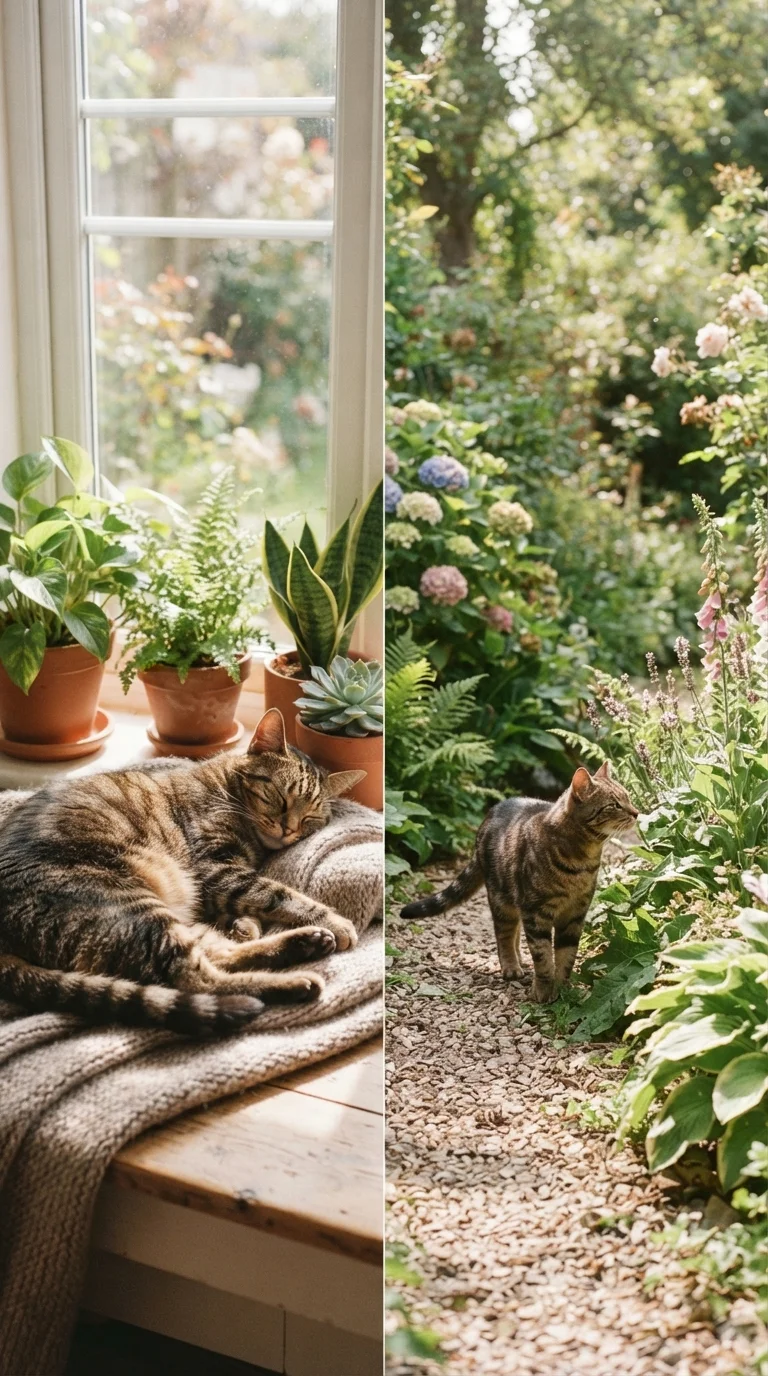
The Core Trade-Off: Safety vs. Stimulation
The indoor vs. outdoor debate often gets framed as a moral question, but it's really a question of trade-offs. Neither lifestyle is inherently cruel, and neither is automatically ideal. What matters is understanding what each actually involves — for your specific cat, in your specific environment.
Outdoor cats gain access to natural stimulation: hunting instincts can play out, territories can be explored, and sensory variety is constant. But these same opportunities come bundled with genuine hazards — vehicle traffic, territorial fights, infectious disease, parasites, and exposure to toxic plants or rodenticides.
Indoor cats avoid most of those acute risks, but can face their own challenges. Without deliberate enrichment, confinement can lead to boredom, anxiety, or behavioral issues. See our guide to keeping a solo cat mentally stimulated for practical enrichment ideas that make a real difference.
| Criterion | Indoor Cat | Outdoor Cat |
|---|---|---|
| Average lifespan | 12–18 years (generally longer) | 5–10 years (varies widely) |
| Injury risk | Low | High (traffic, fights, predators) |
| Disease exposure | Low (FIV, FeLV, parasites) | Elevated — contact with other cats |
| Behavioral stimulation | Requires deliberate enrichment | Naturally high from environment |
| Obesity risk | Higher without activity management | Lower due to activity level |
| Owner control over diet/health | High | Limited — cat may scavenge or hunt |
| Environmental impact | Minimal | Significant — bird and wildlife predation |
Health and Lifespan: What the Data Suggests
Veterinary and animal welfare organizations generally agree that indoor cats live longer on average than outdoor or free-roaming cats. Outdoor cats face a substantially higher risk of injury from vehicles, attacks from other animals, and exposure to infectious diseases like feline leukemia virus (FeLV) and feline immunodeficiency virus (FIV), which spread through bites and close contact.
12–18 yrs
Typical indoor cat lifespan
Veterinary consensus places average indoor cat lifespan considerably higher than that of outdoor cats, largely due to reduced exposure to trauma and infectious disease.
5–10 yrs
Typical outdoor cat lifespan
Free-roaming cats face significantly higher mortality risk from vehicles, predators, disease, and environmental hazards, reducing average lifespan estimates.
~60%
US pet cats kept primarily indoors
According to the American Pet Products Association and similar surveys, a majority of owned US cats are kept predominantly or fully indoors.
That said, indoor cats are not automatically healthier in every dimension. Obesity is more prevalent in indoor cats, partly due to lower activity levels and easier access to food. Dental disease, urinary issues, and stress-related conditions are also commonly flagged in indoor populations. Regular veterinary care — including weight monitoring and dental checkups — matters regardless of lifestyle.
If you're bringing a cat home for the first time, our guide for first-time cat owners covers the foundational health and setup decisions worth knowing before day one.
Behavioral Needs and Environmental Enrichment
Cats are natural hunters with complex behavioral needs. Outdoor access partially satisfies these instincts through real-world interaction — stalking, chasing, climbing, and investigating. For indoor cats, those same drives don't disappear; they need to be met through deliberate enrichment.
This isn't simply about buying toys. Effective enrichment means variety, rotation, and interaction. Puzzle feeders that make cats work for meals, vertical space through cat trees and shelves, window perches with bird feeders outside, and daily structured play sessions all contribute meaningfully to indoor wellbeing. Understanding why cats behave the way they do helps owners provide better environments — for instance, why cats knock things over often reflects a need for attention or stimulation, not mischief.
What About Cats Rescued from Outdoors?
Cats that spent their early life outdoors or as strays may find full indoor confinement genuinely stressful. In these cases, a sudden transition to an entirely indoor lifestyle can cause anxiety or behavioral regression. Gradual adjustment — combined with enrichment and, where safe, some supervised outdoor access — is often recommended by behaviorists. Always discuss the transition with your veterinarian if you're unsure how to manage it.
Outdoor cats self-regulate much of their stimulation naturally, though this also means owners have less visibility into what their cat is actually encountering — and ingesting — on any given day.
Finding Middle Ground: Supervised and Enclosed Outdoor Access
Many cat owners find that the binary — fully indoor or fully outdoor — doesn't have to be the only choice. Supervised outdoor time on a leash or harness, enclosed outdoor runs (often called catios), and screened patios can give cats meaningful outdoor exposure while significantly reducing risk.
Catios in particular have grown in popularity and can range from simple window boxes to large, purpose-built enclosures. They allow a cat to smell fresh air, watch wildlife, and experience natural light patterns without full unsupervised roaming. For owners in urban environments who want to give their cat some outdoor experience, this can be a genuinely viable middle path.
Whatever approach you choose, keeping vaccinations, parasite prevention, and regular vet visits current is essential. This applies to indoor cats too — indoor cats can still be exposed to parasites through insects, open windows, and contact with humans who've been outside.
This article provides general educational information about cat care and is not a substitute for personalized advice from a licensed veterinarian. Always consult your vet about decisions that affect your cat's health and welfare.