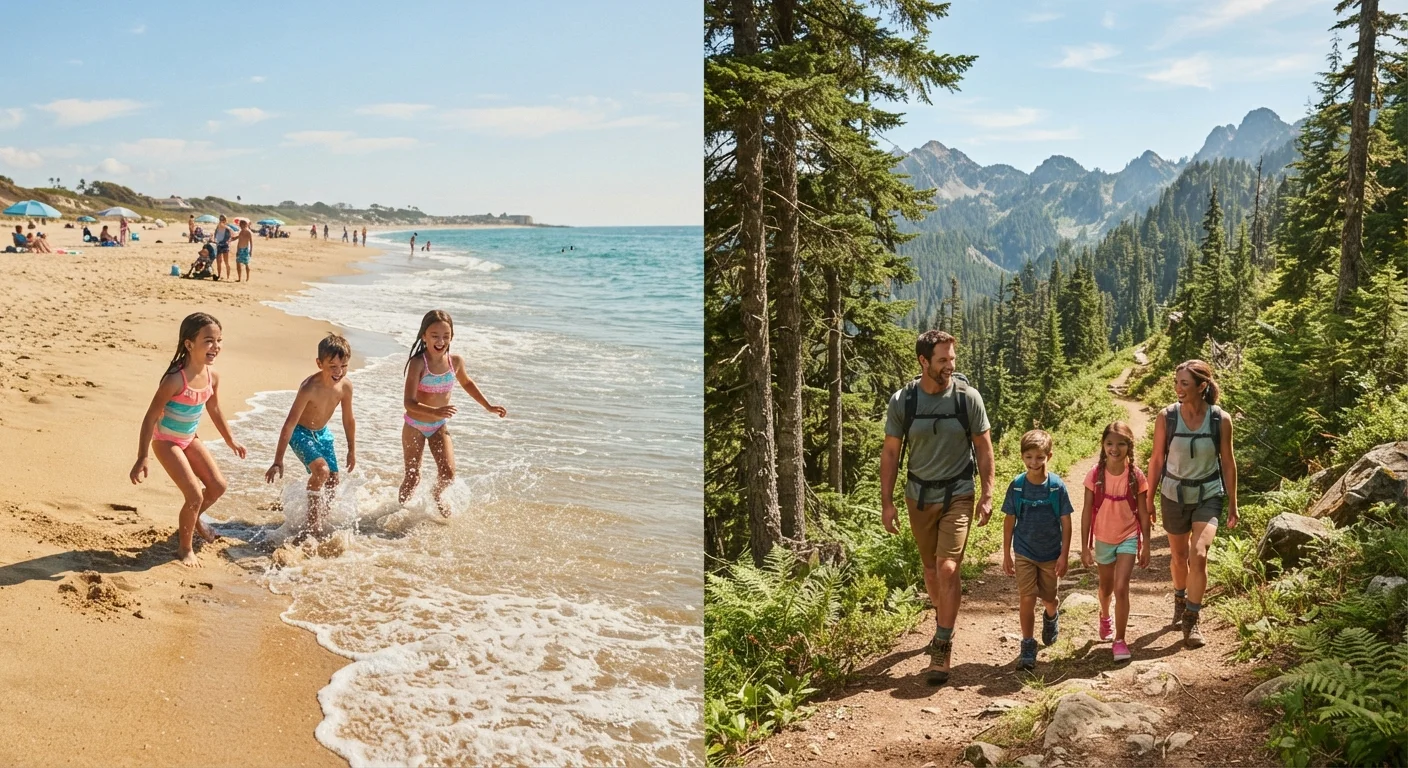
What Each Destination Actually Looks Like Day-to-Day
A beach vacation tends to be wonderfully unscheduled. Mornings start slow, kids build sandcastles before breakfast is finished, and afternoons revolve around tides and waves. The rhythm is loose and forgiving — exactly what exhausted parents and energetic toddlers both need. Destinations like the Outer Banks in North Carolina, Gulf Shores in Alabama, or the Jersey Shore each deliver that familiar coastal ease with amenities nearby.
A mountain retreat runs differently. Days often have a plan — a trail to hike, a lake to reach, a summit view to earn. That structure can be a gift for families with school-age kids who respond well to a sense of adventure and achievement. Think Blue Ridge Parkway cabins, the Colorado Rockies, or the Great Smoky Mountains, where mileage and elevation feel earned.
Neither pace is better. One fits your family better right now. If you're still sorting out what kind of family traveler you are, the first family vacation guide is a grounded place to start.
| Criterion | Beach Vacation | Mountain Retreat |
|---|---|---|
| Best age range | All ages, especially under 7 | Best for ages 6 and up |
| Peak season cost | Higher (summer premium) | Often lower in summer |
| Activity structure | Unstructured, open-ended | Goal-oriented, active |
| Weather risk | Heat, UV, occasional storms | Rapid temperature shifts, altitude |
| Gear required | Minimal, widely available | Layered clothing, sturdy shoes |
| Nearby amenities | Abundant in most beach towns | More limited, plan ahead |
| Physical fitness needed | Low | Moderate to high |
| Wildlife and nature exposure | Coastal birds, marine life | Deer, birds, diverse ecosystems |
Cost, Comfort, and Logistics Compared
Coastal accommodations — especially oceanfront rentals — carry premium pricing in summer, typically peaking between Memorial Day and Labor Day. A week-long beach house rental for a family of four can vary dramatically by region, but popular spots like Cape Cod or the Florida Panhandle tend to command higher rates than mountain cabin alternatives in similar timeframes.
Mountains offer more budget flexibility. Cabin rentals in areas like Tennessee's Smoky foothills or western North Carolina often run lower per night, and access to national forests means low-cost day trips are plentiful. For a deeper look at lodging trade-offs, camping vs. budget hotels breaks down what each approach actually costs in practice.
85%
Families prefer outdoor-focused vacations
According to the American Camp Association's family travel research, the vast majority of families prioritize time outdoors when selecting vacation destinations.
~$1,200
Average weekly cabin rental saving vs. beachfront
Vacation rental market data broadly suggests mountain cabin rates in peak summer can run hundreds to over a thousand dollars less per week than comparable beachfront rentals in popular US coastal markets.
30%
Families who underpack for mountain trips
Travel safety organizations note that a significant portion of families visiting higher elevations arrive unprepared for rapid weather changes, underscoring the need for layered gear planning.
Gear is another factor. Beach trips require sunscreen, shade gear, and swim essentials — all widely available and relatively inexpensive. Mountain trips may call for proper footwear, layered clothing, and rain gear, especially above 5,000 feet. Neither list is prohibitive, but mountain packing is less forgiving if you underestimate weather shifts.
Kid-Friendliness, Safety, and Age Considerations
Beaches are hard to beat for families with kids under 7. The play is self-directed, the risk is visible and manageable in calm conditions, and there's no minimum fitness requirement. That said, surf conditions, jellyfish, and sun exposure are real concerns that warrant close attention. Always check local beach flag systems and apply reef-safe sunscreen generously.
Mountains introduce different considerations. Altitude can affect young children and adults differently — some families notice fatigue or mild headaches above 8,000 feet. Trails that are labeled "easy" for adults may be genuinely challenging for a 5-year-old. If you're eyeing national park destinations, matching the right national park to your kids' ages will help you avoid a mismatch between terrain and ability.
Altitude and Young Children: A Note
If your mountain destination sits above 6,000–8,000 feet, it's worth discussing with your pediatrician before the trip — especially for infants and toddlers. Symptoms like unusual tiredness or irritability at elevation can be easy to miss. Acclimatization time is generally recommended before attempting strenuous hikes. Always verify specific health guidance with a qualified healthcare professional before traveling to high-altitude areas with children.
Older kids — roughly 8 and up — often thrive in mountain settings. The sense of exploration, wildlife sightings, and trail accomplishment land differently at that age than they do for a 4-year-old whose legs tire after half a mile.
Making the Decision — and Getting Ready to Go
Once you've weighed environment, budget, and age-fit, the practical planning begins. Whether you're driving to the coast or winding up mountain switchbacks, the logistics of a family road trip deserve their own attention. Road trips with kids covers the details experienced family travelers swear by — from snack planning to managing screen time on long drives.
Before you confirm any booking, run through your checklist. Documents, accommodation confirmations, activity reservations, health prep — it all compounds quickly with kids involved. The pre-travel planning checklist walks you through each step so nothing falls through the cracks.
There's no universally correct answer in this comparison — just the answer that fits your family at this moment in time. Pick the environment your kids will genuinely enjoy, the budget you can realistically manage, and the pace that will leave everyone ready for the drive home rather than dreading it.