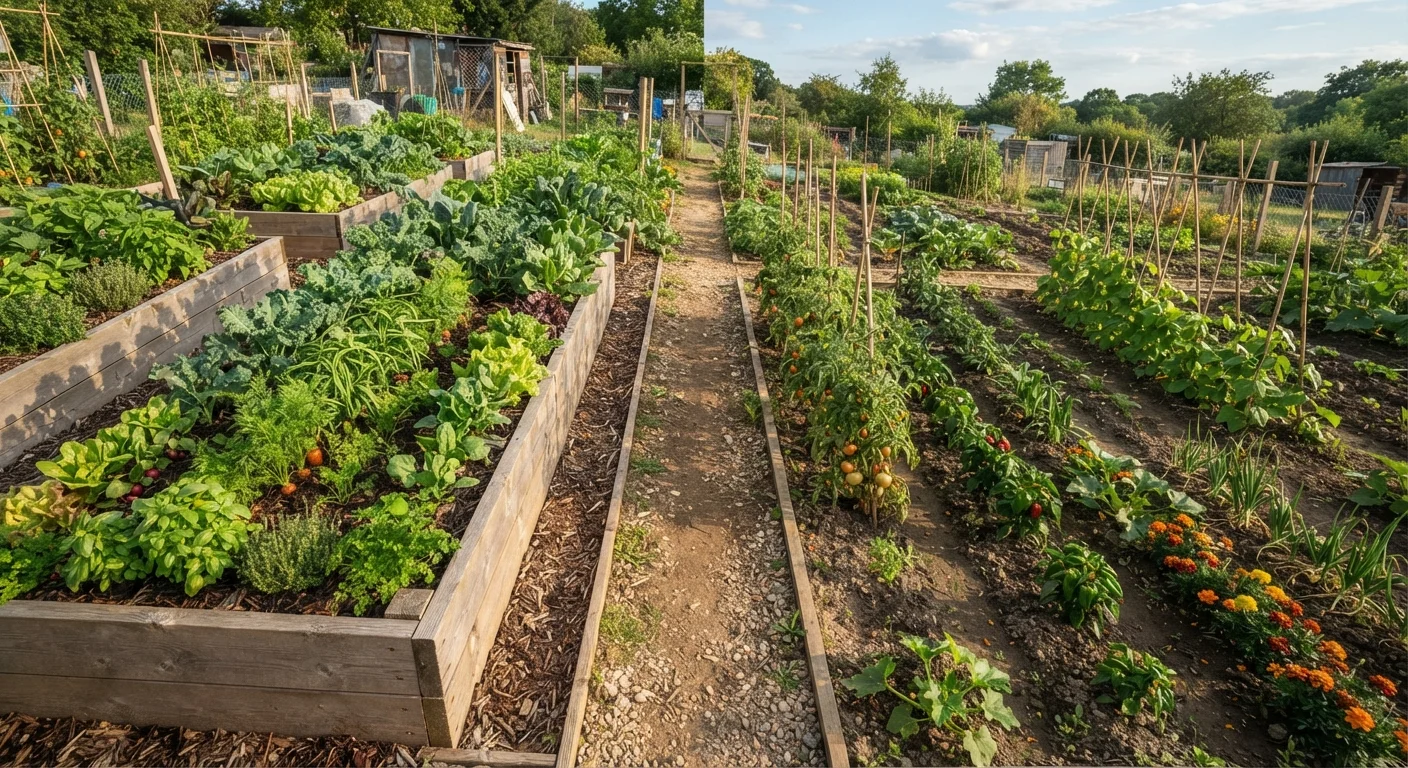
What Sets These Two Methods Apart
At their core, raised bed gardening and in-ground planting differ in one fundamental way: where your plant roots actually grow. In a raised bed, plants grow in a constructed frame filled with a mix you control entirely. In-ground gardening means working directly with whatever soil exists beneath your lawn or yard.
That distinction ripples outward into how you manage drainage, fertility, weeds, pests, and even planting schedules. Understanding those downstream differences — rather than just the surface aesthetics — is what helps you pick the right fit for your actual garden conditions. Before committing to either approach, it's worth learning what your existing soil is actually working with. Our guide on understanding your soil type breaks down what clay, sandy, or loamy ground means for plant health and planning.
| Criterion | Raised Beds | In-Ground Planting |
|---|---|---|
| Upfront cost | Moderate to high (materials + soil) | Low (amendments + tools) |
| Soil control | Complete — you fill the bed | Depends on native soil quality |
| Drainage | Excellent, dries quickly | Varies by native soil type |
| Weed pressure | Lower (fewer seeds from below) | Higher without consistent mulching |
| Scalability | Limited by frame size and cost | Easily expanded across open space |
| Season length | Longer (soil warms earlier) | Shorter in spring, cooler soil |
| Accessibility | High — elevated reduces bending | Lower — requires kneeling or bending |
| Long-term soil ecosystem | Requires active amendment | Develops naturally over time |
The Case for Raised Beds
Raised beds shine in situations where the native ground works against you. If your yard has heavy clay that pools water, shallow topsoil over hardpan, or a history of contamination, building up rather than digging down is often the most practical path forward.
Because you fill raised beds with a custom soil blend, you start with ideal texture and drainage from day one. That mix also warms up faster in early spring, which can extend your growing season by a few weeks in cooler climates. Weeds from below are largely blocked, and the defined edges make it easier to cover beds with row fabric or netting for pest control.
6–8 inches
Minimum raised bed depth for most vegetables
Most cooperative extension services recommend at least 6 inches of growing medium for shallow-rooted crops, with 12 inches preferred for root vegetables.
2–4 weeks
Earlier planting possible with raised beds
Because raised bed soil is above grade and surrounded by air, it can warm significantly faster than in-ground soil in spring, potentially allowing earlier planting in many US climates.
3–5 years
Typical timeline to build healthy in-ground soil
Soil scientists and extension gardening resources generally note that consistent organic matter addition improves native soil structure noticeably within several growing seasons.
The tradeoffs are real, though. Constructing even a modest raised bed requires materials — lumber, composite boards, or stone — plus enough quality soil mix to fill the frame. Costs vary widely depending on size and materials, but they're rarely zero. Raised beds also tend to dry out more quickly than in-ground plots, which can mean more frequent watering during dry spells.
The Case for In-Ground Planting
When your native soil is genuinely good — or can be improved with compost and amendments over a season or two — in-ground gardening is hard to beat for efficiency and scale. There are no frames to build or fill, and you can expand a plot simply by extending your preparation area.
Established in-ground gardens develop a living soil ecosystem over time: earthworms, beneficial fungi, and microbial communities that support long-term plant health in ways that container-style beds can't easily replicate. Deep-rooted plants like tomatoes, squash, and perennial herbs often thrive with room to explore.
Soil Amendments Work Gradually In-Ground
Unlike raised beds where you control the starting mix entirely, improving native in-ground soil is a multi-season process. Adding compost, aged manure, or cover crops builds organic matter incrementally. Most gardeners see meaningful improvement in soil texture and drainage after two to three seasons of consistent amendment — so patience is part of the process.
In-ground plots also pair naturally with mulching strategies that retain moisture, moderate soil temperature, and suppress weed germination. See our guidance on applying mulch correctly for practical depth and timing recommendations. The honest limitation: if your soil is poor or compacted, improving it in-ground takes time and consistent effort over multiple seasons.
Practical Factors to Weigh Before You Decide
Neither method is universally superior — the right choice depends on a combination of your site conditions, budget, physical needs, and long-term goals. A few key questions can help clarify direction:
- What's your native soil like? If it's poor or unknown, a raised bed gives you a clean start. If it's already productive, in-ground planting makes better use of what you have.
- How much space do you have? Raised beds fit neatly into small or irregular spaces; in-ground plots scale more naturally across open yards.
- What's your budget for setup? In-ground preparation — compost, a tiller rental, hand tools — typically costs less upfront than framing and filling a raised bed.
- Are you planning for a single season or long-term? In-ground gardens reward patience and improve over years. Raised beds deliver quicker initial results.
If you're planning your first food garden, our season-by-season vegetable garden framework walks through planning and planting regardless of which method you choose. And once your beds are established, companion planting strategies can help you make the most of your growing space in either setup.